
SAHO global search
63,741 records
 Article
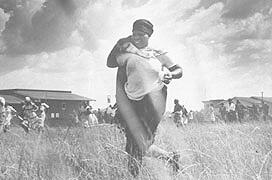
Women’s resistance in the 1960s - Sharpeville and its aftermath
As the 1950s gave way to the 1960s the African National Congress (ANC) and Pan Africanist Congress (PAC) both announced plans to tackle the pass laws for…
Articles, documents, thesis and books relating to the South African Indian Congress
 Article
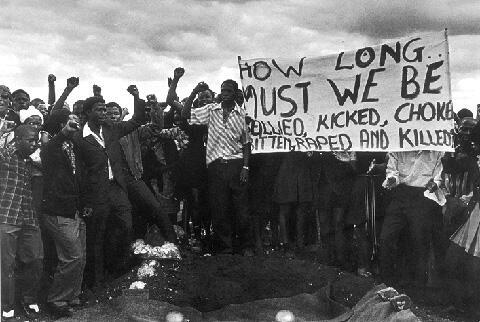
African Nationalism
Introduction Nationalism refers to an ideology, a form of culture, or a social movement that focuses on the nation. It emphasises the collective of a…
 Article
PAC’s African Women’s Organisation
The aim of the African Women's Organisation is to rally African women under the banner of African Nationalism and to educate women socially, politically, and…
 Article
Pan Africanist Congress timeline 1959-2011
In 1959 the Africanists broke away from the ANC and formed the Pan Africanist Congress (PAC). The histories of these two organisations are inextricably linked…
 Article
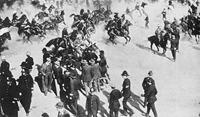
The 1913 Mineworkers’ Strike
Introduction: Background to the Strike The formation of the Union of South Africa in 1910 was a development that had vastly different consequences for the…
The International Socialist League (ISL)
The International Socialist League (ISL) was formed in September 1915. It was created by a progressive faction of the South African Labour Party (SALP) as a…
The historical significance of COSATU’s Workers’ Charter Campaign
Introduction During the late 1970s and early 1980s the issue of drawing up a Workers’ Charter became a leading item on the agenda of the South African labour…
Debating Lineages of Socialism in Africa Webinars
South African History Online, the Wits History Workshop, the Department of History at the University of the Free State, the Department of Development Studies…
 Article
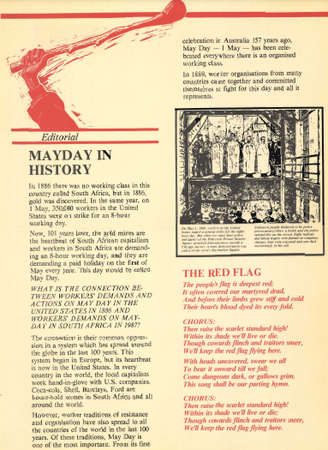
The South African Communist Party and May Day – Some Key Moments
May Day celebrated on 1 May annually, is a celebration of workers and their work. It has a long history, being a day of commemoration and celebration of the…
 Article
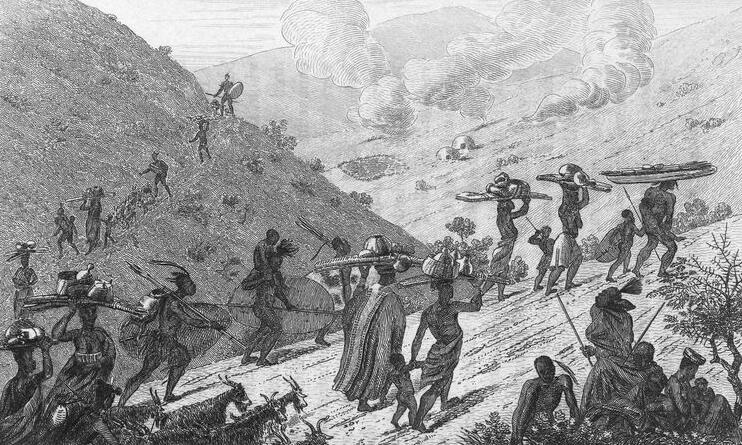
The Mfecane: Understanding a Period of Transformation in Southern Africa
The Mfecane - known as the Difaqane or Lifaqane in Sesotho - was a period of profound political, social, and demographic transformation in southern Africa…
 Article
History Grade 11 - Topic 4 Glossary
Note: All definitions are acquired through Google’s online English Dictionary. Nationalism: Nationalism is the feeling of belonging to a nation. Nationalism…
 Article
History Grade 11 - Topic 3 Glossary
NSDAP- Stands for Nationalsozialistische Deutsche Arbeiterpartei and was a national Socialist German Workers’ Party.[1] Communist Party- The Communist party…
 Article
A Luta Continua Dialogues, Episode 2: Policing and Resistance
Guest Contributors: Anietie Ewang - Human Rights Watch Researcher, Nigeria afọpẹ́fólúwa òjó - Artist & Berlin based #EndSARS Organiser Miski Noir -…
 Article
History Grade 11 - Topic 2 Glossary
American Dream: The ideal by which equality of opportunity is available to any American, allowing the highest aspirations and goals to be achieved.[1] …
 Article
History Grade 11 - Topic 1 Essay Questions
Explain to what extent Stalin succeeded in transforming Russia into a superpower by 1939. Stalin came to power on the back of Lenin’s death in 1925, after…
 Article
History Grade 11 - Topic 1 Glossary
Extra note: In order to standardise the “Terms you need to Know” articles in the Classroom Section, all definitions are accessed from https://www.dictionary…
 Article
A Luta Continua Dialogues, Episode 1: Student Activism
Including Qondiswa James, Mbali Williams, Mihla Hanise, Anya Isabel, Kas and Hunter Hosted by Didintle Ntsie Filmed 5 September 2020 Broadcasted 6…
 Article
History Grade 10 - Topic 1 Glossary
Ancient: Belonging to a period of history that is thousands of years in the past. BC: Before Christ. Used in the Christian calendar to show a particular…
 Article
Poor Whites and their Political Weapon: Constructing the Kakamas Dam
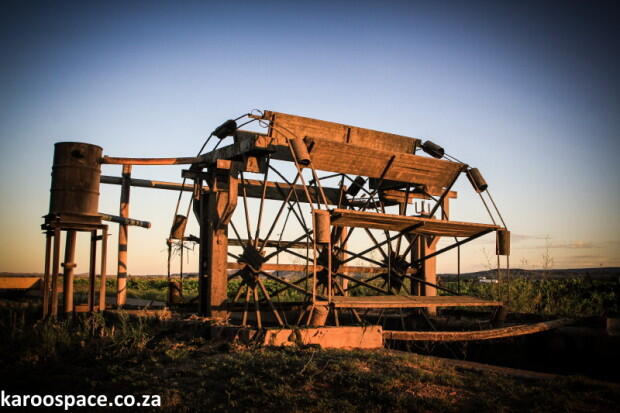
The term “poor whites” was coined during the 19th century, as the mineral revolution and development of mines forced smaller farmers off their land.[1] This…
 Article
Remembering and Celebrating South Africa’s Iconic LGBTQI+ Women
The shards of South Africa’s fragmented history share a common thread throughout; at the core is a struggle for equality and visibility. Over the course of the…
 Article
Gertrude Fester Biography by Nehal Patel
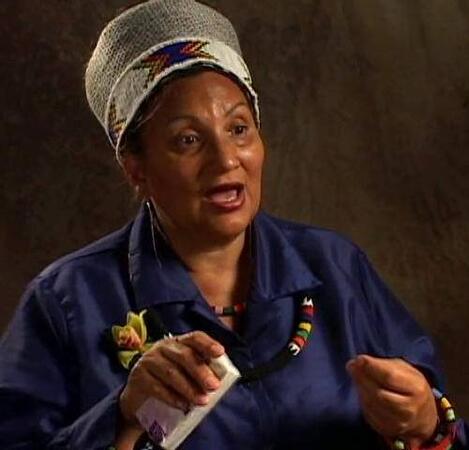
This article was written by Nehal Patel and forms part of the SAHO and Southern Methodist University partnership project Gertrude Fester Biography Abstract …
 Article
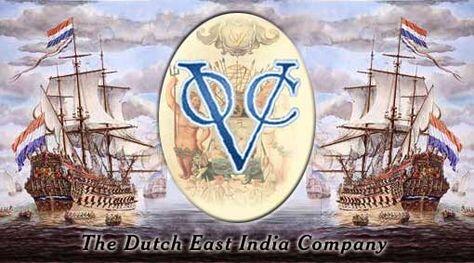
Dutch settlement, the Indian Ocean slave trade and slavery at the Cape - seventeenth and eighteenth centuries
Reasons: DEIC permanent settlement at the Cape 1652 The DEIC (Dutch East India Company) in the Netherlands was set up in 1602 to trade. In 1647, the Haerlem,…
Key terms and definitions Grade 12 topic 4
Key terms definitions Abolished Officially ended or put to stop, especially a system or an institution Advisory…
 Article
Timeline for Grade 12.4 - The end of the Cold War and a new global world order 1989 to present
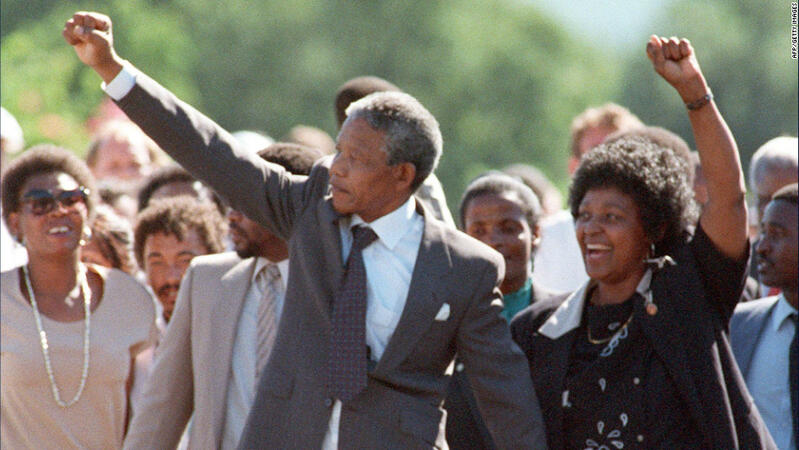
1955 The Freedom charter is adopted. This was the statement, charecterised by its demand that “ the people shall govern” that highlighted the main…
 Article
Grade 12 - Civil Resistance in South Africa 1970s to 1980
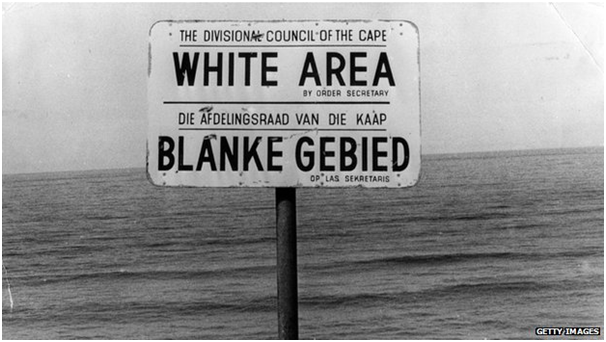
What was the nature of the civil society resistance after the 1960s? During the 1960s and the 1980s South Africa was ruled by the National Party. The NP…
Political revolution between 1820 and 1835
The Mfecane (a Zulu word which translates to “the crushing”) or Difiqane (a Sotho word which translates to “forced removal) was a series of Nguni and other…
Political changes from 1750 to 1820
Britain takes control of the Cape Once revolutionary armies of France invaded Holland in 1795, the British feared that the French would take control of the…
 Article
Grade 4 - Learning about local history through pictures: Cape Town
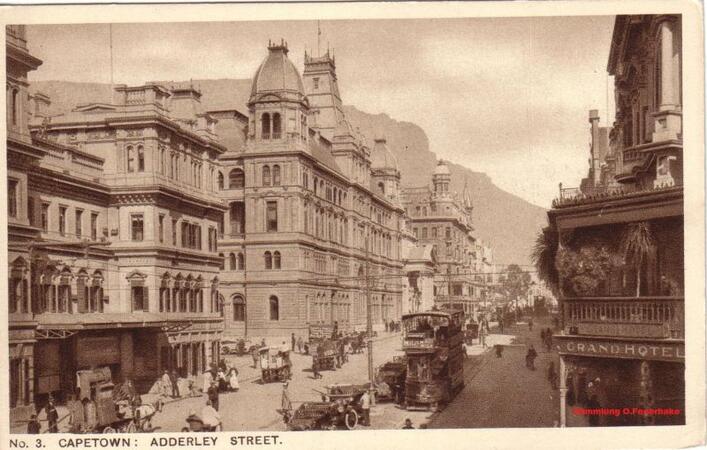
How to find out about the present or the history of a local area? When investigating our past, we need to look at various things and resource information…
 Article
The Cattle Killing Movement
1. Introduction ↵The value of history is derived from its obligation to view all factors and clues of the past that lead up to one particular moment, event or…