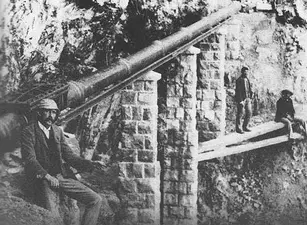
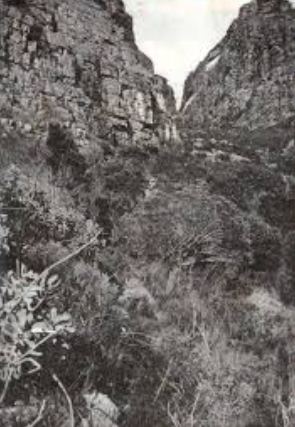
To the Cape’s indigenous people – the Khoi pastoralists and the San hunter-gatherers – the area now occupied by Cape Town City Centre were known as- Camissa, Place of Sweet Water. "As anyone who has drunk from Table Mountain’s streams would attest to!" When Portuguese explorer Antonio de Saldanha climbed Table Mountain in 1503 (the first European to do so) to get his bearings, he was delighted to find a strong stream flowing down the ravine, now known as Platteklip Gorge he had ascended. The creation of reservoirs on Table Mountain was environmentally damaging. But it was vital for the survival of the city's early burgeoning colonial settlement.
The bay at the foot of the mountain, present-day Table Bay, became known as: 'Aguada de Saldanha'. The 'Watering Place of De Saldanha'. Dutchman, Wouter Schouten, who tasted the water on the mountain in 1665. Had this to say about it: “We found it quite sweet and exceptionally pleasant in taste… Our heavenly liquid now tasted better than ordinarily does the most exquisite drink in the world.”
It was the water running down Platteklip Gorge that induced the Dutch to settle at the foot of the mountain in 1652. They built a trading outpost that grew to become the bustling metropolis of Cape Town, "Mother City", to South Africa.
Five streams rise on Table Mountain, draining down different sides of the mountain. A confluence of three smaller streams on the front of the mountain: the Platteklip, the Silver and Capel Sluit. Cape Town owes its existence to the Varsche River. The second stream, the Liesbeek, drains Table Mountain’s luxuriant eastern slopes. Then there’s the Diep and Spaanschemat streams, both flowing southeast towards False Bay. Table Mountain’s largest stream, the Disa, drains southwards into Orange Kloof before debouching in, Hout Bay.
The Varsche’s main source, the Platteklip Stream, still cascades down the lower stretches of Platteklip Gorge (AS SEEN IN THE BANNER) above the city centre, and makes for an impressive sight when in full spate. It is one of only a handful perennial streams on the mountain, swelling to a torrent after winter rains and dwindling to a seep in late summer, when its waters serves as a welcome refreshment to overheated hikers. Hiking Platteklip Gorge in summer, with a late start, makes you realize the value of streams on the mountain.