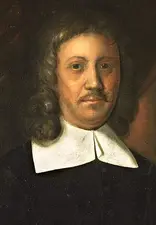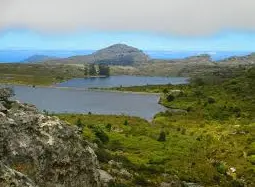
The Diep River originates in the Riebeek-Kasteel Mountains and flows into the ocean near present-day 'Dolphin Beach Hotel', in Milnerton. Three years after his arrival at the Cape of Storms, Jan van Riebeek instructed Jan Wintervogel, a crew member, to scout the Diep River. Wintervogel’s journey began at Table Bay, passed through Visser's Hoek (as it was called then), and reached into what we now know as Malmesbury. Back then, the area was wild and lush, with the river flowing strong and deep, reaching up to 20 meters in some places during the rainy season. The river provided the perfect opportunity for the Dutch East India Company (VOC) to navigate inland using small ships and possibly barges to trade with the local Khoikhoi. Unlike the Khoisan, who lived in smaller communities of fewer than 50 people, led by a tribe chief and survived through hunting and gathering. Whilst the Khoikhoi preferred to live in larger settlements of over 100 people and primarily engaged in cattle herding. Their wealth was measured by the number of livestock they owned. The Khoikhoi mainly occupied the Cape region and they were the first to engage with the Dutch, while the Khoisan were typically found in the Kalahari- A Khoikhoi encampment was established near Vissershok, adding cultural significance to the area!
By 1683, the grazing fields around Table Bay had become sparse due to overgrazing, prompting the VOC to establish Vissershok as an outpost. Hendrik Visscher was put in charge. He oversaw: 'farming operations; managed the slaves, building structures, and—fitting with the times—hosting rowdy weekend parties for VOC officials'. During the Anglo-Dutch Wars, which took place over three separate periods (1652–1654, 1665–1667, and 1672–1674), several Englishmen traveling to India were captured by the Dutch and held as prisoners of war at Vissershok.
Despite the VOC's attempt to monopolize farming activities, forbidding anyone from profiting without official oversight in 1668, several officials. Willem Adriaan van der Stel, found it irresistible to break those rules though. Vissershok, far enough from the prying eyes of the VOC in Table Bay, became a for private livestock grazing area and under-the-table trading, for the VOC. However, this didn’t sit well with the free burghers, who rallied against the prohibition and the corrupt officials. By the 1680's, the Dutch revisited these regulations and began allocating farms to preferred company officials.
Despite its status as the site of South Africa's first wheat farm! Vissershok was never officially recorded as such because it was categorized as an outpost managed by the VOC. By the end of the 18th Century, trade with the East had dwindled, making the farm no longer viable for the VOC. In 1791, the farm was sold to Hendrik Oostwald Laubscher.
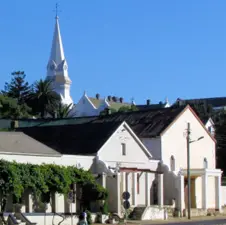
The homestead, now embedded in the boundary wall and visible from Vissershok Road, dates back to 1768 according to its gable. The "ring wall," built to protect livestock from predators and thieves, seems to be even older. (PHOTOS ARE AVAILIBLE IN THE REF. LINK) Though the farmhouse has undergone several alterations over the years, remnants of the past remained visible. However recently—slave torture instruments could still be seen in the basement used just a few years ago. The four stately entrance gate piers, symbols of Dutch rule meant to signal that only authorized entry was allowed, and the boundary walls now form part of the Western Cape's Heritage.
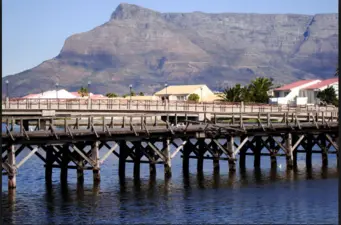
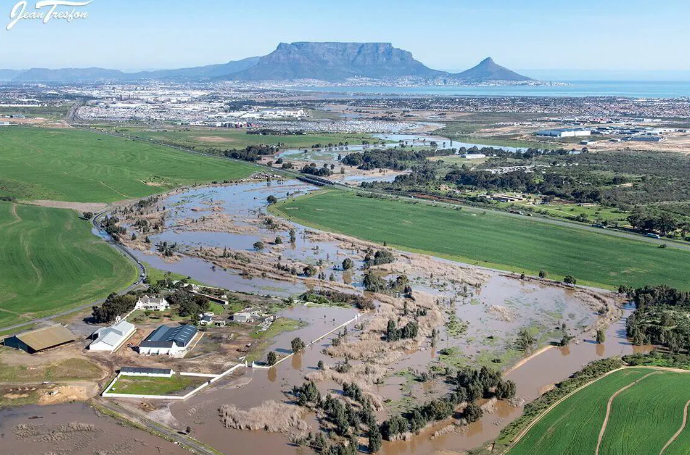
Today, the farm continues to be humbled by the 'Dieprivier'. During winter, the river swells with a vengeance, causing floods that have swept away labourers' cottages, destroyed the old cemetery, and even washed away the bridge over the N7 three times. Despite these setbacks, Vissershok remains a working farm, boasting one of the largest milking facilities in sub-Saharan Africa, capable of milking 200 cows simultaneously. Milking 200+ cows simultaneously or in a single session requires high-capacity, automated milking parlours, typically rotary or rapid-exit herringbones. Modern systems can manage this workload efficiently, reducing labour time while maintaining herd health!
"Is Vissershok Farm truly special?Is it the scandalous past, the pioneering agriculture, or the flood-ridden history? Perhaps it’s all of these things—a farm that refuses to be forgotten, despite its brushes with disaster. And with prominent Durbanville families like the: 'Melck's, Louw's, and Brink's', at its helm! Vissershok seems destined to carry on spinning its strange and wonderful stories for generations to come—especially if the current owner, Andre Brink, has anything to do with it!"