
Raymond Dart was born on 4 February 1893 in Toowong, Brisbane, Australia. He attended university in Queensland and Sydney. In 1920, Dart pursued further study at the University of London, under the anatomists Grafton Elliot Smith and Arthur Keith. When a Anatomy Professorship became available at the University of Witwatersrand, Johannesburg, Elliot Smith encouraged Dart to apply for the position, which he was subsequently offered. Dart moved to South Africa in 1922 and later made enormous contributions globally to the fields of physical anthropology and paleontology.
Alan Cormack, the youngest of three children, was born in Johannesburg in February 1924. His father was an engineer with the Post Office and his mother a teacher. His parents moved to South Africa from the north of Scotland shortly before the outbreak of World War One.
SAHO is free because readers fund it. Donate →
J. M. Coetzee was born to German and English parents in Cape Town on 9 February 1940. Coetzee spent his childhood in there, as well as in Worcester, a picturesque Western Cape town northeast of the famous South African harbour city. Supporters of the liberal South African party of General Jan Smuts, his parents opposed the conservative Afrikaner nationalists who ultimately came to power in South Africa in 1948, beginning a racist and oppressive apartheid regime.
SAHO is free because readers fund it. Donate →
Born in 1900, Johannesburg Chamile worked as a labourer. He was a member of the Newclare branch of African National Congress which he joined during the Defiance Campaign. The indictment against him in the Treason Trial was squashed in 1959.
SAHO is free because readers fund it. Donate →
Herbert Hayton Castens was educated at Rugby School in Warwickshire, where the game of rugby allegedly originated. He played both cricket and rugby and was an outstanding sportsman. He was South Africa”²s first rugby captain, and also captain of the first South African cricket team to tour overseas. After completing his school career he studied Law at Oxford University. In 1887 he obtained full rugby colours at Oxford. As a student he represented Middlesex and the South of England on the rugby field.
SAHO is free because readers fund it. Donate →
Odd one out
Over the years many people have asked me how it came about that I, amongst all the Afrikaners that I grew up with or knew, as a young man in the 1960s and early 1970s, came to an alternative view about racism and Apartheid and took an active role in opposing the South African government of the time.
SAHO is free because readers fund it. Donate →
SAHO is free because readers fund it. Donate →
The great South African writer and activist, Ruth First, was assassinated by a letter bomb sent by the South African Security Police in Maputo, Mozambique on this day, 17 August, in 1982.
At a memorial meeting for Ruth First, after she was assassinated on the streets of Maputo by South African agents, Ronald Segal, another prominent exile figure and her close friend, described Ruth, as a “journalist, author, intellectual, teacher,” whose “whole life was essentially a political act.”
SAHO is free because readers fund it. Donate →
Home Page
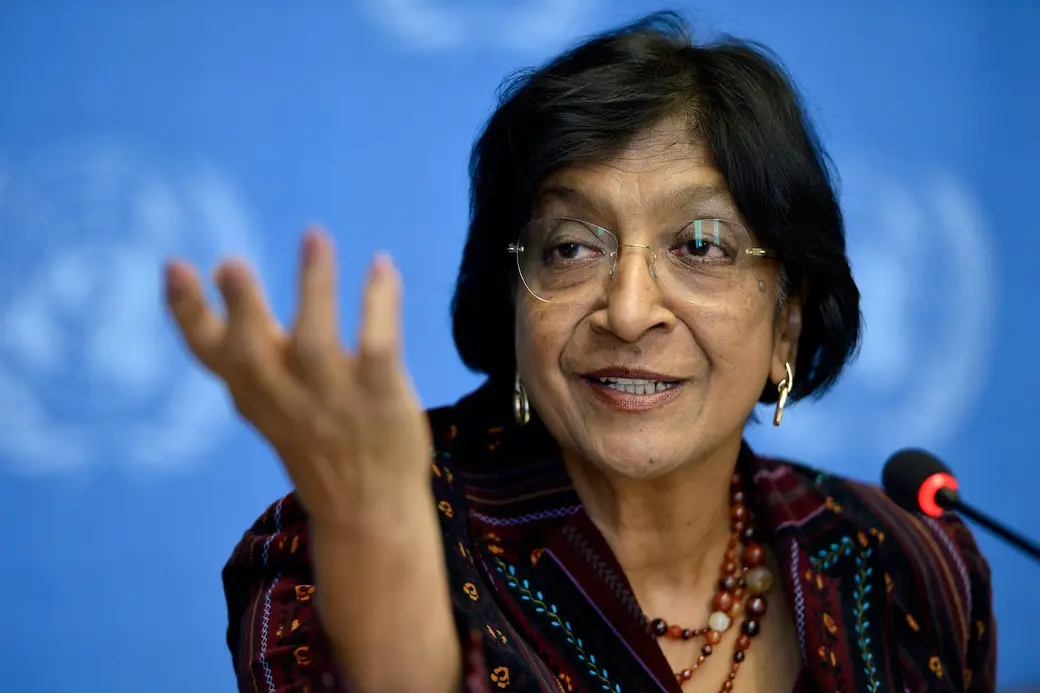
Navanethem (Navi) Pillay
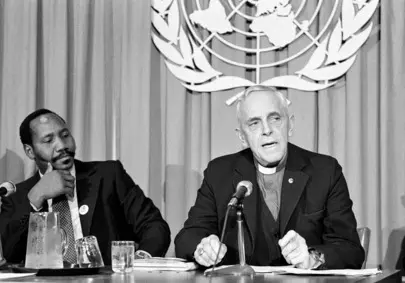
Navanethem (Navi) Pillay was born on 23 September 1941 in Clairwood, Durban, Natal (now KwaZulu-Natal). She attended the University of Natal (now University of KwaZulu-Natal - UKZN) where she graduated with BA in 1963 and then a LLB degree in 1965. At University she joined the…
This day in history · 14 October
Today in history
What happened on your birthday?
Recently added to the archive
| Ref | Type | Dates | Status | |
|---|---|---|---|---|
| R-0153671 | archive | Interview with Navi Pillay, United Nations High Commissioner for Human Rights by Christof Heyns | 13 Oct 2026 | New |
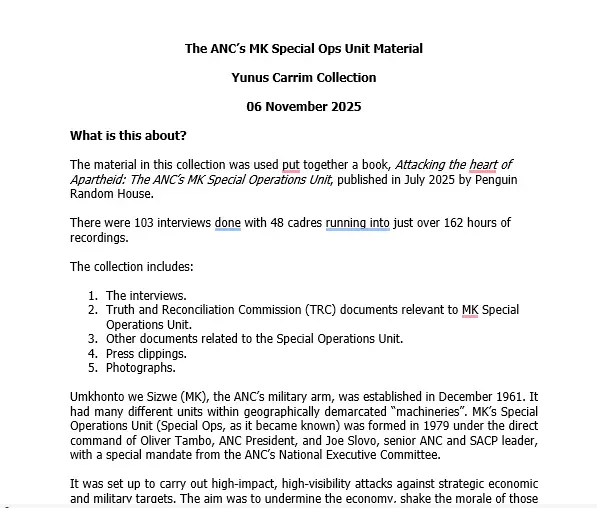
| A-0153670 | article | The ANC’s MK Special Ops Unit Material - Yunus Carrim Collection - The 1987 attack at the Wits Command | 12 Oct 2026 | New |
| P-0013733 | place | Xamdeboo was called Aberdeen, Eastern Cape | 7 Oct 2026 | New |
| P-0065703 | place | Cape Town Civic Centre and the CBD of Cape Town | 30 Sep 2026 | New |
| P-0066087 | place | Paternoster, West Coast | 29 Sep 2026 | New |
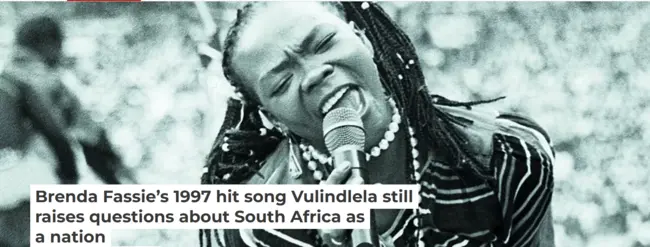
| A-0153666 | article | Brenda Fassie’s 1997 hit song Vulindlela still raises questions about South Africa as a nation | 23 Sep 2026 | New |
| R-0153665 | archive | The South African Indians Who's Who | 23 Sep 2026 | New |
| P-0065985 | place | KwaZulu-Natal Literary Trails (under Heritage Routes) | 18 Sep 2026 | New |
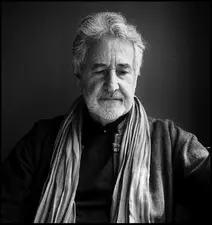
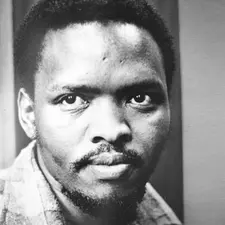
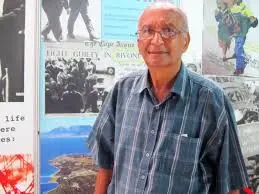
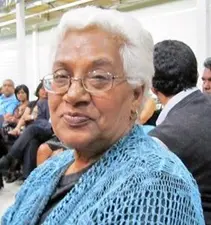
Featured biographies
These are our featured biographies.
Featured SAHO articles
These are the latest of our articles.
Most Read Content Today
The Empire of Mali (1230-1600)
189 views16 June 1976 - Soweto Uprising
122 viewsNavanethem (Navi) Pillay
84 views
History by Grade
Grade 4
Grade 4 - Learning about local history through pictures: Cape Town
Grade 5
Grade 5 - Term 4: A Heritage trail through the provinces of South Africa
Grade 6
Grade 6 - Term 3: Democracy and the Constitution
Grade 7
Grade 7 - Term 2: The Transatlantic slave trade
Grade 8
Grade 8 - Term 2: The Mineral Revolution in South Africa
Grade 9
Grade 9 - Term 1: World War II (1939 - 1945)
Grade 10
History Grade 10 - Topic 6 Contextual Overview
Grade 11
History Grade 11 - Topic 4 Contextual Overview
Grade 12
Grade 12 - Civil Resistance in South Africa 1970s to 1980
Mafika Gwala was a significant South African writer, who emerged in the 1960s and 1970s. A prominent activist of that era, he expressed the political needs and aspirations of all those victimised by apartheid. He was closely associated with the Soweto poets, Mongane Wally Serote, Mbuyiseni Mtshali, James Matthews and Mandla Langa. In 1973, he edited the Black Review, and his short stories, essays and poems have been published in numerous journals and anthologies. His poetry collections include Jo’Liinkomo (1977) and No More Lullabies (1982).
SAHO is free because readers fund it. Donate →