The Northern Cape is South Africa’s Largest Province and must-see destination, whether you prefer the ocean, the desert, the bush or quirky towns rich in history and culture.
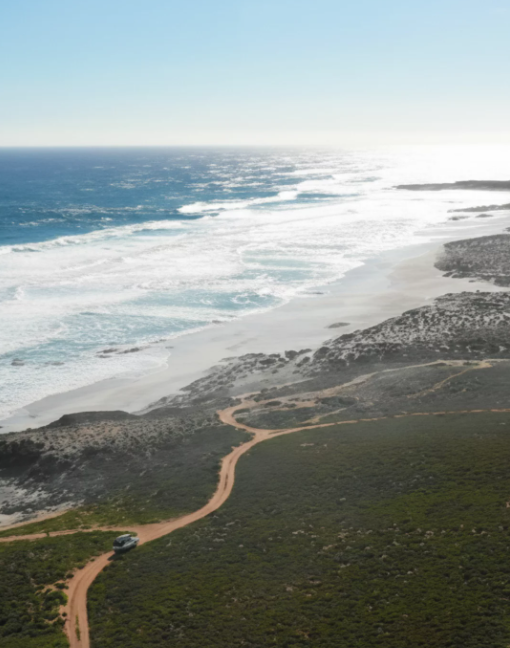
Touring the West Coast of the Northern Cape, primarily between Springbok, Port Nolloth and Alexander Bay."These are highly recommended." The best time to visit is during the months of August to September for the wildflower season. April to October has cooler driving conditions though! The Namaqualand Coastal Route is one of the most scenic self-drive journeys in the Northern Cape. This route combines Atlantic Ocean views, historic diamond mining towns and vast desert plains.
It’s ideal for travellers who enjoy stopping often, exploring forgotten towns and driving roads where traffic is minimal and landscapes feel endless! Visiting of historic diamond towns. Photograph shipwreck sites or experience Namaqualand wildflowers in season. Nearby alternative routes include inland Namaqua passes and gravel roads connecting to Kamieskroon and Goegap Nature Reserve.
Kalahari Red Dune Route
"Big Skies and Open Desert Highways!" The Kalahari Red Dune Route showcases the vast interior landscapes of the Northern Cape. Running through areas such as Upington, Kuruman and the Mierregion. This drive highlights rolling red dunes, camelthorn trees and wide-open horizons. "This route is less about structured attractions and more about immersion in open country driving!"
You can experience: 'Scenic dune drives; Visit small desert towns; Wildlife sightings in open terrain or maybe just stargazing in low light pollution areas!' This route also connects well with the Kalahari Trail and other off-road extensions.
"A duration of 2 to 4 days is recommended for a relaxed road trip loop!" The best time to visit is May to September for comfortable temperatures. Summer is extremely hot but, offers dramatic desert storms.
Riemvasmaak Hot Springs ("For desert relaxation after the drive!")
Riemvasmaak Hot Springs is one of the Northern Cape’s most unique natural attractions. Located between the Orange and Molopo Rivers. "This remote canyon setting offers naturally heated mineral pools surrounded by dramatic rock formations!" Riemvasmaak is a settlement in ZF Mgcawu District Municipality in the Northern Cape province of South Africa. The name means ‘tighten the strap’ or ‘tied with straps’. Riemvasmaak is located near the Orange River, close to the Namibian Border. It was originally settled in the early 1930's by people of Xhosa, Damara, Herero, Nama, and Coloured origin. In the early 1970's however the community was sent back to their ethnic homelands by the apartheid government. The Damara group was sent to Khorixas, a town in South-West Africa (today Namibia) and this group of people, became known as: 'Riemvasmakers'. They were given land by Damara Chief Justus Garoëb to settle in that area. For road trip travellers, it is the perfect restorative stop after long hours on gravel roads. It is approximately 95 km north-east of Kakamas in the Northern Cape. You can relax in natural hot mineral pools, explore surrounding canyon terrain or take short scenic walks photographing the interesting rock formations! Half-day to overnight stay recommended is recommended during the months of April to September, for cooler ambient temperatures. Summer visits you need to complete your activities by early morning or late afternoon.
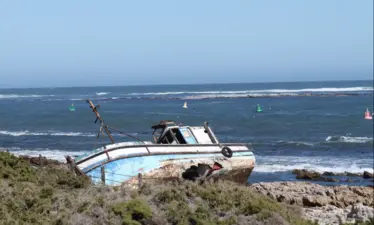
The Shipwreck Trail links three major wrecks – the 'Piratiny', 'Border' and 'Arosa'. All that remains of the Piratiny is a rusted shell and fragments of old leather shoes in amongst the mussel shells and plants only a few metres from the wreck. These three tarnished, rusting ruins are not the only ships to have run aground. Poor weather and numerous rocky sections of coastline have put paid to many ships. But most of these were lost at sea. In-between the wrecks are a series of historical, archaeological and geological sights as well as whales, dolphins and birds.
The coastline is a harsh one. What hasn't survived leaves only its bones and fragments as evidence – whale bones, shell middens, some evidence of stone tools left by the Khoi.