
Professor Sir Raymond (Bill) Hoffenberg was born in Port Elizabeth, Eastern Province (now Eastern Cape) on 16 March 1923. He went to school in Port Elizabeth and excelled at sport. Later in life, he excelled at squash and golf.
Stanley Basil Lollan was born in Johannesburg in 1925, he became one of the few significant coloured activists in the Transvaal in the 1950s. A clerk by occupation, he was secretary of the South African Coloured People's Organisation in the Transvaal in the mid-1950s and was a defendant in the Treason Trial for its full length, from 1956 to 1961. He moved to Swaziland after 1961.He worked as a clerk at the Industrial Council for the Clothing Industry.
SAHO is free because readers fund it. Donate →
Struggle veteran Amos Ndwalane, who escaped the noose by seven days due to the unbanning of the African National Congress (ANC) in 1990, was allowed out of his hospital bed for two hours on Friday (3 May 2019) so that former president Jacob Zuma could hand over a new house in Lamontville, Durban, to him.
SAHO is free because readers fund it. Donate →
Adrian Leftwich grew up in Cape Town, Western Province (now Western Cape), in 1940 in a liberal Jewish family. His father was a doctor, and his mother gave piano lessons and carried out charitable works.
Leftwich obtained his BA Honours degree from the University of Cape Town (UCT), Western Province (now Western Cape), South Africa and his PhD degree from the University of York, United Kingdom. He taught at the Universities of Cape Town, York, Lancaster and Reading in the United Kingdom (UK).
SAHO is free because readers fund it. Donate →
In the 1920s, with the First World War (1914-1918) over, the pattern of female employment began to change. The war and the protectionist policy of the Pact government under JBM Hertzog (who wanted to help the ‘poor whites' to get back on their feet) both boosted the growth of the manufacturing industry. Women of all racial groups slowly began to gravitate to the towns and were drawn into the labour market. Outside the reserves, economic opportunities opened up for African women too.
SAHO is free because readers fund it. Donate →
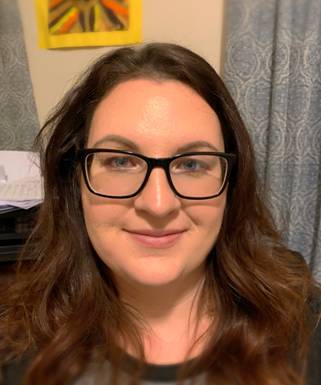
Kaitlin Bedard
| Kaitlin Bedard is a History and Secondary Education major at Bridgewater State University. A life-long resident of Massachusetts, she plans on using her degree to become a teacher in Massachusetts. |
SAHO is free because readers fund it. Donate →
Africa South Art Initiative (ASAI) is a non-profit company specialising in research and publication on the visual arts in Africa. ASAI began in 2005, concerned with the lack of engagement by South African artists, art historians and curators with their peers on the African continent. Since then ASAI has begun to understand its role as both a pan-African project as well as an initiative located in the global south.
SAHO is free because readers fund it. Donate →
South African History Online hosts “virtual internships” with Bridgewater State University students enrolled in a “History of South Africa” course with Dr. Meghan Healy-Clancy, Assistant Professor of History and African Studies Program Coordinator.
The project was inspired by an initial McGill University-SAHO partnership.
SAHO is free because readers fund it. Donate →
While the two main forces in the Anglo-Boer War 2 were White, it was not an exclusively White war. At least 15 000 Blacks were used as combatants by the British, especially as scouts to track down Boer commandoes and armed block house guards, but also in non-combatant roles by both British and Boer forces as wagon drivers, etc. They suffered severely as result of the British "scorched earth policy" during which those who lived on White farms were removed to concentration camps, as were the women and children of their White employers.
SAHO is free because readers fund it. Donate →