
SAHO global search
23,186 records
 Article
Anti-South African Indian Council (SAIC) Campaign
South African Indian Council (SAIC) In 1961, Indians were officially recognised as a permanent part of the South African population and the Department of…
 Article
Mafika Pascal Gwala Annual Lecture
The Mafika Pascal Gwala Annual lecture was initiated by South African History Online in 2015 and is run in partnership with both the University of Kwa Zulu…
 Article
1956 Women Marchers
# 1956 Women Marchers is an initiative of the Albertina and Walter Sisulu Foundation and South African History Online to gather the names and stories of the…
 Article
Mafika Gwala Third Annual Lecture, 5 October 2017
The Mafika Pascal Gwala Annual lecture was initiated by South African History Online in 2015 and is run in partnership with both the University of Kwa Zulu…
SAAAH: “Reception / Perception”
Post-structuralist discourse has resulted in a shift in emphasis from the author to the reader, or the production of art to its reception. Reception/perception…
20 Years of Democracy - Profiles of the Presidents
South Africa’s advent to democracy was ushered through the 1993 Interim Constitution, drawn up through negotiations among various political parties,…
Make South Africa ungovernable: Broadcast on Radio Freedom: Oliver Tambo, 10 October 1984
We are marking two important occasions in the history of our protracted struggle at a time when the revolutionary fervour amongst all sections of the black…
Make South Africa Ungovernable: Broadcast on Radio Freedom by O. R. Tambo, 10 October 1984
We are marking two important occasions in the history of our protracted struggle at a time when the revolutionary fervour amongst all sections of the black…
 Article
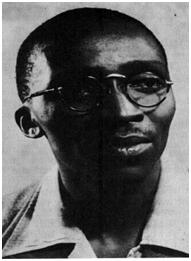
The Society of Young Africa (SOYA)
The Society of Young Africa (SOYA) held its opening conference on 20th December 1951. Led by I. B. Tabata, SOYA was closely linked to the Non European Unity…
 Article
Freedom Charter timeline 1948-1961
1948 26 May, DF Malan's National Party government follows up its election victory with the introduction of new apartheid laws as well as the stricter…
 Article
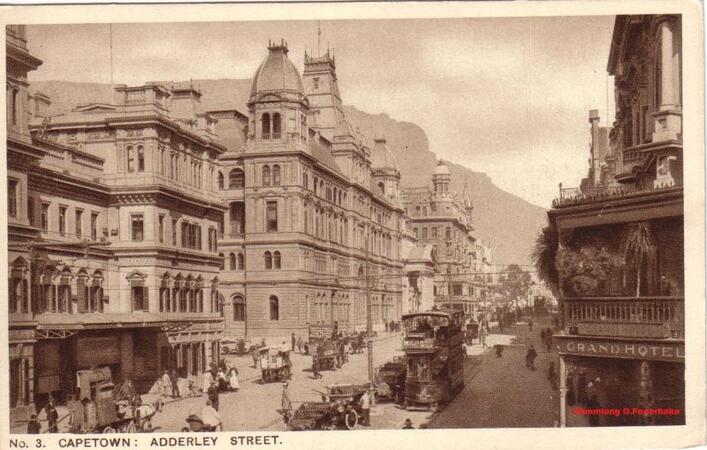
Grade 4 - Learning about local history through pictures: Cape Town
How to find out about the present or the history of a local area? When investigating our past, we need to look at various things and resource information…
Yusuf Dadoo Timeline: 1900 - 1909
1902 At the cessation of hostilities, Sir Alfred Milner, the former British High Commissioner and Governor of the Cape and now administrator of the two…
Gallery
This extensive history through pictures gallery documents the role that women have played in the liberation and democratisation of our country from 1900…
The Hawks letter to Pravin Gordhan by Berning Ntlemeza (Politics Web), 28 February 2016
Text of the letter from Lt General Berning Ntlemeza, National Head of Directorate for Priority Crime Investigation, to Minister of Finance Pravin Gordhan, 19…
Kutlwano Moagi
Kutlwano Moagi is a Photographer and an aspiring Jazz Upright Bassist. Born in soweto, 14 April 1983. Completed a photography learnership at the MArket Photo…
The State of Art in South Africa Conference
Held at the University of Cape Town from 16-20 July 1979, The State of Art in South Africa Conference was chaired by Neville Dubow, then head of the Michaelis…
 Article
South African Association of Art Historians (founded 1984)
Who is SAAAH? About SAAAH The South African Association of Art Historians (SAAAH), founded in 1984, is the major professional association of art historians…
 Article
Manto Tshabalala-Msimang timeline 1940 - 2009
1940 9 October, Manto Tshabalala-Msimang is born in Durban, KwaZulu Natal. 1959 Tshabalala-Msimang matriculates from Inanda Seminary. 1961 Tshabalala…
Biography of Lefifi Tladi by Paul Linck
Abstract: This paper focuses on the life on Lefifi Tladi. Tladi is an artist, poet, and jazz singer that went into exile in South Africa because of apartheid…
 Article
Moses Kotane Timeline
1905 9 August, Moses Kotane is born in Tamposstad, to Samuel Segogwane, a lay preacher and traditional healer, and Siporah Mmadira Kotane, a seasonal…
Document 36 - The first hearing on certification: a summary of the judgment of the Constitutional Court
The COSATU Executive Committee met on Friday, 24 May 1996 in its second ordinary meeting of the year. Below are some of the decisions taken by the Executive…
Statement at the meeting of the Special Committee against Apartheid in observance of the International Day of Solidarity with the Struggling People of South Africa (Soweto Day), 16 June 1989
On behalf of the South African Youth Congress, whose leadership is working under most precarious conditions inside South Africa, I should like most sincerely…
 Article
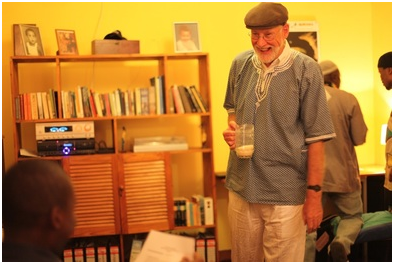
Inqaba ya basebenzi
Inqaba ya basebenzi, published in London by the Marxist Workers' Tendency of the African National Congress documents the workers' struggle for national…
 Article
Workshop ‘71
Theatre Workshop ‘71 was a theatre training workshop that was founded in 1971 by the South African Institute for Race Relations (SAIRR) in Johannesburg. SAIRR…
 Article
United Women’s Organisation (UWO)
The United Women’s Organisation (UWO) was launched in April 1981 with 400 delegates from the Western Cape attending. Some of the women who pioneered the…
Federation of South African Cultural Organisations (FOSACO)
The Federation of South African Cultural Organisations (FOSACO) was initiated in 1990 at a consultative conference held in Johannesburg. The aim of FOSACO was…
Performing Arts Council of the Transvaal (PACT)
PACT was founded in Pretoria on 3rd January 1963 with P.P.B Breytenbach as the first director. It was founded under the same principle as the Cape Performing…
 Article
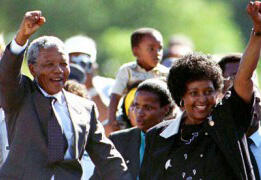
Timeline Interim Constitution 1991 to 1993
1991 On 13 November 1991, Nelson Mandela announced that the first constitutional talks would take place on 29 and 30 November at the World Trade Centre in…
Art lost in a time of struggle by Mary Corrigall
Thami Mnyele and Medu Art Ensemble Retrospective During the past few years the Johannesburg Art Gallery has focused attention on black artists who were…
 Article
The Early History of Rugby in South Africa
Prior to the passage of apartheid laws both Black and White South Africans played rugby, albeit separately. After the onset of apartheid Black South Africans…