
SAHO global search
197 records
 Event
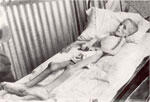
EventGeneral De la Rey protests British mistreatment of women and children
The Anglo-Boer War broke out in 1899 and was the result of the British annexation of the Transvaal, soon after gold had been discovered in the region in 1886…
Book 6: Negotiation, Transition and Freedom - Timeline
From the book: Book 6: Negotiation, Transition and Freedom commissioned by The Department of Education 1902 Treaty of Vereeniging 1910 31 May,…
Say It out Loud - The Coloured People and the Franchise, 1906
From the book: Say It out Loud by Mohamed Adhikari The Coloured People and the Franchise , 1906 On Tuesday 31st July the principles of the Constitution to…
The Afrikaner Bond
The Origins of the Afrikaner Bond The Afrikaner Bond, an Afrikaner political organisation that was effectively the first political party in South Africa, was…
Desirable or undesirable Basotho women?' Liquor, prostitution and the migration of Basotho women to the Rand, 1920-1945' by P. L. Bonner
From the book: Women and Gender in Southern Africa to 1945 edited by Cherryl Walker On 19 September 1937 a violent collision rocked Vereeniging's Top…
 Article
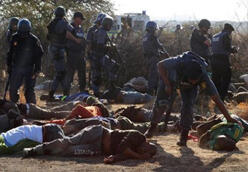
South African major mass killings timeline 1900-2012
Between the 20th and 21st century, a number of people lost their lives in South Africa amid liberation struggle. However, some of these events were carried out…
 Article
Colonial history of Nelspruit
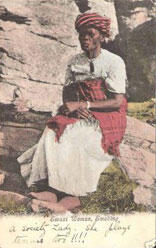
Nelspruit lies in the Lowveld, in the valley of the Crocodile River just below the great eastern escarpment of the Transvaal. Long before it acquired a…
 Place
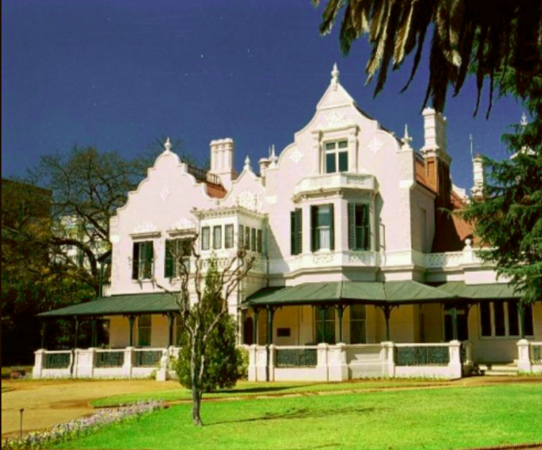
PlaceMelrose House, Jacob Mare Street, Pretoria
George Heys, a young man from Durban, made his fortune in the diamond rush in Kimberley by establishing a successful coach transportation business that…
 Event
EventThe First Draft of the Constitution is published
In January 1995 an advertising campaign was launched to elicit public views on what should be in the Constitution. On 19 September the first consolidated draft…
 Place
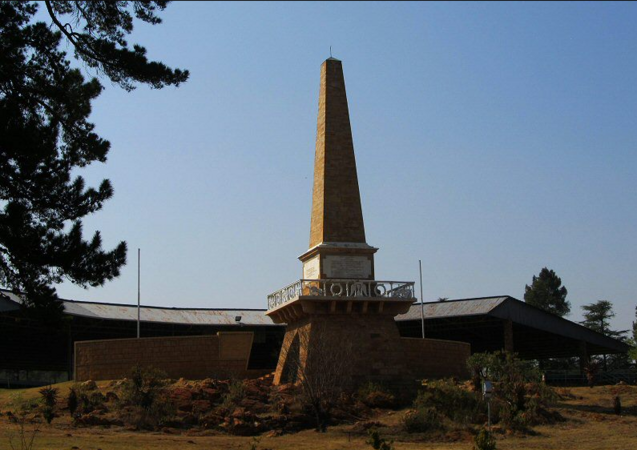
PlacePaardekraal Monument, Market Street, Krugersdorp
It was declared a National Monument underold legislation on 6 April 1936. The monument was designed by Sytze Wierda who was the Zuid-Afrikaansche Republiek…
10 YEARS PROJECT
close Document 4 'Our Annual Conference - An Inspiring Gathering': report in the South African Worker 31 January 1929 The Seventh…
 Article
Sharpeville Timeline
16 December 1959 - At the annual African National Congress (ANC) conference, Chief Albert Luthuli declared that 1960 would be the "Year of the Pass", with a…
 Article
Passive Resistance Campaign Timeline
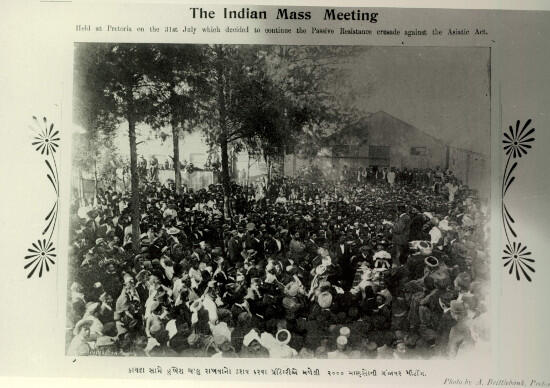
1906 11 September, A mass meeting of Indians took place at the Empire Theatre in Johannesburg in connection with the agitation at present going on in the…
 Article
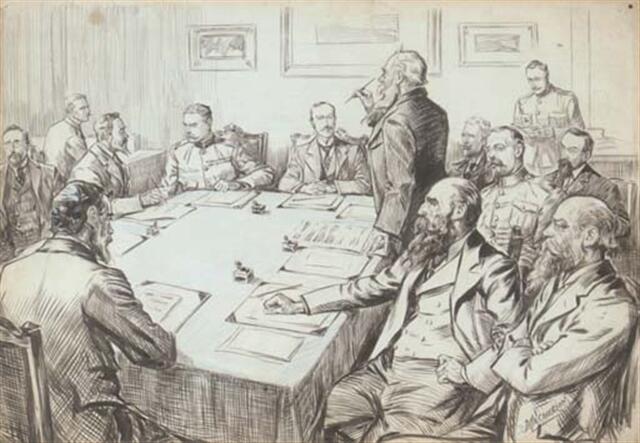
South African Constitutional Development Timeline 1902 - 1997
1902 31 May, The Peace Treaty of Vereeniging ends the Anglo-Boer War that began in 1899. The Treaty is signed between Boer and British leaders. 1908 12…
ANC statement on the death of Adelaide Tambo, 31 January 2007
It is with deep regret and a profound sense of loss that the African National Congress has learnt of the death this evening (31 January 2007) of Adelaide Tambo…
 Place
PlaceOld Pretoria Iron Mines Ltd Buildings, Iscor, Pretoria
The simple brick structure and its adjacent chimney contained the boiler and blower house of a blast furnace and formed part of the iron works established by…
 Article
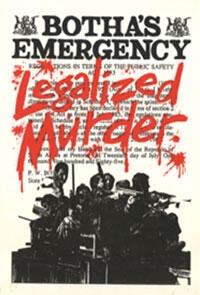
States of Emergency in South Africa: the 1960s and 1980s
One of the key instruments used by the apartheid government to neutralise political dissent was the State of Emergency (SOE). In periods when the government…
 Article
Sharpeville Massacre, 21 March 1960
At the annual conference of the African National Congress (ANC) held in Durban on 16 December 1959, the President General of the ANC, Chief Albert Luthuli,…
African People’s Organisation (APO)
By the beginning of the twentieth century a number of political organisations initiated by Coloureds existed, most of which dealt with the question of the…
 Article
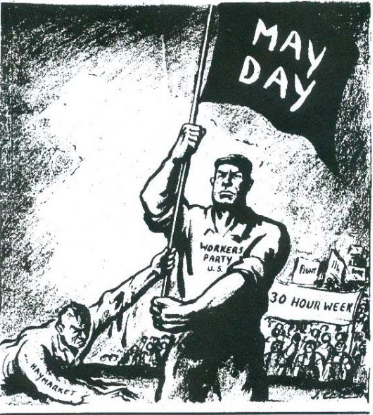
The History of May Day in South Africa
The struggle for a shorter workday, a demand of major political significance for the working class dates back to the 1800s. On 7 October 1884, the Federation…
Colonial conquest and resistance, Pre 1900
Several factors seemed to pave the way to apartheid, among them a colonial conquest, land dispossession, economic impoverishment, and exclusion from…
41. Statement of Indians to the Transvaal Constitution Committee, 1906
From the book: A Documentary History of Indian South Africans edited by Surendra Bhana and Bridglal Pachai At the time that preparations were being made…
Who was Khwezi? Here’s what we learnt during the Zuma rape trial by TMG Digital (Sowetan) ,10 October 2016
The woman who accused President Jacob Zuma of rape‚ Fezekile Ntsukela Kuzwayo‚ was from a family of political exiles whose life was spread across Zimbabwe‚…
![B J Vorster [John Vorster] portrait](/sites/default/files/styles/saho_medium/public/bio_pics/vorster_bj.jpg?itok=ySN_t7b3) Biography
BiographyB J Vorster [John Vorster]
Overview Balthazar Johannes Vorster (also known as BJ Vorster or John Vorster) was the Prime Minister of South Africa from 1966 to 1978, after having served…
 Article
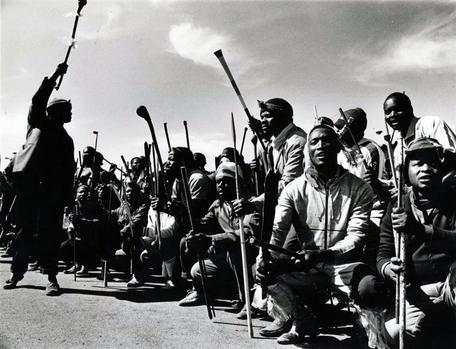
Boipatong massacre - 17 June 1992
On 17 June 1992 the Joe Slovo Informal settlement in Boipatong outside Vereeniging was attacked by a group of about 300 armed men from Kwa Madala Hostel in…
 Article
African National Congress Youth League (ANCYL)
The African National Congress Youth League (ANCYL) was established on 2 April 1944, by Anton Lambede (who became the League’s first President), Nelson Mandela,…
 Article
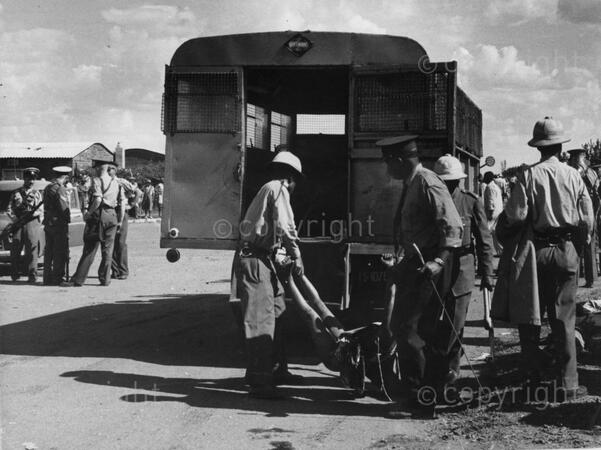
1960-1966: The genesis of the armed struggle
The 1960s marked an important watershed in South Africa's struggle against apartheid. The aftermath of the Sharpeville Massacre, in 1960, signalled the…
Chapter 10 - Sharpeville and its aftermath
From: Lessons of the 1950s By Richard Monroe, March-May 1984 Chapter 10 - Sharpeville and its aftermath In the early months of 1960 the PAC leadership launched…
The genesis of the armed struggle, 1960-1966
Introduction Sharpeville shortly after the shootings © Museum Africa. The 1960s marked an important watershed in South Africa's struggle against apartheid…
Dunbar, Thibedi, Sigamoney: Three figures in the IWW in South Africa by Red Jack (libcom.org), 08 January 2012
The Industrial Workers of the World (IWW, the Wobblies) was the main influence on the radical left in South Africa in the early twentieth century. But who were…