
SAHO global search
63,754 records
1. The whole Coolies petition the Durban Corporation for better wages
From the book: A Documentary History of Indian South Africans edited by Surendra Bhana and Bridglal Pachai 'The whole Coolies in this Barrack' wrote to the…
5. Muslims of Durban complain about the vexatious curfew law
From the book: A Documentary History of Indian South Africans edited by Surendra Bhana and Bridglal Pachai The Vagrant Law prevented Muslims in the borough…
76. The Indian people are an integral and permanent part of South Africa
From the book: A Documentary History of Indian South Africans edited by Surendra Bhana and Bridglal Pachai The South African Institute of Race Relations…
Introduction
From the book: A Documentary History of Indian South Africans edited by Surendra Bhana and Bridglal Pachai The first set of documents in Part II relates to…
66. G. M. Naicker: we will not collaborate
In 1946 the Government passed the Asiatic Land Tenure and Indian Representation Act (referred to as the 'Ghetto' Act in the next document). The Natal Indian…
72. The Defiance Campaign, 1952
A joint planning council of the African National Congress and the South African Indian Congress resolved to embark upon a mass campaign for the repeal of a…
 Archive
A Documentary History of Indian South Africans edited by Surendra Bhana and Bridglal Pachai
It is common knowledge that Indians came to South Africa in two categories, namely as indentured Indians and as 'free' or 'passenger' Indians. The former came…
59. The South African Federation challenges Congress over the settlement
From the book: A Documentary History of Indian South Africans edited by Surendra Bhana and Bridglal Pachai A convention was held in Johannesburg on 28-30…
54. South African Indian Congress: first annual report, 1924
From the book: A Documentary History of Indian South Africans edited by Surendra Bhana and Bridglal Pachai The South African Indian Congress was formed in…
63. Colonisation scheme: the colonial-born Indians respond - From the book "A Documentary History of Indian South Africans" edited by Surendra Bhana and Bridglal Pachai
From the book: A Documentary History of Indian South Africans edited by Surendra Bhana and Bridglal Pachai There had long been a feeling among some,…
19. Lawrence asks for exemption from discriminatory laws
From the book: A Documentary History of Indian South Africans edited by Surendra Bhana and Bridglal Pachai Vendenayagum Lawrence petitioned the Natal…
Chapter 1 - Introduction
Chapter 3 - Exploring the feasibility of negotiation
By 1985 the struggle for democracy in South Africa had intensified, and the country found itself on the brink of a potentially devastating civil war. The…
Chapter 7 - Defining the process
Codesa's first plenary session boosted the chances of a speedy resolution to South Africa's conflict and of substantive negotiation towards democracy. By now,…
Document 37 - The Bill of Rights
The original numbering, as it appears in the South African Constitution, has been retained here, hence it begins at Article 7. 7. RIGHTS 1. This Bill of…
Chapter 5 - Preparing to negotiate
It took nearly two years of formal talks to remove the obstacles in the path of multi-party negotiations. However, it was not until nearly ten months after…
Document 36 - The first hearing on certification: a summary of the judgment of the Constitutional Court
The COSATU Executive Committee met on Friday, 24 May 1996 in its second ordinary meeting of the year. Below are some of the decisions taken by the Executive…
Document 4 - ‘Our Annual Conference - An Inspiring Gathering’: report in the ‘South African Worker’
Dear Prime Minister, YOUR people more than any other section of the white community must surely know in the very core of their beings, if they were unaware…
The picture gallery of the negotiators
 Archive
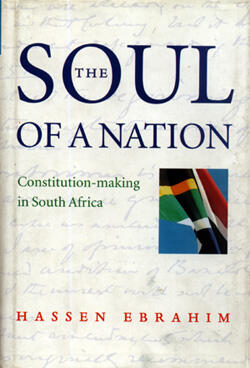
The Soul of a Nation
'Laws do not make a better society, people do ... it is crucial that the people of South Africa unite around a common respect for the Constitution' …
Chapter 8 - Negotiating an end to the deadlock
The deadlock was not about principle, but about political power: the power to determine the final constitutional dispensation. It also served to fuel the…
Document 5 - Programme of the Communist Party of South Africa adopted at the seventh annual conference of the Party
Q: Until the early 1960s, the tradition of resistance to apartheid was one of nonviolence. And [then] this idea of the armed struggle was considered by Mandela…
Document 27 - Record of Understanding
Presented to the Portfolio Committee: Justice Annexures available on the COSATU website at www.cosatu.org.za 1. Executive Summary of Recommendations The…
Chapter 2 - Historical Background
The new constitution was negotiated between May 1994 and October 1996 in the country's first democratically elected convention, the Constitutional Assembly…
Chapter 14 - Epilogue: lessons from the negotiating table
The new constitution is a celebration of the creativity of the South African people, for few, if any, other countries have been as successful in negotiating a…
Document 15 - ‘A document to create a climate of understanding’; Nelson Mandela to F. W. de Klerk
"Communique" by SASO, July 1969 For the first time after 1959, Non-White student leaders met at Stutterheim in July 1968. A need for contact, especially…
Document 11 - Second letter from Nelson Mandela to Hendrik Verwoerd
I REFER YOU TO MY LETTER of 20 April 1961, to which you do not have the courtesy to reply or acknowledge receipt. In the letter referred to above I informed…
Document 20 - Advance to national democracy: guidelines on strategy and tactics of the ANC
Declaration The conference took place against the background of the Government's adoption of GEAR, its impact on social spending and failure to create jobs,…
Part two: Schedule of documents
Document 28 - Negotiations: a strategic perspective
1. Bill of Rights A. Right to Strike The right to strike should specifically include the right to defend and promote social and economic interests of workers…