
SAHO global search
686 records
 Article
Rustenburg Timeline 1850-2001
1850 The Nederduitsch Hervormde Church (Nederduitsch Reformed Church) establishes a congregation in Rustenburg. 16 November, A Hervormde congregation is…
 Article
African Resistance Movement (ARM)
Origins One of the defining moments in the struggle against apartheid in South Africa was the Sharpeville Massacre and its aftermath. The heavy-handed…
 Article
Indian South Africans timeline 1654-1899
Indian South Africans Timeline: 1654-1899 1654 Slaves from India and South East Asia are introduced to the Cape. 1820 A number of Indians arrive in…
”Malan Cannot Succeed Where Hitler Failed”: Interview To , Cape Town, June 1950
"Never before in the history of South Africa have the national leaders acted so swiftly and with complete oneness of purpose in their determination to beat…
Report of the Joint Planning Council of the ANC and the South African Indian Congress, November 8, 1951
To the President-General and members of the Executive Committee of the African National Congress and the President and Councillors of the South African Indian…
 Article
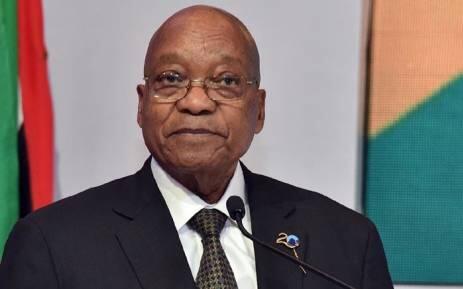
The Jacob Zuma Presidency - 2009 to 2017 (March)
Jacob Gedleyihlekisa Zuma ascended to the South African presidency on 9 May 2009 on a wave of popular euphoria fuelled by voters and fellow party politicians…
 Article
Rivonia Trial 1963 - 1964
Often referred to as "the trial that changed South Africa,” in October 1963, ten leading opponents of apartheid went on trial for their lives on charges of…
 Article
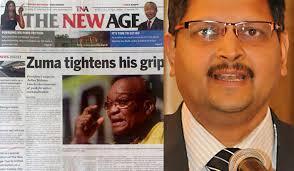
African National Congress Timeline 2011 - 2020
AFRICAN NATIONAL CONGRESS TIMELINE — 2011 – 2020 2011 8 January 2011 African National Congress (ANC) President Jacob Zuma delivers the traditional ANC…
 Article
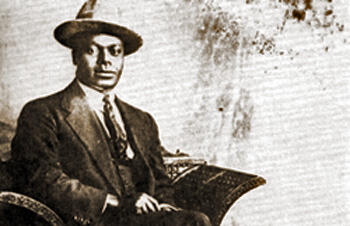
Nelson Mandela Timeline 1930-1939
1930 White women get the vote. This means in effect that the weight of the black vote is decreased from 3.1% to 1.4%. The first restrictions against the…
 Article
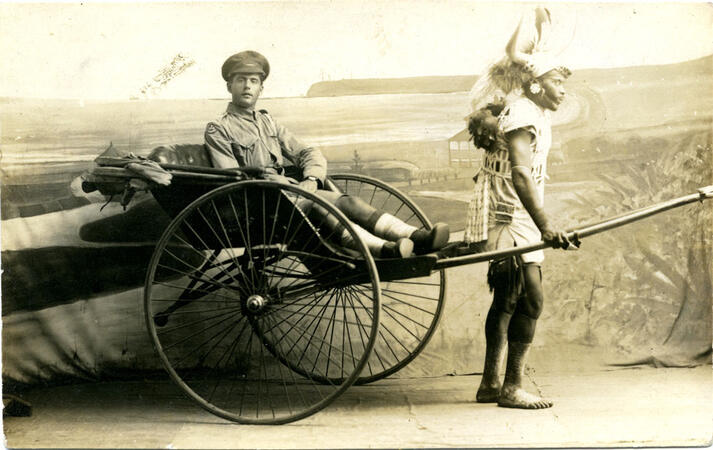
General South African History Timeline: 1920s
July, Industrial and Commercial Workers Union of South Africa (ICU) is established as national Black trade union in Bloemfontein. 11 September, Gerrit…
 Article
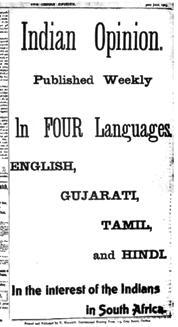
Indian South Africans timeline 1920-1929
1920 February, The Asiatic Inquiry Commission, headed by Sir Johannes Lange, is appointed to inquire into laws concerning the right of Asiatics to trade and…
'We Go To Action': Statement on the Launching In Natal of the Defiance Campaign, August 30, 1952
Natal through its accredited delegates whose stand was fully endorsed at the Conference of the African National Congress, Natal Branch, held in Durban on March…
Second World War and its impact, 1939-1948
South Africa enters the War General Smuts signing the agreement at the first meeting of the UN General Assembly. Source: P. Joyce (2000), Suid-Afrika in die…
 Article
HIV/Aids in South Africa timeline 1940s-2009
1940s The oldest Human Immunodeficiency Virus-2 (HIV-2) jumps from animals to humans, according to a Washington-based study in May 2003. Some sources say…
 Article
South African Constitution: The Bill of Rights
On 21 March, South Africa celebrates Human Rights Day. This day is a commemoration of the 1960 Sharpeville Massacre and how far the nation has come in the…
 Article
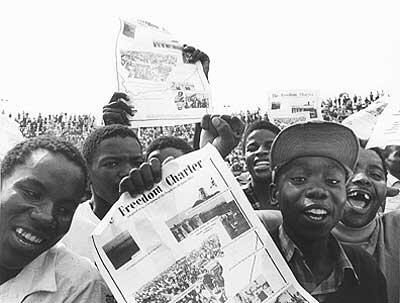
The Freedom Charter
Adopted at the Congress of the People, Kliptown, on 26 June 1955 We, the People of South Africa, declare for all our country and the world to know: that…
Township Uprising, 1984-1985
On 3 September the Tricameral Parliament opened in Cape Town while protest demonstrations began in the Transvaal, marking the start of the longest and most…
 Article
National Party (NP)
The first leader of the National Party (NP) became Prime Minister as part of the PACT government in 1924. The NP was the governing party of South Africa from…
 Article
Yusuf Dadoo Timeline: 1930 - 1939
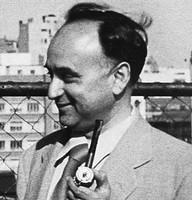
1930 October 5, The Asiatics Land Tenure (Amendment) Bill imposes segregation on Indians in the Transvaal. The South African Indian Congress meets at an…
 Article
Grey Street Complex timeline 1800-1999
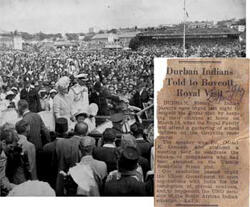
1854 15 May, The proclamation of the settlement of Durban into a Borough. The European population stands at 1,204. 1858 The Umzinto Sugar Company…
The African Resistance Movement (ARM): An Organisational History
OriginsOne of the defining moments in the struggle against apartheid in South Africa was the Sharpeville Massacre and its aftermath. The heavy-handed response…
A Brief History of Mali by US Department of State updated 01 October 2015
A Grand Heritage: Malians express great pride in their ancestry. Mali is the cultural heir to the succession of ancient African empires – Ghana, Malinké, and…
 Article
Afrapix Chronology 1981-1991
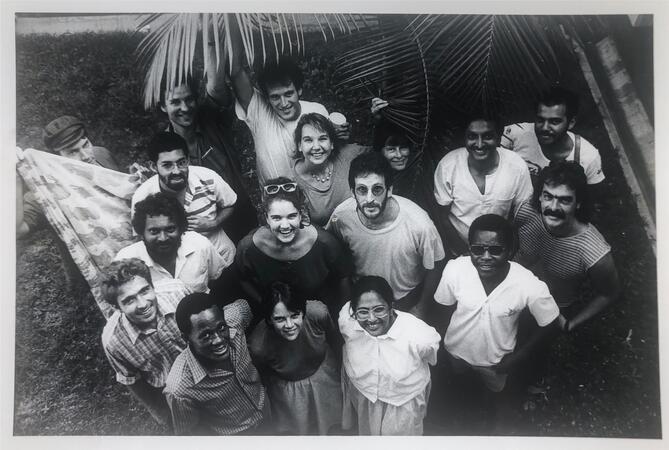
In the 1980s the National Party witnessed a renewed national and international pressure to initiate political reform. The Apartheid government accelerated its…
 Article
Cape Town Timeline 1300-1997
Photograph of a Khoisan lady. Source: unknown 1300-1599 c.1300-c.1500 The Khoisan are established as the dominant power in the southern and south…
 Article
The turbulent 1950s - Women as defiant activists
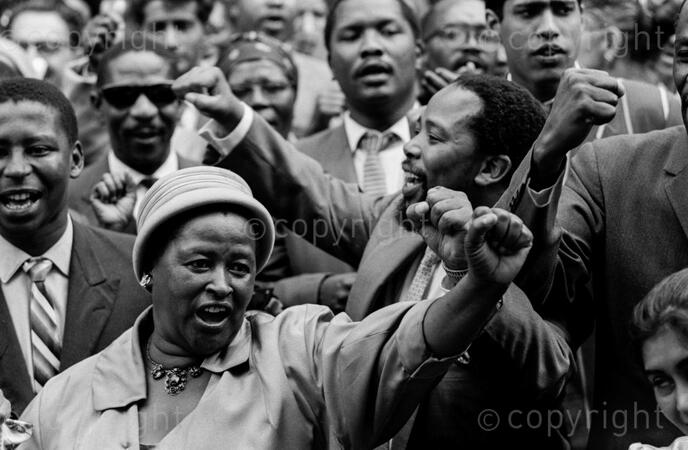
In the 1950s the government's increasingly repressive policies began to pose a direct threat to all people of colour, and there was a surge of mass political…
 Article
Timeline of State Action Against the Press in the 1960s
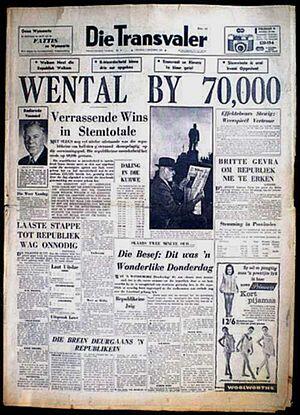
1960 Mar- Norman Phillips of the Toronto Star was detained 3 and '/2 days for trying to cable a story about a police attack on Nyanga, Cape Town. The report…
Armed struggle & the advancement of the student and labour movements, 1967-1976
Introduction MK Sabotage. This photograph was part of a sequence shot by a Rand Daily Mail photographer, two of which were published in the and Daily Mail of…
 Article
A Luta Continua Dialogues, Episode 1: Student Activism
Including Qondiswa James, Mbali Williams, Mihla Hanise, Anya Isabel, Kas and Hunter Hosted by Didintle Ntsie Filmed 5 September 2020 Broadcasted 6…
 Article
Yusuf Dadoo Timeline: 1960 - 1969
Yusuf Dadoo Timeline: 1960 - 1969 1960 March 16, The Boycott Movement, in London, is renamed the Anti-Apartheid Movement (AAM). Tennyson Makiwane, Vella…
Colonial history of Polokwane
When the Voortrekkers arrived in the region, they set up settlements in various locations. One of the earliest settlements, in 1836, was in the Zoutpansberg,…