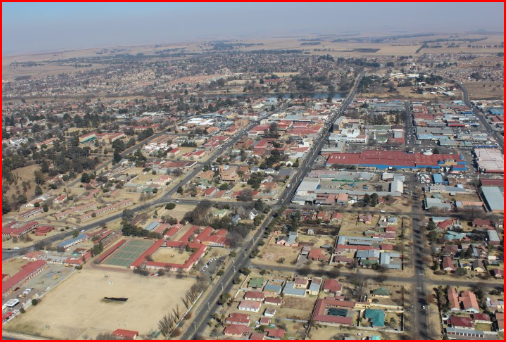
Ermelo is in the Gert Sibande District in the Mpumalanga province of South Africa. It is part of the Msukaligwa Local Municipality within that district. Ermelo played a pivotal role in South Africa’s liberation struggle as it was a stop over for the ANC’s Umkhonto we Sizwe members who were travelling to Swaziland and Mozambique, and it also experienced forced removals during the 1960's. But the surrounding region is also brimming with cultural, natural and geographic attractions.
During apartheid more than three million households were subject to forced removals, evictions and relocation. "This experience is deeply ingrained in the memory of many of the effected South African's!" Relocation affects people directly and frequently results in loss of income, increased cost of living and disruption of social links that provide insurance and support for people where incomes are low or irregular.
The ruins of Nyebe settlement, also referred to as: 'the District Six', of Mpumalanga Province. Is found just a few minutes south of Ermelo city centre, near the current settlement of 'New Ermelo' or Ext. 44. Nyebe was a non-white community of thousands of residents who were forcibly displaced by the apartheid government. Today, all that remains of the Nyebe are house foundations overgrown with grass, dried up water wells, stairs that lead to nowhere and a turned over stone pillar from a shop that faced the main through road. Various artifacts have been discovered in the area and one can walk between the outlines of houses, along streets that are no more, to the imagined sounds of playing children. While little is known about the Nyebe, save for the stories that a few surviving community members and their children relate; the ruins tell the story of forced removals that occurred across South Africa during apartheid. This non-white community of thousands of people was razed to the ground in the 1960's after it was reclassified a whites only area, according to the 1950 Group Area’s Act. This was done upon the request of the white farmers who had to drive through the community on route to their properties. The settlement was also rumoured to shelter members of Umkhonto weSizwe – the African National Congress’ (ANC) military wing – who were travelling from Johannesburg to Swaziland and onwards to Mozambique.
"The white farmers reported excessive movement and target shooting practise in Nyebe after nightfall."
The community was relocated to an old portion of Ermelo called: 'Wesselton Ext2', six kilometres away. This had been demarcated as a black area by the apartheid government. Many community members moved back to the area and used the bulldozed bricks to rebuild their houses on the remaining foundations, but within a year of their return, the Department of Bantu Affairs knocked everything down again. This time the apartheid government transported the bricks to the otherside of the valley, to make them difficult to access. The area seemed forgotten until recently, as a handful of children of former community members are moving back to the area after successful land claim bids through the Commission on Restitution of Land Rights.
Cenotaph Msukaligwa is a significant memorial dedicated to the heroes and heroines of the anti-apartheid liberation struggle from the Gert Sibande District. It is located at 113 Koolbank Street, Central Ermelo city centre. It honours all those liberation heroes and heroines from the Gert Sibande District Municipality, who fought for racial equality in the liberation struggle. Their names have been inscribed in stone, so that we never forget the immensity of their personal sacrifice. The cenotaph is located near the World War II memorial.
The region also has much to boast about in terms of cultural, natural and geographic attractions. Ermelo is often used as a base by those wanting to explore the surrounding region, such as the stone circle ruins of the Bakoni people near Machadodorp. The bushman rock art of the Sudwala Caves, also known as the 'La Rochelle Caves', are also a fascinating history lesson.