
New Age, newspaper and its' predecessors, The Guardian; Advance were founded by trade unionists, academics and and was known as a leftist publication. New Age was linked to the African National Congress and its' leadership. In 1954, Govan Mbeki joined the editorial board of New Age, together with Ruth First, Brian and Sonya Bunting and others. The articles and columns in New Age reflected the conditions of the Black people, including Indians and Coloureds of South Africa and showcased the reality of apartheid focusing on the socio-political and economic conditions with some articles covering fiction, poetry and sport. Some items that made "front page" were, the Treason Trial; revolts at Zeerust and Sekhukhuniland; Group Areas and the protests by Indians; Banning of the newspaper and political organisations; coverage of those activists abroad who were exiled; women demonstrating against the pass-laws; workers and their demands for better working conditions and wages. The leaders used their writing skills to document the state of South Africa, it's people, and their sufferings for the common struggle for liberation and freedom.
archiveREF R-0113780Verified
Archive record
New Age
- Updated
- 22 Feb 2016
South African History Online. (2016, February 22). New Age. South African History Online. https://sahistory.org.za/xh/ref/R-0113780
South African History Online (2016) 'New Age', South African History Online, 22 February. Available at: https://sahistory.org.za/xh/ref/R-0113780 (Accessed: 22 July 2026).
South African History Online, New Age [website], https://sahistory.org.za/xh/ref/R-0113780, (accessed 22 July 2026).
"New Age." South African History Online, 22 Feb. 2016, https://sahistory.org.za/xh/ref/R-0113780. Accessed 22 July 2026.
South African History Online. "New Age." South African History Online. February 22, 2016. https://sahistory.org.za/xh/ref/R-0113780.
Further reading
 Article
DISA Archive
DISA is a freely accessible online scholarly resource focusing on the socio-political history of South Africa,...
 Archive
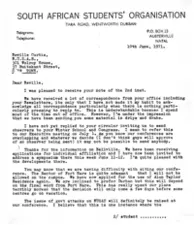
Letter from Barney Pityana to Neville Curtis
Letter from Barney Pityana (President, SASO) to Neville Curtis (NUSAS) regarding NUSAS and SASO relations.
 Archive
Apartheid's Sporting Afterlife by Clark Easey
Apartheid’s Sporting Afterlifeby Clark Easey · Eleven Named PeopleThe challenge facing South African sport is no...
SAHO is free because readers fund it. Donate →