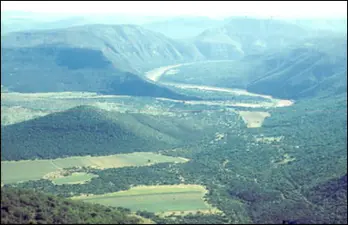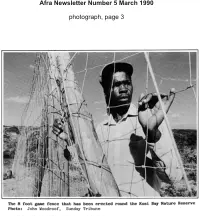
This Reserve lies East of the Sunday's River and North of Port Elizabeth. In about 1931, about 680 ha. was enclosed to form the Addo Elephant National Park. The name is of Khoikhoi origin and means 'poison ravine', named after the succulents which grow there.
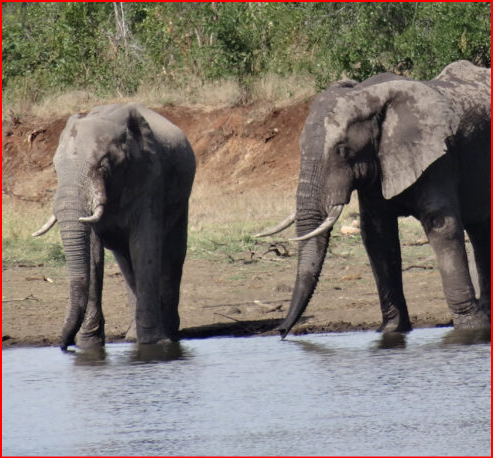
The male African Elephant are the largest extant terrestrial animal and can reach a height of 4 m and weigh over 7 000 kg. All elephants have several distinctive features, the most noticeable being the long trunk or proboscis, used for many purposes particularly breathing, lifting water and grasping objects. Their incisor teeth, grow into tusks which can serve as weapons or tools for moving objects and digging. Elephants' large ears flap, to help control their body temperature. Their pillar-like legs can carry their great weight! Elephants are herbivorous and can be found in different habitats including savannahs, forests, deserts and marshes. (They prefer to stay near water, ie. the Sundays River!)
Unfortunately, one of the biggest threats to the elephant Population is the Ivory Trade. These animals are illegally poached for their tusks!
The Addo project is in line with SANParks’ Green Energy Strategy that envisages saving energy on the demand side and replacing fossil fuels on the production side through the use of renewable energy. They are converting boreholes from diesel generators to solar power, using solar to power staff accommodations, and have a biofiltration system for grey water recycling. The park is also working on a larger project to make its main camp completely off-grid using solar power.
11 July 2025 -SANPARKS NEWS-
"Addo Elephant National Park’s Lion Genetics Receive A Boost With The Introduction Of Two New Males
Two male lions, previously from the: 'Twee Revieren' section of Kgalagadi National Park, now call Addo Elephant National Park (AENP) in the Eastern Cape home. The two, estimated to be around seven years-old, have been acclimatising to their new conditions in a 'boma'-(In South Africa, a boma typically refers to an enclosed outdoor area, often with a fire pit, used for social gatherings and dining, particularly in the context of safari lodges and game reserves. The term originates from Swahili and historically denoted a fortified enclosure for livestock, but it has evolved to represent a space for communal meals and storytelling), in AENP for the past few weeks. They were released yesterday (10 July 2025) and early indications are that they are settling well into the landscape. Their arrival follows close on the heels of the introduction of two lionesses into the Park at the beginning of March. The two-and-a-half year-old sisters were brought in from the:'Khamab Kalahari Reserve', on the South-Eastern edge of the Kalahari. The new sets of genes are a valuable addition to the lion population in the Park, as they bring with them strong, healthy genes that will add to the genetic variety in the Park. There are now nine lions in the main game viewing area and a further three in what is known as the Nyathi section of Addo.
The two males are collared for ease of monitoring and so that the rangers and researchers can observe what habitats they use, their proximity to the other lions, other predators and which species they prey on. The collars will also enable management to reach a fine balance of managing the lion population carefully in relation to the size of the park and their impact on prey species. Their management forms part of a larger initiative to mimic natural processes that regulate lion social behaviour and population growth, which includes swapping individuals between parks to ensure constant introduction of new genes. At the same time two older males, known as: 'Niklaas' and 'Witwarm', were darted and moved to Mountain Zebra National Park outside Cradock. The two are first settling in an enclosure, inside the park before released."