
SAHO global search
2,117 records
 Place
PlaceA History of Ottosdal and Letsopa
… only. In his letters from Robben Island, Ahmed Kathrada notes that his relatives, the Kola family, were removed from …
 Archive
Soldiers without reward- Africans in South Africa's wars
Military History Journal Vol 10 No 1 - June 1995 (incorporating Museum Review) SOLDIERS WITHOUT REWARD Africans in South Africa's Wars by J S Mohlamme …
 Archive
1990 - President De Klerk: State of the Nation Address, 2 February 1990
Mr Speaker, Members of Parliament. The general election on September the 6th, 1989, placed our country irrevocably on the road of drastic change. Underlying…
FW de Klerk’s speech to Parliament, 2 February 1990
Mr Speaker, Members of Parliament. THE GENERAL ELECTIONS on September the 6th, 1989, placed our country irrevocably on the road of drastic change. Underlying…
 Article
Life Timeline of Jacob Zuma
1942 12 April, Jacob Gedleyihlekisa Zuma is born in Nkandla in northern KwaZulu-Natal. 1958 Zuma joins the African National Congress (ANC) and through…
 Article
Grade 7 - Term 1: The Kingdom of Mali and the City of Timbuktu in the 14th Century
Timbuktu, French Tombouctou, is a city in the western African country of Mali. Often used as a popular term to describe a distant and mystical place, the city…
The Battle of Square Hill
Participation as combatants in the First World War was reserved for men of “European descent”. [i] According to Article 7 of the South African Defence Force…
 Article
Pass laws in South Africa 1800-1994
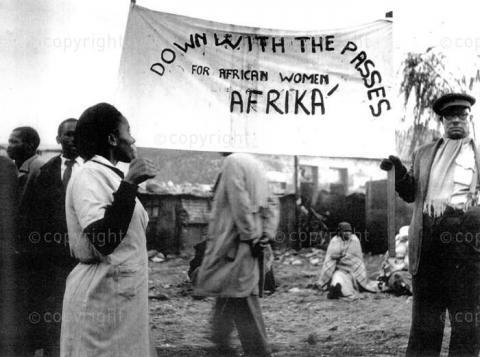
Slaves at the Cape were forced to carry passes. This made it easier for their owners and the local authorities to control their movements. The first time Pass…
Document 119 - Non-European United Front of South Africa, Minutes of Conference held in City Hall, Cape Town, 8 to 10 April 1939
From: South Africa's Radical Tradition, a documentary history, Volume One 1907 - 1950, by Allison Drew The Conference was formally opened in the City Hall, on…
 Article
The Contentious Relationship Between Ngqika And Ndlambe
Introduction King Ngqika and Prince Ndlambe led the Rharhabe people of the Amaxhosa in the early 19th century. Their relationship is of significance regarding…
 Article
African National Congress Timeline 1940-1949
In the 1940s the ANC rejuvenated itself and began to work more closely with the SACP, putting behind the antagonistic relationship between the two parties in…
 Article
Indian South Africans: 1924-1948 Legislation and Segregation
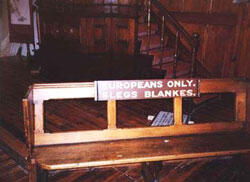
Contents Introduction The concept of segregation Discriminatory legislation up to 1924 Political Legislation Economic Legislation Legislation regarding…
 Article
Women’s resistance in the 1960s - Sharpeville and its aftermath
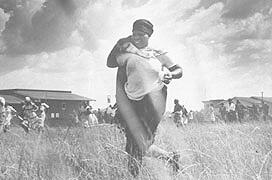
As the 1950s gave way to the 1960s the African National Congress (ANC) and Pan Africanist Congress (PAC) both announced plans to tackle the pass laws for…
Gender and deviance in South African industrial schools and reformatories for girls, 1911-1934 by Linda Chisholm
From the book: Women and Gender in Southern Africa to 1945 edited by Cherryl Walker Between 1926 and 1934 waves of 'insubordination', 'defiance' and 'riots'…
Statement by Oliver Tambo at the plenary meeting of the United Nations General Assembly, 09 November 1982, New York
Defeat those who subvert United Nations Decisions Four days ago, in commemorating the twentieth anniversary of its singularly important decision calling on…
INDIAN SLAVES IN SOUTH AFRICA: A little-known aspect of Indian-South African relations by E. S. Reddy
The visit of Nelson Mandela to India may be an appropriate occasion to recall a little known but significant aspect of relations between India and South Africa…
72. The Defiance Campaign, 1953
From the book: A Documentary History of Indian South Africans edited by Surendra Bhana and Bridglal Pachai A joint planning council of the African National…
66. G.M. Naicker: We will not colloborate
From the book: A Documentary History of Indian South Africans edited by Surendra Bhana and Bridglal Pachai In 1946 the Government passed the Asiatic Land…
14. Suicide among indentured labourers
From the book: A Documentary History of Indian South Africans edited by Surendra Bhana and Bridglal Pachai By far the largest number of Indians (152 184 in…
Tribute to the United Nations Special Committee Against Apartheid - Statement at the Meeting of the Special Committee on its Tenth Anniversary by O. R. Tambo, New York, 2 April 1973
Mr. Chairman, Sir, Distinguished representatives, Today, we, black and white, peoples of many nationalities and continents, representatives of different…
Speech on the Occasion of Installation as the Chancellor of the University of Fort Hare and on being Awarded the Honorary Degree of Doctor of Laws by O. R. Tambo, 19 October 1991
The Chairman of the Council,(2) Mr. Vice-Chancellor,(3) Members of the University Council, Members of the Senate and Heads of Departments, Members…
The Role Of The Indian People In The South African Revolution: An Interview In 1968
QUESTION: Dr. Dadoo, you have just published a leaflet which is the first public call you have made to the Indian people since you left South Africa in 1960…
Address to CODESA by comrade Nelson R. Mandela, President of the ANC 20 December 1991
Chief Justice and Joint Chairpersons; Leaders of Political Parties and Movements; Distinguished Observers from International Organisations; Members of the…
Address of the President of South Africa, Thabo Mbeki, on the occasion of the 100th Anniversary of Mahatma Gandhi’s Satyagraha, Durban
Programme Director, Your Excellency, the Prime Minister of India, Manmohan Singh, And esteemed members of the Indian delegation, Ministers and Deputy…
Document 109 - G. H. Gool and J. A. La Guma, “Appeal of the National Liberation League for a National Convention of the Subject Peoples of South Africa”, The Liberator, September 1937
From:South Africa's Radical Tradition, a documentary history, Volume One 1907 - 1950, by Allison Drew FELLOW NON-EUROPEANS, Business men, Professionals,…
Nelson Mandela The World Celebrates the Mandela’s
Introduction Winnie's banning order expired in September 1975 and thirteen years of silence was broken. She was in a sense pulled back from the dead. Durban…
14. Suicide among indentured
By far the largest number of Indians (152 184 in all by 1911) who came to South Africa were indentured. Among the many problems that faced them, and apparently…
66. G. M. Naicker: we will not collaborate
In 1946 the Government passed the Asiatic Land Tenure and Indian Representation Act (referred to as the 'Ghetto' Act in the next document). The Natal Indian…
72. The Defiance Campaign, 1952
A joint planning council of the African National Congress and the South African Indian Congress resolved to embark upon a mass campaign for the repeal of a…
Chapter 17. Afrikaner Nationalism and the Workers - Garment Workers in Action by E. S. Sachs
Few people, including most English-speaking South Africans, know anything at all about the Afrikaner people, their history and their national aspirations. Yet…