
The name being of Zulu origin derived from 'insquthu'- meaning a flat-topped vessel, descriptive of a nearby hill from which the village takes its name. It is 53 km East of Dundee. Most of the population is Black , 97.89% and therefore the first language is Zulu. The women are the predominant gender, 57.29%, because like in most villages of South Africa, the men venture off to cities, to find work and support their family. The Population in 2011 was 5453, over an area of 5.31km squared.
placeREF P-0125243Revised
Place record
Nqutu, Kwa-Zulu Natal
- Updated
- 18 Apr 2019
How we know this
- 01New Dictionary of South African Place Names by Peter E. Raper
- 02https://census2011.adrianfrith.com/place/575050
Last updated · 18 Apr 2019
South African History Online. (2018, August 13). Nqutu, Kwa-Zulu Natal. South African History Online. https://sahistory.org.za/ref/P-0125243
South African History Online (2018) 'Nqutu, Kwa-Zulu Natal', South African History Online, 13 August. Available at: https://sahistory.org.za/ref/P-0125243 (Accessed: 24 September 2026).
South African History Online, Nqutu, Kwa-Zulu Natal [website], https://sahistory.org.za/ref/P-0125243, (accessed 24 September 2026).
"Nqutu, Kwa-Zulu Natal." South African History Online, 13 Aug. 2018, https://sahistory.org.za/ref/P-0125243. Accessed 24 Sept. 2026.
South African History Online. "Nqutu, Kwa-Zulu Natal." South African History Online. August 13, 2018. https://sahistory.org.za/ref/P-0125243.
Further reading
 Article
Brenda Fassie’s 1997 hit song Vulindlela still raises questions about South Africa as a nation
In 1997, South Africa’s most famous music star had a huge hit. Brenda Fassie’s Vulindlela became a national pop...
 Place
Place
KwaZulu-Natal Literary Trails (under Heritage Routes)
Kwa-Zulu Natal has a diverse literary heritage, from the legacy of prominent Indian writers and political figures in...
 Article
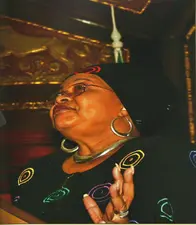
Ambassador Lindiwe Mabuza and her connection with Scotland: An Appreciation by Brian Filling
Born in South Africa in 1938, she spent much of her life in exile from apartheid South Africa at college in Lesotho,...
 Place
Place
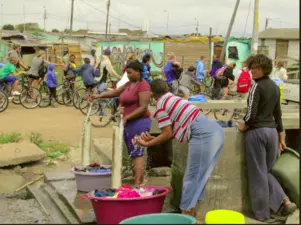
Langa Township, Cape Town
Development of Langa locationIn the course of the Inter War Years the regulations of the 1902 Location Act were...
 Place
Place
Gansbaai, Overberg
World-renowned as the ultimate destination for diving with Great White Sharks and “game-viewing” of the Marine Big...
SAHO is free because readers fund it. Donate →