The Knysna Forest has a rich history spanning thousands of Years, from indigenous use to colonial exploitation and modern conservation.
Indigenous people who lived here in prehistoric times and up to pre-Colonial days are known as :'The Southern Cape Hessequa'. (They're better described as a ‘Khoikhoi Community, OR Hottentots'.) The Hottentots all appear to have utilised the forests resources in a more-or-less sustainable way. However that changed when the Cape was settled by Colonists, of course – because they brought modern commerce with them, which needed enormous quantities of timber for construction, tools, and furniture. The Knysna Forests was then over harvested from the early 1800's until 1939, when the government put a stop to logging altogether!
The Knysna Forests is South Africa's largest forest complex covering about 568 square kilometers. Archaeological evidence shows human presence in the Southern Cape dating back to the Earlier and Middle Stone Ages. The Khoi-khoi or Hottentot people named the region with terms reflecting their relationship with the forest, such as Knysna, meaning "ferns," and Hessequa, meaning "Men of the Trees". These early inhabitants lived lightly on the land, utilizing forest resources sustainably for food, shelter, and cultural practices.
European interest in the Knysna Forest began after the Dutch East India Company (VOC) established a Colony at Cape Town in 1652, seeking timber for construction, fuel, and shipbuilding. The first colonialist farmer in Knysna: 'Stephanus Terblanche', established the: 'Melkhoutkraal Farm', in 1770. This included the Knysna Lagoon Basin. 1802, settlement was disrupted because of the De Poort Massacre, during the Third Frontier War. This delayed colonization. George Rex, arriving in the early 1800's, became a prominent figure in Knysna, expanding timber harvesting and farming operations. The forests were heavily exploited for timber from the early 1800's, with species like yellowwood, stinkwood, and ironwood being harvested for furniture, tools, and construction. The logging industry peaked in the late 19th and early 20th Centuries.
Gold Rush and Economic Development-
In 1878, a gold nugget discovery in the Millwood Forest, briefly sparked a gold rush. However, the gold deposits were insufficient and the mining industry collapsed, leaving Knysna to develop around timber and agriculture!
By 1939, the South African Government intervened to halt indiscriminate logging, recognizing the ecological importance of the forests. Since 2009, much of the Knysna Forest and the Knysna Lagoon have been incorporated into the Garden Route National Park, a network of protected areas spanning over 160,000 hectares. Today, the forest is celebrated for its biodiversity, including rare species like the Knysna Seahorse, Knysna Goby, and the Knysna Loerie (AS SHOWN IN PICTURE), as well as large mammals such as elephants and leopards.
Ecological Significance-
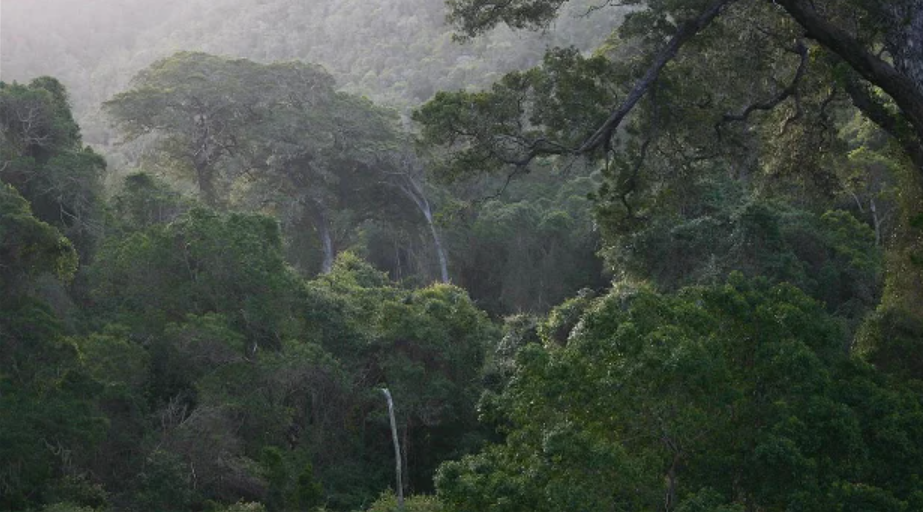
The Knysna Forest is characterized by nutrient-poor, acidic soils and a variety of indigenous tree species, including yellowwood, stinkwood, and ironwood. Rainfall, ranging from 525 mm to 1,220 mm annually, is a key factor in sustaining the forest ecosystem. The forest remains a vital ecological and cultural landmark, attracting visitors for its natural beauty, wildlife, and historical significance.
The Knysna Forest thus represents a unique intersection of natural richness and human history, from early indigenous stewardship to colonial exploitation and modern conservation efforts.