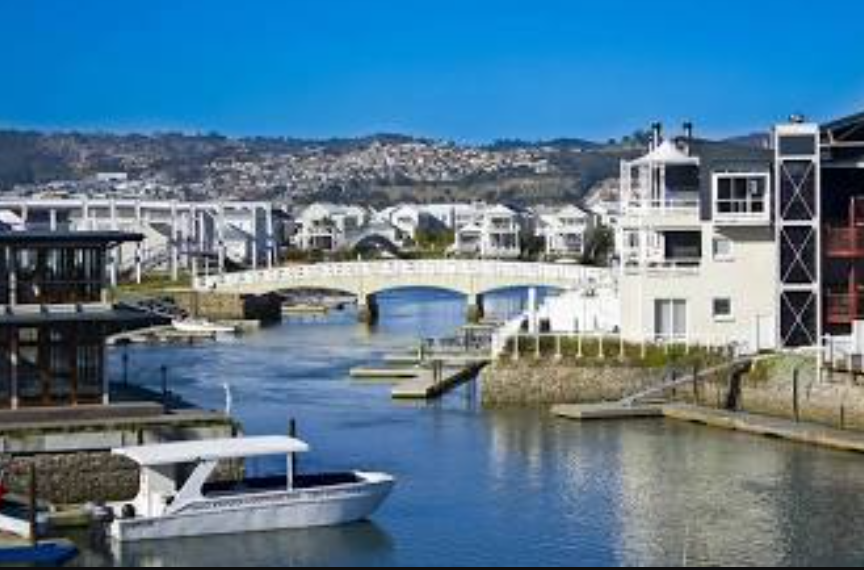
It was to this island that much of the timber harvested from the Knysna Forest came and it was shipped off again to Cape Town and points East to feed theCape Colony’s need for wood.
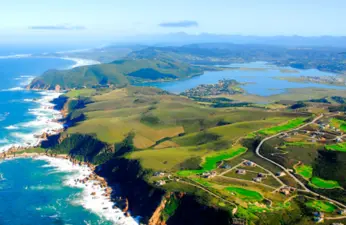
Thesen Islands is steeped in the History of the Southern Cape. It is situated in the midst of the tranquil waters of one of the richest ecological estuaries in South Africa – home to the rare and endangered Knysna sea horse, 'Hippocampus Capensis'.
Legend has it that the San or Bushmen, were the earliest inhabitants of the island. Later, settlers made this Area their home, drawn by the rich indigenous Forests where herds of the indigenous Knysna elephant roamed. The island became known as Paarden Island – ‘Horse Island’.
The name Thesen, has its origins in faraway Norway. In July 1869, Arndt Leonard Thesen, a prominent timber merchant from Stavanger in Norway. Left his hometown with his wife and nine children, planning to start a new life in New Zealand. After their ship, the 'Albatross', ran into difficulties near Cape Town, Arndt Thesen decided to stay on in South Africa. The Thesen's settled in the picturesque Town of Knysna, surrounded by indigenous Forests. This is where they started a timber trading company. In 1904 his son Charles Wilhelm Thesen bought Paarden Island, located in the Knysna River estuary. In 1922 he established a timber processing plant on the island, which soon became known as: 'Thesen Island'.
In the early 1980's Barlows, one of South Africa’s industrial conglomerates, purchased the island and its timber treatment plant from: 'Thesen and Company'. Barlows soon realized that the timber processing activities could not be continued on this island located in the midst of such a scenic and eco-sensitive Lagoon. At the same time there was growing community concern about the environmental and industrial pollution caused by the factory’s activities. As a result the plant’s doors were finally closed!In the ensuing years the abandoned derelict buildings, machinery and waste dumps increasingly turned into an eyesore and a health hazard.
In 1991, Dr. Chris Mulder a South African environmental engineer, who received his doctorate in environmental design in Houston- USA, proposed a complete redevelopment of the island into a unique residential marina. As the Knysna River Estuary is one of the most sensitive ecosystems in the country and a major tourism attraction, the development of Thesen Islands called for an extremely careful and sensitive planning covering: 'ecological, architectural, engineering, aesthetic, social and cultural criteria'. After eight years of research and planning by Dr. Mulder and his team, approval was finally granted in December 1998 – but with over one hundred strict and complex conditions! In all, ten years passed from initial concept to final approval, involving twenty-five alterations to the master plan. One of the hurdles that Dr. Mulder and his team had to overcome was the isolation and protection of the Area previously used for 'pole treatment'. This resulted in the acknowledgement of the Core Contaminated Zone (CCZ), a portion of Erf 13840, Knysna, as depicted and defined in the Thesen Island Parkland Trust Deed.