The town is home to the region's main hospital despite the capital of the Kunene region now being located in Opuwo. (LINK IN FURTHER READING)
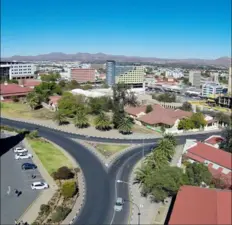
Located to the north-west of Namibia's capital city; Windhoek on the C39 road west of Outjo. Khorixas is a small rustic town home to around 6 000 inhabitants, the region was once the capital of the Damaraland Bantustan and most of the people living here today are from the Damara ethnic group.
"Khorixas is the ideal town to use as a short stop over to refuel, have a light lunch and then continue on to the next destination!" While the town may be fairly nondescript, the surrounding area is ideally positioned for those wanting to visit some of the interesting attractions in the area. Its close proximity to the main attractions allows one to visit in the morning before the sun becomes too hot. The main attractions in the area include: 'Twyfelfontein; Brandberg; the Petrified Forest and Burnt Mountain and Organ Pipes'. (LINK PROVIDED IN FURTHER READING)
Twyfelfontein was Declared Namibia's first World Heritage Site in 2007, Twyfelfontein is located 430 kilometres (267 miles) from Namibia's capital city; Windhoek, 300 kilometres (186 miles) from Otijwarongo and just 99 kilometres (61.5 miles) from Khorixas [link to each of the towns] in the northern region of Namibia.
The site is named after a nickname the locals gave to a topographer that came to the area to study the feasibility of farming in the region in 1947. The story of the region is centred around David Levin, the topographer. He rediscovered a spring that ran through the area but was unable to get enough water from it to sustain his family and herds of animals. David soon began to have doubts about the capacity of the spring, and this led a local farmer nicknaming him David Twyfelfontein. 'Twyfel' means 'questionable' or 'uncertain' in Afrikaans. Thus his nickname meant: David 'Doubts-the-Spring'. David Levin later purchased the land in 1948 and gave it the name Twyfelfontein.
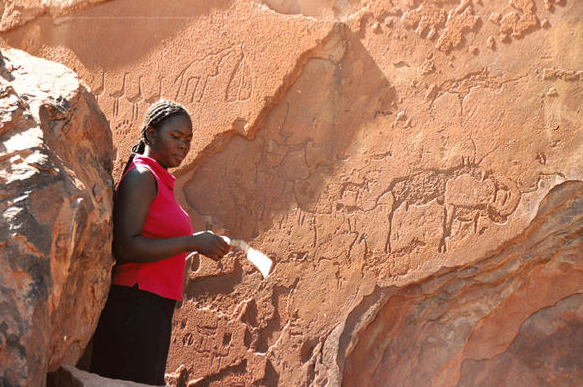
Situated 100 kilometres (62 miles) from the sea, in an area where the Namib Desert becomes Damaraland and the scenery changes from dry red sands to lush waving grassland, one will find a broad valley that stretches out across the sandstone plateau. It is here that Twyfelfontein and the incredible rock engravings are found. (AS SHOWN IN PHOTO)
While rock engravings are found all over the world, although mostly in Africa; the rock art engravings at Twyfelfontein are the largest and are considered the most important concentration of rock art in Africa, with over 2 500 petroglyphs in a variety of different styles, being found here, (this is another name for rock carvings or rock art). The engravings were first discovered before 1914 by Reinhardt Maack who later published a report in 1921 which brought a lot of attention to the site, and many visitors. The difference between these engravings and the rock paintings one often sees, is that rock paintings are usually found in rock shelters or in caves while these engravings are found in the open air.