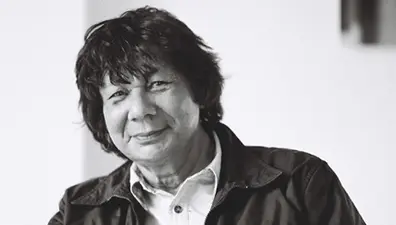
“Art is the spark, the illumination which is socially significant for it brings about understanding.”
Jan Gerard Sekoto was born on 9 September 1913 in Botshabelo. Botshabelo was a mission station established by the German missionaries amongst the Pedi community in the Middelburg district of the Transvaal.
How we know this
01Manganyi, N.C. (1996). A Black Man Called Sekoto, Johannesburg: Witwatersrand University Press.
02Anonymous pamphlet, (2003?). ‘About Gerard Sekoto’s music’, (advertising the playing of his music, at the Pretoria Art Museum on the 10th anniversary of his death, by The Blue Heads, a group of 9 musicians managed by Barbara Lindop, one of Sekoto’s biographers)
03Sack, S. (1988). The Neglected Tradition, Johannesburg: Johannesburg Art Gallery.
04Gerard Sekoto: SA\'s artistic icon, 3 June 2004 [Accessed 12 March 2009]
05Gerard Sekoto: The townships of Paris [Online]: Available at: culturebase.net profile [Accessed 12 March 2009]
06Gerard Sekoto mural unveiled in Sophiatown - Lucille Davie, October 6, 2004
Last updated · 20 Jul 2026
Cite this entry
South African History Online. (2011, February 17). Jan Gerard Sekoto. South African History Online. https://sahistory.org.za/nso/ref/B-0009013
South African History Online (2011) 'Jan Gerard Sekoto', South African History Online, 17 February. Available at: https://sahistory.org.za/nso/ref/B-0009013 (Accessed: 22 July 2026).
South African History Online, Jan Gerard Sekoto [website], https://sahistory.org.za/nso/ref/B-0009013, (accessed 22 July 2026).
"Jan Gerard Sekoto." South African History Online, 17 Feb. 2011, https://sahistory.org.za/nso/ref/B-0009013. Accessed 22 July 2026.
South African History Online. "Jan Gerard Sekoto." South African History Online. February 17, 2011. https://sahistory.org.za/nso/ref/B-0009013.