1884
Otto von Bismarck chairs the Berlin Conference to stem the scramble for Africa. Only Morocco, Ethiopia, and Liberia are recognized as independent entities.
1884
Partition of West Africa and East Africa
1896
Ethiopia, under Emperor Menelik II, defeats invading Italian army in the Battle of Adwa.
1896
Lumière brothers' demonstration of projected moving photographic images in Alexandria.
1897
British punitive expedition to the Kingdom of Benin sacks and burns down the city, loots its artworks and artifacts, and exiles the Oba of Benin to Calabar
1898
Enoch Sontonga composes Nkosi Sikelel'i Africa, which later becomes the pan-African national anthem in South Africa during apartheid and, thereafter, part of the new South African national anthem.
1898
British conquest of Sudan
1900
Henry Sylvester Williams convenes the first Pan-African Conference
1900
French circus group projects the Lumière brothers' L 'Arroseur arrosé in Dakar.
1902
End of the Anglo-Boer Wars in South Africa.
1902
Gordon Memorial College, Khartoum, is founded and offers art lessons.
1903
Ama Onabolu establishes himself as a modern portrait painter in Lagos and is the first modern Nigerian artist.
1903
Ecole des Beaux-Arts, Cairo, is established.
1903
Herero revolt in Namibia against German colonial rule is brutally suppressed by German colonial troops; thousands are massacred.
1904
France consolidates its West African colonies into French West Africa.
1908
Prince Yousef Kamal founds the School of Fine Arts; Cairo.
1908
France establishes French Equatorial Africa.
1908
Tunisia becomes a French protectorate.
1910
Union of South Africa is formed
1912
African National Congress founded in South Africa as a political organization to defend the rights of disenfranchised blacks.
1913
Muhammad bin Abubakar publishes the epic poem Utendi wa Liiyongo Fumo (Epic of Liyongo Fumo) of the southeastern African oral tradition.
1914
Modern Nigeria is created when Lord Frederick Lugard amalgamates the Northern and Southern British protectorates to form Nigeria.
1914
Establishes Lagos as the central capital of the colony.
1919
W.E.B. Dubois organizes the First Pan-African Congress, in Paris.
1920
Nigerian modern art pioneer Ama Onabolu completes art studies at St. John's Wood School of Art; London.
1920
Spain is defeated by Abd el Krim's forces in Morocco.
1920
Shooting of striking coal miners by colonial troops in Enugu, eastern Nigeria.
1921
The Society of Fine Arts is founded in Egypt.
1921
Second Pan-African Congress is held, in London, Brussels, and Paris; it has a large contingent from Africa.
1922
Egypt becomes constitutional monarchy.
1922
Mohamed Bayoumi's short film The Civil Servant is the first to be made by an Egyptian filmmaker.
1923
The Devonshire Memorandum declares the interests of the natives in Uganda paramount.
1923
Third Pan-African Congress is held, in Lisbon.
1924
Achimota College is founded in Ghana, with G.A. Stevens as its first art master.
1924
The film The Girl of Carthage is directed by Chikly in Tunisia.
1925
Thomas Mofolo publishes his third novel, the critically acclaimed Shaka the Zulu, written in Sotho
1925
Radio broadcasting begins in Algeria
1927
Kenneth Murray arrives in Nigeria at Aina Onabolu's instigation to teach art at King's College, Lagos. His art curriculum is later introduced into other major regional colleges First Egyptian feature film, Leila, is directed by Istephane Rosti
1927
Fourth Pan-African Congress is held, in New York.
1929
Exhibition of watercolors by Albert Lubaki, from the Belgian Congo, is held at the Palais des Beaux-Arts, Brussels, and travels to three other European venues.
1929
Aba Women's Riot, a major revolt in eastern Nigeria against colonialism.
1930
Tshekisho Plaatje's novel Mhudi is published in South Africa
1931
Ghanaian nationalist politician and publisher J.B. Danquah establishes Times of West Africa.
1934
Aimè Césaire and Leopold Sédar Senghor found the Paris-based newspaper L'Etudiant Noir.
1935
Italy invades Ethiopia
1935
MISR Studio, Africa's first film studio, opens in Egypt
1935
Radio broadcasting begins in Tunisia
1935
Nnamdi Azikiwe founds The West African Pilot, an African nationalist newspaper in Accra and, later, Lagos
1936
Ethiopia's Emperor Haile Selassie flees from invading Italian troops to Geneva, and petitions, unsuccessfully, to win the support of the League of Nations to reestablish Ethiopia's sovereignty.
1937
Nnamdi Azikiwe publishes Renascent Africa, a book dedicated to the idea of African political and cultural independence
1937
Nnamdi Azikiwe and Herbert Macaulay found the National Convention of Nigeria and Cameroon in Lagos, the first nationalist political party, with a broad national base and membership.
1937
Kenneth Murray exhibits the work of five of his students, including Ben Enwonwu, at the Zwemmer Gallery, London
1937
The Fine Arts School is founded at Makerere College, Uganda, under the direction of Margaret Trowell
1938
July, Jomo Kenyatta, Kenya's nationalist leader, publishes Facing Mount Kenya: The Tribal Life of the Gikuyus, with an introduction by Bronislaw Malinowski.
1940
April, Nelson Mandela, future leader of liberated South Africa, is expelled from Fort Hare University for being involved in a student strike
1940
African colonial conscripts join the war against Nazi Germany
1944
Nelson Mandela founds African National Congress Youth League with Oliver Tambo
1944
Italian troops are expelled from Ethiopia and Emperor Selassie returns
1944
Winston Churchill and Theodore Roosevelt issue the Atlantic Charter, which recognizes the right of all peoples to decide what form of government they wish to have.
1944
The Group of Contemporary Art is formed around Hussein Youssef Amin in Egypt.
1944
Dramatist and satirist Hubert Ogunde stages his first play, The Garden of Eden.
1945
End of World War II. African soldiers return from Europe, North Africa, and Asia.
1945
Arab League founded in Cairo issues Arab Charter, a document of pan-Arab cultural, religious, linguistic, and political solidarity
1945
July-August, General strike of government employees over wage demands, Nigeria Hubert Ogunde founds the first professional theater group in Nigeria, the Ogunde Concert Party, and writes Strike and Hunger, set against the backdrop of the general strike of workers against the exploitative wages paid by the colonial administration in Nigeria.
1945
The theme song, Kobo Ojumo (A Penny a Day), known as 'the song of the people," becomes a big hit Algerian nationalist demonstrations lead to riots, resulting in numerous deaths.
1945
United Nation is formed in San Francisco.
1945
October 15-21, Fifth Pan-African Congress, held in Manchester, England, is convened by George Padmore (Trinidad); H. Mekonnen (Ethiopia); Kwame Nkrumah (Gold Coast); Jomo Kenyatta (Kenya); and Peter Abrahams (South Africa). The result is the unanimous demand for an independent Africa
1946
Trade Unions legalized in the Belgian Congo.
1946
Alliance formed between the African National Congress and the South African Indian Congress to oppose white rule.
1946
Mouvement pour le Triomphe des Libertés Démocratiques is founded in Algeria by Messali Hadj Rassemblement Démocratique Africain (RDA) is founded by Houphouet-Boigny (Ivory Coast) with Modibo Keita (Mali) and others
1946
Forced labor is abolished in all French colonies. French citizenship is offered to all inhabitants of overseas territories
Leopold Sédar Senghor's Chants d'Qmbre is published by Editions Seuil, Paris.
Leopold Sédar Senghor's Chants d'Qmbre is published by Editions Seuil, Paris.
1946
March, New constitution in Gold Coast (present-day Ghana) makes it the first British African colony with a black majority in the Legislative Council
1947
T. R. Mekonnen founds the Pan-A fricanist Journal in London.
1947
New constitution allows for a black majority in the Legislative Council, Nigeria.
1947
Nationalist revolt in Madagascar against the French.
1947
United Gold Coast Convention convoked by J.B. Danquah.
1947
Kwame Nkrumah publishes Towards Colonial Freedom, a manual for the struggle to end colonialism.
1947
East African High Commission is formed.
1947
Alioune Diop establishes Presence Africaine in Paris, a publishing house and a journal promoting African culture and literature, and a major organ of the Negritude movement in the postwar period.
1947
Ben Enwonwu becomes the first Nigerian to hold the post of Federal Art Advisor.
1947
South African artist Gerard Sekoto leaves South Africa and goes into exile in France.
1948
Afrikaner National Party, under the leadership of Daniel F. Malan, comes to power in South Africa, and the all-white Parliament begins to legislate apartheid policies.
1948
University College lbadan is founded in Nigeria
1948
The highly acclaimed village of New Gourna, Egypt, is built by Egyptian modernist architect Hassan Fathy, Fathy's philosophy of combining modernist technology with low-cost traditional material is seen as a successful bridge between European and Maghrebian building traditions
1948
Seydou Keita opens his photographic studio in Bamako
1948
Union des Populations du Cameroun (UPC) is formed.
1948
Bloc Democratique Senegalais is founded by Leopold Sédar Senghor.
1948
Alan Paton publishes Cry, The Beloved Country about life under apartheid in South Africa General strike in Zanzibar against colonial occupation
1948
Camden Arts Centre, London, exhibits Nigerian art.
1948
Polly Street Art Centre is established in Johannesburg.
1948
Leopold Sédar Senghor edits the first anthology of Negritude poetry, Anthologie de Ia Nouvelle Poésie Negre et Malgache, with an introduction by Jean-Paul Sartre.
1948
Ernest Mancoba participates in the HBST COBRA" exhibition in Copenhagen.
1948
February, Twenty-nine are killed in anti-British riots in Accra, Gold Coast. World War II veterans protest colonial government, and institute a boycott of European goods. These events spur on the fight for independence
1949
Convention of People's Party (CPP) is founded in the Gold Coast by kwame Nkrumah.
1949
Gold Coast Film School established in Accra.
1949
Makerere becomes a university college.
1949
Mixed-race marriages declared illegal in South Africa
1950
South African National Party passes the following apartheid laws: Immorality Act, Population Registration Act, Suppression of Communism Act, Group Areas Act.
1950
Sierra Leone People's Party formed by Milton Margai
1950
Aimé Césaire publishes Discourse on Colonialism
1950
KoIa Ogunmola, Nigerian actor, playwright, ahd mime, stages his Yoruba-language play lfe Owo (Love of Money)
1951
Pressure mounts in Egypt for England to leave occupied Canal Zone.
1951
Libya becomes an independent kingdom.
1951
Gordon College is affiliated with Khartoum.
1951
Technical Institute and becomes the School of Fine and Applied Arts and the center of the Khartoum School artists' movement.
1951
Poto-Poto school is founded in Brazzaville, Congo, by Pierre Lads.
1951
Drum magazine is founded in South Africa.
1951
Shaaban Roberts writing in Swahili emerges as East Africa's leading poet and essayist with his best-known work, Kusadikika (To be Believed)
1952
All non-whites are forced to carry passes in South Africa. Political organizations launch a massive resistance campaign.
1952
Kwame Nkrumah becomes prime minister of the Gold Coast.
1952
Egyptian revolution overthrows King Farouk Amos Tutuola's Palm Wine Drinkard is published by Faber and Faber Frantz Fanon's Black Skin, White Mask is published
1952
October 20, State of emergency declared by the British in Kenya after Mau Mau (The Land and Freedom Army) rebellion. Kenyatta is arrested by Kenya's colonial government. Mau Mau guerrilla activity continues until 1959
1952
November 8-9, South African riots suppressed by security forces Mandela and other colleagues arrested under the Suppression of Communism Act.
1953
Grand Kalle (Joseph Kabasele), known as the father of Congo music, founds Orchestre African Jazz in Léopoldville.
1953
E.T. Mensah and his band undertake their historic tour of Nigeria. The band receives enthusiastic welcome in Lagos
1953
Mamlou Toure's short film Mouramani is released in Guinea.
1953
Algeria and other French colonies oppose colonial rule; FLN issues a manifesto and an armed struggle against French rule begins.
1953
Federation of Rhodesia and Nyasaland is formed.
1953
South African government institutes new laws against massive resistance as well as the Reservation of Separate Amenities Act, Public Safety Act, Criminal Law Amendment Act, and the Bantu Education Act.
1953
Egypt becomes a republic, with General Muhammad Neguib as president.
1953
Julius Nyerere elected President of Tanganyika African Association.
1953
France deposes the Sultan of Morocco.
1953
The Nigerian College of Arts, Science, and Technology, Zaria, is established.
1953
Camara Laye publishes L'Enfant Noire (The African Child).
1953
June 15, Over 100 Mau Mau fighters killed by British forces in Aberdere Forest, Kenya.
1953
October 20, Jomo Kenyatta and five others convicted of organizing the Mau Mau rebellion in Kenya. Kenyatta is sentenced to seven years in prison
1954
Television introduced in Morocco.
1954
The first public broadcast of Western Nigerian Television.
1954
Cyprian Ekwensi's People of the City is published.
1954
Colonel Nasser seizes power in Egypt; British troops are removed from Egypt and Nasser is elected Egypt's first president
1954
Algerian War of Independence begins, led by the Front Liberation Nationale (FLN).
1954
Tanganyika African National Union (TANU) is formed, with Nyerere as president Nkrumah's CPP wins general election in Gold Coast; Britain promises independence Frank McEwen helps establish the National Gallery of Rhodesia (later the National Gallery of Zimbabwe). Thomas Mukarobgwa, employed as a gatekeeper, would later become a pioneering Zimbabwean artist.
1954
Akwapim 6 is formed in Accra by six Ghanaian artists.
1955
Sudan gains independence from Britain.
1955
Television introduced in western Nigeria
1955
Odu: A Journal of Yoruba and Related Studies is founded at the University of Ibadan, Nigeria, by Saburi Biobaku and UlIi Beier
1955
June 26, Freedom Charter, a non-racial document for a democratic South Africa, is adopted by anti-apartheid Congress Alliance (African National Congress, Indian National Congress, The Communist Party of South Africa
1956
Various representatives of African nationalist parties attend the Bandung Conference in Indonesia.
1956
State of emergency is declared throughout Algeria; Moroccan Army of Liberation attacks French posts in West Algeria.
1956
UPC banned in Cameroon.
1956
Cameroonian author Mongo Beti publishes critical novel The Poor Christ of Bomba.
1956
Ousmane Sembene publishes his first novel, Le Docker Noir (The Black Docker).
1956
King Mohammed of Morocco is restored to throne by the French.
1956
Sudan becomes an independent republic.
1956
Oil is discovered in southern Nigeria.
1956
Morocco and Tunisia become independent.
1956
President Gamal Abdel Nasser nationalizes the Suez Canal, leading to international crisis. British and French invasion of Egypt fails to make Nasser a hero in the Arab and African independence struggle.
1956
Dedan Kimanthi, leader of the Mau Mau (Land and Freedom Army), is hanged in prison.
1956
African Party for the Independence of Guinea and Cape Verde (PAIGC) and the Popular Movement for the Liberation of Angola (MPLA) are founded.
1956
Treason trial against opponents of apartheid begins in South Africa, and lasts until 1961.
1956
Congres des Artists et Ecrivains Noirs is organized by Alioune Diop and Aime Césaire, and held in Paris at the Sorbonne. Delegates include Frantz Fanon, Leopold Sedar Senghor, Langston Hughes, Richard Wright, Ben Enwonwu, and Cheik Anta Diop.
1956
Television introduced in Algeria.
1957
Afro-Asian Solidarity Conference is held in Cairo
1957
Tunisia becomes a republic
1957
Union des Travailleurs d'Afrique Noir founded by Sékou Toure in Guinea.
1957
Black Orpheus, a journal for African arts and literature, is founded by UIIi Beier in Ibadan, Nigeria.
1957
In an effort to affirm cultural continuity with the past, Ghanaian poet Kofi Awoonor begins to translate into English traditional African oral art forms, which he would draw from and recast in his own poetry and fiction.
1957
Paulin Soumanou Vieryra's and Mamadou Sarr's film Afrique sur Seine (Africa on the Seine), on African students' life in Paris, is the first film made by a black African in Europe.
1957
March 6, Gold Coast becomes independent Ghana, the first independent black state in Africa, under Prime Minister Kwame Nkrumah. E.T. Mensah's song Ghana Freedom is special song of the night.
1958
Sekou Toure in a historical confrontation with General de Gaulle in Conakry demands outright independence for Guinea.
1958
Egypt and Syria formally merge to form United Arab Republic with Nasser as president All-African People's Conference is convened by Kwame Nkrumah in Accra.
1958
South Africa officially gains independence from Great Britain
1958
Chinua Achebe's Things Fall Apart is published.
1958
Egyptian director Youssef Chahine's film Cairo Station is released.
1958
French military raids Tunisia.
1958
General de Gaulle advocates a federation called the French Community with internal autonomy for French overseas territories; announces independence of French Africa at Brazzaville.
1958
Zaria Art Society (later known as the "Zaria Rebels") is inaugurated at the Nigerian College of Arts, Science, and Technology, Zaria, by Demas Nwoko, Bruce Onobrakpeya, S. Irene Wangboje, Yusuf Grub, William Olaesebikan, Simon Okeke, and Uche Okeke. Okeke founds the Cultural Center, Kafanchan (later renamed Asele Institute). The Institute is moved to Nimo at the outbreak of the Civil War
1958
October 2, Guinea becomes independent with Sekou Toure; all other French African territories remain within the French Community
1959
Fifty are killed, three hundred wounded in anti-colonial demonstrations in Leopoldville (now Kinshasa), Belgian Congo, organized by the Alliance des Ba-Kongo (ABAKO) Saniquelle meeting is held between Presidents Nkrumah, Tubman, and Toure to plan the union of free African states and the establishment of the Monrovia Group, a move toward founding an African Community
1959
Riots in the Belgian Congo.
1959
United Nations condemns apartheid.
1959
Senegal and Western Sudan (now Mali) demand independence and brings about the end of the French Community.
1959
Second Congres des Artists et Ecrivains Noirs, held in Rome.
1959
Lionel Rogosin's Come Back Africa, a film examining the pass laws for blacks in South Africa, is released.
1960
At the Brussels Round Table Conference in January Belgium agrees to the independence of the Belgian Congo.
1960
Seventeen African countries gain independence (Nigeria, Senegal, Mali, Belgian Congo, French Congo, Ivory Coast, Upper Volta (Burkina Faso), Cameroon, Somalia, Dahomey (Benin), Mauritania, Madagascar, Niger, Chad, Togo, Gabon, and the Central African Republic.
1960
The United Nations declares 1960 as the Year of Africa.
1960
Pan-African Congress organizes demonstration in Sharpeville; South African police kill sixty-seven National Anti-Pass Law Campaign demonstrators in what becomes known as the Sharpeville Massacre.
1960
The PAC and the ANC are banned.
1960
South West Africa People's Organization (SWAPO) is formed, with Sam Nujoma as president.
1960
Army mutiny in newly independent Congo; Katanga province secedes as an independent nation from former Belgian Congo, under Moishe Tshombe; UN troops deployed in Katanga to end secession from newly independent Congo. Unrest continues as another revolt against Congo's central government in Kasai province breaks out.
1960
Ulli Beier organizes the independence exhibition in Lagos, where the works of key members of the Zaria Society are shown.
1960
E.C. Arinze and his Music Band records Freedom Highlife to commemorate Nigerian independence.
1960
Grand Kalle (Joseph Kabasele) composes Independence Cha Cha, the popular theme song of Congolese independence.
1960
Nobel Laureate Wole Soyinka writes A Dance of the Forests and forms the theater group 1960 Masks (later renamed Orisun Players) to perform it.
1960
D.T. Niane publishes Soundjata ou l'Epoque Mandingue, a French translation of the Soundjata epic.
1960
Chief Albert Luthuli, former African National Congress President, is awarded the Nobel Peace Prize.
1960
Harold Macmillan delivers "Winds of Change" speech in Cape Town and commences his "Winds of Change" tour around British Colonial Africa in anticipation of independence.
1960
African heads of state meet in Monrovia to discuss the formation of an African Community.
1960
Insurrection by French population in Algeria against de Gaulle's government.
1960
September 14, Prime Minister Patrice Lumumba is overthrown by Colonel Joseph-Desire Mobutu in the former Belgian Congo.
1961
Patrice Lumumba, Congolese prime minister, is murdered while in detention in Katanga.
1961
Angolan independence struggle against Portugal is begun with an attack on a Luanda prison.
1961
Chinua Achebe's No Longer at Ease is published.
1961
New Congo Federation is declared by President Kasavubu and Prime Minister Ileo.
1961
Resistance struggle against Portugal begins under UNITA in northern Angola.
1961
Kwame Nkrumah publishes I Speak Freedom: A Statement of African Ideology.
1961
South Africa becomes a republic and, under apartheid, withdraws from the Commonwealth of Nations.
1961
July, Mbari Club is founded in Ibadan by a group of young writers and artists, including WoIe Soyinka, John Pepper Clark, Christopher Okigbo, Demas Nwoko, Uche Okeke, and Ulli Beier. Ezekiel Mphahlele, a South African, is its first president.
1961
Mbari also establishes a publishing house that issues first editions of many of the writers' and dramatists' early works, and exhibits the work of many modern African artists, such as Ibrahim el El-Salahi (Sudan), Malangatana Ngwenya (Mozambique), Skunder Boghossian (Ethiopia), Vincent Kofi (Ghana), Jacob Lawrence (USA), Susanne Wenger (Austria), among many others.
1961
Kenyatta is released from prison by British colonial authorities
1961
Tanganyika and Sierra Leone become independent states.
1961
Members of the Commonwealth UN forces attempt, unsuccessfully, to capture the capital of secessionist Katanga
1961
Million-acre scheme instituted in Kenya, whereby the government buys land from settlers and redistributes it to Africans in Kenya
1961
Frantz Fanon's influential The Wretched of the Earth is published, in which he examines the psychological and material costs of colonization in Algeria.
1961
Armed forces announce that they have taken control of Algeria; OAS terrorism begins; Algerian peace talks begin in Switzerland.
1961
South Africa's Athol Fugard publishes The Blood Knot.
1961
Mandela forms and becomes commander-in-chief of Umkhonto we Sizwe-Spear of the Nation-an organization to lead the ANC's armed struggle.
1961
Cecil Skotnes, Sidney Kumalo, Giuseppe Cattaneo, and others form the Amadlozi Group in South Africa.
1961
Frantz Fanon dies of cancer at the age of thirty-six in Washington, D.C.
1961
Rajat Neogy founds Transition: An International Review in Kampala.
1962
Uganda becomes an independent state and a member of the Commonwealth.
1962
Fela Ransome Kuti and a group of West African musicians form the Koola Lobitos in London.
1962
Rwanda and Burundi become independent.
1962
Kenya Constitutional Conference in London.
1962
Christopher Okigbo's Labyrinths is published.
1962
Algeria wins independence after eight years of fighting; over 900,000 French settlers leave.
1962
First African government is formed in Northern Rhodesia.
1962
Frelimo headquarters are set up in Dar-es-Salaam, Tanganyika.
1962
Mbari Mbayo Club in Oshogbo, Nigeria, is opened with a performance of dramatist Duro Ladipo's first play, Oba Moro. Many artists, including American painter Jacob Lawrence, Georgina Beier, Dennis Williams, conduct workshops there First International Congress of African Culture, organized by Frank McEwen, is held in Salisbury, Rhodesia (now Harare, Zimbabwe). It seeks to address the contemporary aesthetics of African art and music. Among the participating artists are Vincent Kofi, Ben Enwonwu, and Malangatana Ngwenya. Alfred Barr, William Fass, SO. Biobaku, Roland Penrose, and Tristan Tzara attend.
1962
Art from the Commonwealth is exhibited at the Commonwealth Institute, London.
1962
Historic and controversial Conference of African Literature in English language is held at Makerere University, Kampala, to debate the state of post-colonial African literature. Those who attend include Chinua Achebe, Wole Soyinka, Ezekiel Mphalele, Lewis Nkosi, James Ngugi, Rajat Neogy. Several nationalist writers fail to acknowledge any literature written in non-African languages as being African.
1963
Ousmane Sembene's first film, Borom Sarret, is released, winning first prize at the International Film Festival in Tours, France
1963
UN troops capture Katanga. Moishe Tshombe goes into exile
1963
Heads of thirty African states sign Charter of the Organization of African Unity (OAU) in Addis Ababa, creating the first inter-governmental African organizing body
1963
Jomo Kenyatta becomes prime minister of Kenya after the country gains its independence from Britain
1963
Nigeria and Uganda become republics and members of the Commonwealth
1963
Egypt and Syria merge to become United Arab Republic, a short-lived experiment in pan-Arab unity, with Gamal Abdel Nasser as president Central African Federation of Nyasaland, Southern and Northern Rhodesia is dissolved
1963
Dennis Brutus, prominent South African poet, publishes Sirens Knuckles Boots
1963
Josiah Kariuki publishes the autobiographical work Mau Mau Detainee
1963
Zanzibar becomes independent
1963
Nelson Mandela, Walter Sisulu, Govan Mbeki, Ahmed Kathrada and other prominent liberation leaders are tried for conspiracy and sabotage at the Rivonia trial. All are found guilty and sentenced to life imprisonment. Mandela addresses court from the dock and refuses to renounce violence as self-defense in the fight against apartheid Conference on the Curriculum of Higher Education held at Fourah Bay College, Freetown. Obi Wall continues to question the state of postcolonial literature and calls for the decolonization of African literature
1964
Kwame Nkrumah publishes Consciencism: Philosophy and Ideology for Decolonization and Development with Particular Reference to the African Revolution
1964
UN forces leave the Congo
1964
Kenya becomes a republic, with Jomo Kenyatta as its first president
1964
Nyasaland becomes independent as Malawi, with Hastings Banda as prime minister.
1964
Northern Rhodesia becomes independent as Zambia, under Kenneth Kaunda
1964
Frelimo begins armed struggle against the Portuguese in Mozambique
1964
Revolution in Zanzibar; Sultan overthrown and Karume becomes President.
1964
Tanganyika is united with Zanzibar to form Tanzania
1964
Ama Ata Aidoo's The Dilemma of a Ghost is published
1964
The three books in Duro Ladipo's trilogy on the history of the Kingdom of Oyo, Oba Koso (The King did not Hang), Oba Moro (The King of Ghosts), and Oba Waja (The King is Dead), are published to critical acclaim. Ladipo and his theater make a successful appearance at the Berlin Festival with his Yoruba Operas Oba Koso and Eda; the group tours other European cities, including Brussels
1965
General strike and demonstrations force resignation of President Youlou of the Congo Republic
1965
General Mobutu comes to power in the Congo by ousting President Kasavubu in a second military coup
1965
Organisation Commune Africaine et Malagache (OCAM) is formed at conference of French-speaking heads of state One-party state is adopted in Tanzania
1965
Wole Soyinka's first novel, The Interpreters, is published
1965
Fela Ransome Kuti returns to Nigeria and begins his experiments with a new, postcolonial sound, which he calls Afro beat
1965
Ian Smith declares Unilateral Independence for whites-only Southern Rhodesia to stop the movement toward majority rule
1965
Commonwealth Arts Festival, London, features performances of plays written by Wole Soyinka, Duro Ladipo, and J.P. Clark
1965
Papa bra Tall establishes the Manufacture
1965
Nationale du Tapisserie in Theis, Senegal
1966
Nigeria's first military coup d'etat ousts elected civilian government.
1966
Prime Minister Abubakar Tafawa Balewa and Ahmadu BeIIo, the Sardauna of Sokoto, are assassinated, leading to a Nigerian crisis that culminates in civil war
1966
While on a state visit to Romania, President Nkrumah is overthrown by a military coup, bringing an end to the first historic pan-African government in the independence era
1966
New Nigerian constitution replaces federation with unitary state. Twenty-nine die in inter-ethnic conflict between Hausas and lbos in northern Nigeria
1966
Second military coup in Nigeria by northern officers. Head of military government Major-General Johnson Aguiyi-Ironsi is assassinated and succeeded by Lieutenant Colonel Yakuba Gowon
1966
Gambia, Botswana, and Lesotho gain independence
1966
Commonwealth Conference in Lagos
1966
Shakespeare's Julius Caesar is translated into Swahili by Julius Nyerere, President of Tanzania, during the same period that poet Jean Joseph Rabearivelo begins to use vernacular ballad forms of Madagascar rather than French-inspired forms
1966
First novel by a Nigerian woman is published, Flora Nwapa's Efuru
1966
First Festival Mondial des Arts Negres, is held in Dakar, Senegal, under the patronage of President Senghor
1966
Journees Cinematographiques du Carthage, the first major pan-African film festival, is launched by the Tunisian Ministry of Culture at the urging of Tahar Cheriaa
1966
Glib Pontecorvo's film La Battaglia di Algeri (The Battle of Algiers), which is about the Algerian War of Liberation, is released
1966
African Arts magazine founded by John Povey at the University of California, Los Angeles
1966
Ama Ata Aidoo's Dilemma of the Ghost is published
1967
Conference at Aburi, Ghana, fails to prevent secession of Biafra from Nigeria
1967
Biafra, under Colonel Odumegwu Ojukwu, declares independence from Nigeria.
1967
Tanzania's President Nyerere proclaims the "Arusha Declaration," calling for a policy of self-reliance and the dedication of Dodoma as the new capital of Tanzania
1967
Kenya, Tanzania, and Uganda form the East African Community
1967
Six-day war between Egypt and Israel ends in Egyptian defeat, a blow to Nasser's pan-Arabism
1967
July 6, Federal troops attack . A three-year civil war ensues New Ugandan Constitution abolishes traditional kingdoms. Kabaka of Buganda is restricted to internal exile, creating constitutional crisis
1968
President Modibo Keita, first president of independent Mali, is replaced by National Liberation Committee following a coup led by Lieutenant Moussa Traore
1968
James Ngugi (later Ngugi wa Thiong'O), Henry Owuor-Anyumba, and Taban Lo Liongo publish a statement demanding that the English Department at the University of Nairobi be abolished and a Department of African Literature and Languages take its place
1968
Ousmane Sembene's first color feature film, Mandabi (The Money Order), is released
Mauritius and Swaziland gain independence
Mauritius and Swaziland gain independence
1968
Leading Nigerian poet Christopher Okigbo is killed in conflict during the civil war in Nigeria
1968
Equitorial Guinea gains independence from Spain
1969
The Pan-African Film Festival in Ouagadougou, Burkina Faso (FESPACO), is inaugurated Charismatic and beloved African nationalist leader of independence and Kenyan Minister for Economic Planning and Development, Tom Mboya, is assassinated in Nairobi
1969
Restoration of civil rule in Ghana; general election establishes Kofi Busia as prime minister
1969
Popular Revolutionary Movement (MNR) is declared sole legal party in the Republic of Congo
1969
Athol Fugard's Boesman and Lena is published
1969
King ldris is deposed by a military coup in Libya; Colonel Gaddafi comes to power
1969
First Festival Cultural Panafricain is held in Algiers President Gamal Abdel Nasser resigns from office, relinquishes all official political titles and functions, and withdraws from public life. He is succeeded by Anwar Sadat
1969
The Ghanaian government of President Busia expels Nigerian residents; tens of thousands are displaced
1970
End of civil war in Nigeria, which claimed more than one and half million lives.
1970
The surrender of Biafra
1970
President Obote's "Common Man's Charter" is introduced in Uganda
1970
President Nasser dies in Cairo; thousands attend his funeral
1970
President Mobutu begins "Authenticite" campaign, changes his name from Joseph-Desire to Mobutu Sese-Seko, renames the Congo Zaire, and orders the removal from public view of all symbols of colonial rule, including the bronze monument of Belgian King Leopold II in the center of Kinshasa
1970
Federation Panafricaine des Cineastes (FEPACI) is formed in Algiers
1970
Burkina Faso nationalizes film distribution and production, creating SONAVICI
1970
Declaration of Mogadishu issued by eastern and central African states announcing their intention to continue armed struggle to liberate South Africa
1971
Idi Amin deposes President Milton Obote of Uganda, in a military coup, beginning one of the most repressive regimes in Africa
1971
Central African Republic recognizes South Africa; receives economic aid
1971
Declaration of Mogadishu issued by eastern and central African states announcing their intention to continue armed struggle to liberate South Africa.
1971
African National Council formed in Rhodesia by Bishop Abel Muzorewa
1972
Kwame Nkrumah dies in exile in Guinea
1972
WoIe Soyinka publishes The Man Died, his prison memoirs
1972
Hutu guerrillas in Burundi kill over 10000 Tutsis in an attempted coup
1972
Tanzania and Uganda sign peace treaty
1972
Safi Faye makes her first, short film, The Passerby, as the first black African woman to direct a feature film
1972
Chad and Nigeria sign treaty of cooperation and mutual assistance
1972
Asians expelled from Uganda by General Amin
1972
Pearce Commission in Rhodesia reports that the African population says "no" to settlement proposals
1973
Mali and Nigeria sign treaty of cooperation and mutual assistance
1973
Zambia-Rhodesia border closed by President Kaunda
1973
Massive strikes by black mine workers in South Africa
1973
First All-African Games held in Lagos
1973
Djibril Diop Mambety's seminal film Touki Bouki is released in Senegal
1973
Youssef Chahine's Sparrow is released
1973
Ethiopian director Haile Gerima's Harvest 3000 is released
1973
Prime Minister Ian Smith of Rhodesia begins talks with African nationalists in an attempt to reach an internal settlement
1974
Emperor Haile Selassie is overthrown by a military coup ending the rule of the world's longest royal dynasty
Sixth Pan-African Congress held in Dar-es-Salaam, Tanzania, with representatives from various liberation movements, including the ANC, South West Africa People's Organization (SWAPO), and Front for the Liberation of Mozambique (FRELIMO)
Sixth Pan-African Congress held in Dar-es-Salaam, Tanzania, with representatives from various liberation movements, including the ANC, South West Africa People's Organization (SWAPO), and Front for the Liberation of Mozambique (FRELIMO)
1975
Cape Verde, Guinea-Bissau, Mozambique, and Angola gain independence from Portugal
1975
General Yakuba Gowon is overthrown in Nigeria's third, bloodless military coup, to be replaced by Brigadier Murtala Ramat Muhammed
1975
Dahomey is renamed People's Republic of Benin
1975
Emperor Haile Selassie of Ethiopia dies in detention; his body is secretly buried by a military junta
1975
Lome Agreement signed between the EEC and thirty-seven African states
1975
Great year for African cinema: Ousmane Sembene releases his influential film Xala; Lakhdar Hamina's film
1975
Chronique des années de braise is awarded the Palme d'or at the Cannes Film Festival
1975
Economic Community of West African States is founded; Treaty signed by fifteen states
1975
Tanzam Railway is opened between Zambia and Tanzania
1975
Four "front-line" presidents at Quilemane pledge support for the Zimbabwe National Liberation Army South African troops invade Angola in support of UNITA forces
1976
Nigerian head of state, General Murtala Muhammed, is assassinated in unsuccessful coup d'etat and succeeded by Lieutenant General Olusegun Obasanjo
1976
Israeli Commandos raid Entebbe Airport in Kampala and successfully rescue Israeli hostages held by Palestinian Liberation Organization guerrillas
1976
Angola, Mozambique, Tanzania, and Zambia sign an agreement on regional defense cooperation
1976
Soweto uprising begins in South Africa; Hector Peterson, aged eleven, becomes first student killed
1976
South Africa declares Transkei, one of the Bantustans created by the apartheid regime to enforce further black segregation from the white population, independent
1976
Safi Faye directs her first full-length feature film, A Letter from My Village
1976
Institut Africain d'education cinematographique (INAFEC) is set up in Burkina Faso to train filmmakers
1977
Steve Biko, founder and leader of Black Consciousness Movement, dies in police custody
1977
UN imposes embargo on arms trade with South Africa
1977
Djibouti becomes independent state; final withdrawal of the French from African territory
1977
Central African Empire proclaimed by Jean Bedel Bokassa, who crowns himself emperor
1977
Assembly meets in Nigeria in preparation for return to civilian government
1977
Second World Black Festival of Arts and Culture (FESTAC), the largest cultural event ever on the African continent, is held in Lagos, with over 17,000 participants from over fifty countries
1978
South African Black Consciousness Movement's Azanian People's Organization (AZAPO) is formed
1978
South African forces attack South West African People's Organization refugee camp in Angola
1978
Jomo Kenyatta, statesman, nationalist, independence and anti-colonial leader, pan-Africanist, and Kenya's first president, dies in Mombasa
1978
Transitional government under Bishop Abel Muzorewa is formed in Rhodesia
1978
Anwar Sadat of Egypt signs the historic Camp David Peace Treaty in Washington, D.C., with Israel's Menachem Begin, and becomes first Arab leader to visit Jerusalem
1978
Malian film director Souleyman Cisse makes Baara
1978
lvorian sculptor Christian Lattier dies in Abidjan
1979
Tanzanian and Ugandan exiles, as part of Ugandan Liberation Front, invade Uganda to overthrow Idi Amin, who flees from the country after the fall of Kampala
1979
Ethiopia and Kenya sign cooperation treaty
1979
Souleyman Cisse is arrested by the Malian government for making the film Den Moussa Civilian rule is restored in Ghana after Flight-Lieutenant Jerry Rawlings attempts, for several months, to seize power in his first attempted military coup
1979
Elections and return of civilian rule in Nigeria and the inauguration of second republic
1979
Emperor Bokassa is overthrown and Central African Republic is established Consortium lnter-Africain de Distribution Cinematographique (CIDC) is formed to create a common market for cinema in Francophone Africa
1980
Ceasefire in Rhodesia ends civil war; Robert Mugabe's ZANU wins fifty-seven of eighty contested seats in the Rhodesian election. Rhodesia gains independence from Britain, becoming Zimbabwe Reggae star Bob Marley performs at the independence inauguration of Zimbabwe
1980
President Senghor of Senegal resigns from office. Vice President Abdou Diouf succeeds him
1980
Federated Union of Black Artists (FUBA) Academy is founded in Johannesburg
1981
Kenya and Somalia sign cooperation and border agreement
1981
Jerry Rawlings seizes power in Ghana, in his second military coup, remaining president of the country until 2000
1981
OAU demands the withdrawal of Libyan troops from Chad
1981
President Kaunda of Zambia meets South African Prime Minister P.W. Botha on the border of Botswana and South Africa
1981
Kenya officially becomes a one-party state
1981
Libyan jets are shot down by United States aircraft
1981
South African troops advance into southern Angola to fight against SWAPO guerrillas
1981
President Anwar Sadat of Egypt is assassinated in Cairo by an Islamic fundamentalist
1982
FEPACI meets in Niamey (Niger) and issues the Niamey Manifesto
1982
Split in South Africa's National Party occurs following opposition to Prime Minister P.W. Botha's proposals for constitutional change
1982
South Africa raids ANC bases in Mozambique
1983
Souleyman Cisses Finye wins the Grand Prix at FESPACO in Ouagadougou
1983
Centre International des Civilisations Bantu (CICIBA) is established in Libreville, Gabon South African antiapartheid organization United Democratic Front is launched in Cape Town
1983
Nigerian civilian government of President Shehu Shagari is overthrown in fourth coup led by Major-General Muhammadu Buhari
1983
New Constitutional Bill in South Africa
1983
Captain Sankara seizes power in Upper Volta to initiate radical reforms in the country, which is renamed Burkina Faso
1983
Discussions begin over the future of Namibia between South Africa and the United Nations
1984
Mozambique and South Africa sign Nkomati Accord, a mutual non-aggression pact
1984
President Sekou Touré, Guinea, dies. Military Committee for National Recovery, under the leadership of Colonel Lansan Contb and Colonel Diarra
1984
Traore, seizes power
1984
Benin, Ghana, Nigeria, and Togo sign cooperation agreement
First Cairo International Biennale
First Cairo International Biennale
1984
P.W. Botha becomes President of South Africa
1984
Archbishop Desmond Tutu is awarded Nobel Peace Prize
1984
Lome III Treaty is signed to order trade relations between European Community and African States
1984
"A Hundred Years after the Berlin Conference: Perspectives on Africa's Liberation" is held at Makerere University
1985
State of emergency is declared by South Africa's apartheid government. The Congress of Trade Unions (COSATU) is launched in response.
1985
South African troops withdraw from Angola
1985
Transitional government is set up in Namibia
1985
President Nyerere resigns from office in Tanzania
1985
The government of Israel conducts an airlift of Ethiopian Falasha Jews to Israel
1985
First Biennale of Contemporary Bantu Art, Libreville, Gabon
1985
A seminal exhibition opens in Johannesburg, "Tributaries: A View of Contemporary South African Art," curated by Ricky Burnett, which brings together for the first time the work of both mainstream and rural African artists
1985
December 25, Six-day war between Mali and Algeria over disputed Agacher strip
1985
87 Ousmane Sembene (Senegal), Souleyman Cisse (Mali), and other African filmmakers found the West African Film Corporation (WAFCO) as an inter-African film body instrumental in cultural advancement and preservation
1985
First People's Parks created in Soweto, South Africa
1986
Military leader General Babangida announces civilian rule shall be restored in Nigeria in October 1990
1986
Popular Nigerian journalist and editor Dele Giwa, who is critical of Babangida's government, is murdered by a letter bomb
1986
Pass Laws-which have, for more than two decades, required black South Africans to carry official cards, without which they could not move freely in cities-are abolished
1986
Bishop Desmond Tutu is awarded Martin Luther King Jr. Non-Violent Peace Prize for antiapartheid activity
1986
Yoweri Museveni is inaugurated president of Uganda following the capture of Kampala by National Resistance Army
1986
Edward Perkins is appointed first black American ambassador to South Africa
1986
US military forces bomb Tripoli, capital of Libya; Gaddafi escapes injury
1986
Referendum in Central African Republic approves establishment of one-party state
1986
Nigerian writer WoIe Soyinka is awarded the 1986 Nobel Prize for Literature
1986
South African backed coup in Lesotho; South African raids into Zambia, Zimbabwe, and Botswana Whitechapel Art Gallery, London, holds exhibition entitled "From Two Worlds," which includes the works of Sokari Douglas Camp, Gavin Jantjes, and other African artists
1986
Widespread boycotts and violence lead to declaration of state of emergency in South Africa; hundreds killed by government forces, over 8,000 detained.
1986
United States implements trade sanctions and disinvestments by US companies begins President Samora Machel of Mozambique is killed in plane crash and is succeeded by Joaquin Chissano
1987
Ugandan government forces kill 350 Uganda People's Front opponents in Battle of Corner Kilak
1987
Nigerian military government postpones restoration of civilian rule from 1990 to 1992
1987
Award-winning Zimbabwean writer Dambudzo Marechera dies in Harare
1987
Conservative Party becomes official opposition after whites-only elections in South Africa
1987
Souleyman Cisse's Yeleen wins the Jury Prize at the Cannes Film Festival
1987
Meeting in Dakar between ANC leaders and dissident white Afrikaners
1987
Army coup in South African Bantustan of Transkei
1987
Military coup in Burkina Faso; President Thomas Sankara is assassinated
1987
Conference in Amsterdam to form Culture in Another South Africa (CASA); sponsored by the ANC and the Dutch Anti-Apartheid Movement, and is occasion for more than 300 South African artists to meet and discuss the future of a multiracial South Africa
1988
Egyptian novelist and writer Nabuib Mahfouz is awarded the Nobel Prize for Literature, becoming the first African writer and winner with Arabic as native tongue
1988
Barbican Art Gallery, London, shows contemporary stone sculpture from Zimbabwe
1988
Nigerian photographer Rotimi Fani-Kayode dies of AIDS in London
1988
Talks in London, New York, Geneva, and Brazzaville lead to agreement of Cuban withdrawal from Angola and independence for Namibia
1988
Strikes in South Africa against government anti-strike laws
1988
Cuban and South African troops withdraw from Angola
1988
Civil War begins in Somalia
1988
Ousmane Sembène's Camp de Thiaroye is refused entry at Cannes Film Festival
1988
Férid Boughedir directs Camera Arabe, a major documentary on Arab cinema
1988
President Botha meets President Chissano of Mozambique, agreeing to end South African aid to rebels in Mozambique
1989
Ban on political activity lifted in Nigeria; two government-sponsored political parties-the Social Democratic Party and the National Republican Convention-are formed in Nigeria
1989
Arab Maghreb Union common market set up by Algeria, Tunisia, Libya, and Mauritania
1989
"The Other Story: Afro-Asian Artists in Post-War Britain," curated by Rasheed Araeen, is shown at the Hayward Gallery, London
1989
ldriss Ouedraogo's acclaimed film Yaaba is released
1989
President F.W. de Klerk conducts secret talks with Nelson Mandela, who remains imprisoned.
1989
P.W. Botha resigns and is succeeded by F.W. de Klerk; after elections de Klerk announces program to reform the apartheid system
1989
Walter Sisulu of the ANC is released from South African prison
1989
"Magiciens de Ia Terre" is held at the Centre Georges Pompidou, Paris
1990
President F.W. de Klerk lifts ban on over sixty opposition organizations in South Africa, including ANC, Pan-Africanist Congress, and the Communist Party
1990
Mandela is released from prison after twenty-seven years in jail
1990
Negotiations between ANC and the South African government threatened by police killing of eleven black demonstrators in Sebokeng
1990
Mandela heads ANC delegation to begin formal talks with the South African government
1990
The ruling Parti Congolais du Travail (PTC) abandons Marxism, Leninism and monopoly of power
1990
ECOWAS peacekeeping force (Ghana, Guinea, Gambia, Nigeria, Sierra Leone) of 4,000 men is deployed to Liberia
1990
South West Africa People's Organization candidates win forty-one of seventy-two seats in pre-independence Constituent Assembly
1990
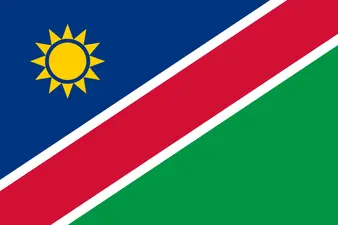
South West Africa becomes independent Namibia. South West African People's Organization (SWAPO) wins majority of votes in parliament; Sam Nujoma, its president, becomes president of Namibia
1990
ldriss Ouedraogo's film Tilaiwins the Grand Prix at the Cannes Film Festival
1990
Fend Boughedir's film Halfouine is released
1990
Studio Museum's "Contemporary African Artists: Changing Tradition" opens in New York. Work of African artists, except those from Egypt and South Africa, is shown at the Venice Biennale
1991
Over 200 are killed in rioting between Christians and Muslims in northern Nigeria
1991
Ruling Popular Movement for the Liberation of Angola (MPLA) abandons Marxist-Leninist platform for socialist democracy
1991
Estonil Accord ends sixteen-year civil war between Angolan government and UNITA rebels
1991
Repeal of Land and Group Areas Act marks official and legal end of apartheid in South Africa Oliver Tambo is succeeded as president of ANC by Nelson Mandela
1991
Forum for the Restoration of Democracy (FORD) forms opposition groupings.
1991
Kenya Opposition Democratic Party is formed in Kenya by former minister, Mwai Kibaki. General strike in Kenya is called by Forum for the Restoration of Democracy (FORD), demanding release of political prisoners and multiparty elections
1991
ANC announces end of thirty-year struggle against apartheid regime in South Africa.
1991
Convention on a Democratic South Africa (CODESCA) representing nineteen parties begins meeting in Johannesburg Apartheid is abolished; South Africa prepares for multiracial elections.
1991
South African writer Nadine Gordimer is awarded Nobel Prize for Literature
1991
Susan Vogel curates "Africa Explores: 20th Century African Art" at the Center for African Art, New York
1991
"Africa Hoy," curated by Andre Magnin opens at the Centro Atlantico de Arte Moderno, Las Palmas de Gran Canaria; It is mounted at other venues under the title "Africa Now" and, at the Saatchi Gallery, London, as "Out of Africa"
1991
Nigerian writer Ben Okri's The Famished Road wins the Booker Prize for Literature
1991
Revue Noire, a magazine of contemporary African art, is published in Paris by Jean Loup Pivin, with Simon Njami as editor
1992
Boutros Boutros-Ghali becomes first African Secretary General of the UN
1992
Two-day general strike in Lagos against rule of President Babangida
1992
ANC begins "mass action" campaign to remove F.W. de Klerk from power
1992
Forty people are killed in South African township Boipatong by Inkatha Freedom Party supporters
1992
National Assembly elections, Nigeria, won by government-sponsored Social Democratic Party against government-sponsored National Republic Convention
1992
Four million black workers support two-day general strike against white government called by Congress of South African Trade Unions
1992
President Eduardo dos Santos is re-elected in Angola
1992
Kenyan opposition party Forum for the Restoration of Democracy (FORD) splits into FORD-Asili and FORD-Kenya
1992
Constitutional Amendment Act, entry of black South Africans to cabinet
1992
1,000 killed in fighting between MPLA government and opposition UNITA forces, Angola, after disputed election results
1992
Jerry Rawlings elected president of Ghana; Rioting by opposition
1992
President Daniel arap Moi returns to office in first multiparty election, Kenya
1992
DAK'ART, the Dakar Biennale, is founded as major exposition of contemporary international art
1992
First Egyptian International Print Tniennale, Cairo
1992
The Eye: A Journal of Contemporary Art is published in Zaria, Nigeria, by the Eye Society
1992
Mo Edoga's and Ousmane Sow's participation in documenta IX, Kassel, marks the first African presence there.
1993
Eritrea, a former region of Ethiopia, becomes an independent state
1993
Democratic election results are annulled by the military dictatorship in Nigeria. Nigerian Transitional Council under Ernest Shonekan sworn in instead.
1993
Kenyan opposition parties Forum for the Restoration of Democracy (FORD), FORD-Asili, FORD-Kenya, and the Democratic Party forms a united front
1993
High Council of Republic of Zaire declares Mobutu guilty of treason for dissolving cabinet
1993
South African artist Gerard Sekoto dies in exile in Paris
1993
Second International Symposium on Nigerian Art, Lagos
1993
The Museum for African Art, New York, presents five African artists at the Venice Biennale
1993
Haile Gerima's Sankofa is released
1993
First black members of South African cabinet appointed, by F.W. de Klerk
1993
Chris Hani, South African Communist Party leader and ANC executive member, is assassinated
1993
Election for civilian president in Nigeria is won by Chief Moshood Abiola of Social Democratic Party. Nigerian military government announces presidential elections to be invalid. Demonstrations in Lagos demanding end of military rule. Nigerian military leader, Major-General Ibrahim Babaginda, relinquishes power to interim president, Ernest Shonekan
1993
Nineteen die and twenty-two are wounded in shooting at Wadeville industrial area, Johannesburg.
1993
Thirty-one are killed in "Day of Terror" as South African Parliament begins discussing establishment of Transitional Council. Nelson Mandela and F.W. de Klerk are awarded Nobel Peace Prize
1993
Nigerian interim president, Ernest Shonekan, is replaced by General Sani Abacha. Banning of political parties, restoration of civilian rule delayed until August 1993
1994
At least 500,000 Tutsi civilians are massacred by Hutu vigilantes in Rwanda
1994
500 Nigerian troops occupy Diamond Island and Djabane, Cameroonian islands in the Gulf of Guinea
1994
Uganda's Lord's Resistance Army offers to surrender for resettlement aid
1994
Ghanaian diplomat Kofi Annan replaces BoutrosGhali as UN Secretary General
1994
Nigerian artist Ben Enwonwu dies in Lagos
1994
Nka: Journal of ContemporaryAfrican Art is founded by Okwui Enwezor in New York
1994
Kunle Tejuosho publishes Glendora Review:
1994
African Quarterly on the Arts in Lagos, Nigeria
1994
Forces of Change: Artists of the Arab World, a major show of Arab women artists opens at The National Museum of Women in the Arts, Washington, D.C.
1994
Pan-African Congress announces end of armed struggle in South Africa
1994
Oginga Odinga Kenyan Nationalist leader dies
1994
1,000 people die, 150,000 are displaced in a week of clashes in northern Ghana between Konkomba and Namumba ethnic groups
1994
President Mangope is forced to resign in South African "homeland" of Bophuthatswana
1994
First multiracial elections in South Africa end 350 years of white domination
1994
Mandela is inaugurated as president of South Africa, Thabo Mbeki as first deputy-president, marking the first institution of black majority rule in South Africa. First multiracial cabinet is appointed
1994
Moshod Abiola, winner of 1993 Nigerian presidential elections, is arrested for treason after calling for an uprising
1994
Peace accord signed between MPLA in Angola and UNITA forces
1994
November 17, Bomb explodes at Lagos International Airport
1994
"lères Rencontres de Ia Photographie Afnicaine" in Baunako, Mali
1995
US lobbying organization TransAfrica condemns Nigerian military regime for its infringement of human rights
1995
Truth and Reconciliation Commission established to investigate apartheid atrocities, with Bishop Desmond Tutu and Alex Borraine chairmen
1995
ANC candidates win more than two-thirds of the votes in local elections in South Africa First Africus Johannesburg Biennale held in Johannesburg
1995
Africa '95, a festival of art in England. Major accompanying shows include, "Seven Stories about Modern Art in Africa," Whitechapel Art Gallery, London; "Self Evident," Ikon Gallery, Birmingham; and "Africa: The Art of a Continent," Royal Academy of Arts, London
1995
Ghanaian sculptor El Anatsui wins the Kansai Telecasting Prize at the Osaka Tniennale Nigerian-born artist and photographer Iké Udé founds the international magazine aRUDE in New York
1996
South African Supreme Court orders the predominantly white Potgietersrus Primary School to admit black pupils in a landmark post-apartheid ruling
1996
Lord's Resistance Army guerrillas kill over 200 people in attacks in northern Uganda First Nigerian president and independence leader, Nnamdi Benjamin Azikwe, dies at age ninety-two
1996
"In/sight: African Photography, 1940 to the Present" is held at the Solomon R. Guggenheim Museum, New York
Isaac Julien's Frantz Fanon: Black Skin, White Masks is released and broadcast on BBC in London
Isaac Julien's Frantz Fanon: Black Skin, White Masks is released and broadcast on BBC in London
1996
Cameroonian novelist Calixte Beyala wins the Grand Prix du Roman award in France with her novel Les Honneurs Perdus. She is the first black person to win the prize
1996
White National Party withdraws from South African Government of National Unity with the ANC
1996
Kudirat Olayinka Abiola, wife of imprisoned victor in 1993 Nigerian presidential elections, Chief Moshood Abiola, is murdered in Lagos
1996
President Mandela signs sweeping and liberal new South Africa Constitution in Sharpeville
1996
Writer and activist Ken Saro-Wiwa and the "Ogoni Nine" are hanged by the military dictatorship in Nigeria
1996
Ouattara (Ivory Coast) and Magdalene Odundo (Kenya) are included in Marilyn Stokstad's Art History, marking the first occasion on which the work of contemporary African artists is included in a major survey of world art
1997
Moshood Abiola, the presumed winner of 1993 democratic elections in Nigeria, dies in detention after more than three years in captivity
1997
Acclaimed Nigerian musician, composer, and political activist FeIa Anikulapo Kuti dies of AIDS in Lagos. Tens of thousands attend his funeral in Lagos
1997
Senegalese film director Djibnil Diop Mambety dies in Senegal
1997
Nelson Mandela and Graca Machel wed
1997
Second Johannesburg Biennale is held in Johannesburg and Cape Town
1997
Fifteenth FESPACO film festival attracts some 400,000 visitors
1997
William Kentridge (South Africa), Abderrahmane Sissako (Mauritania), and Oladele Ajiboye Bamgboye (Nigeria) exhibit at documenta X in Kassel
1997
Mobutu Sese Seko is overthrown by the rebel forces of Laurent Kabila, fleeing from Zaire after more than three decades in government. Laurent Kabila assumes power and changes the name of the country to the Democratic Republic of Congo
1998
Okwui Enwezor is appointed artistic director of documenta XI
1998
Fifth Dakar Biennale is held
1998
Nigerian artist Chris Ofili wins England's premier art award, the Turner Prize
1998
Nigerian dictator General Sani Abacha dies in office of apparent heart attack; a new transitional government begins the process of restoring democracy and civilian rule
1999
After sixteen years of military rule, Nigeria returns to civilian rule. Olusegun Obasanjo wins general elections and becomes president of the fourth republic
1999
Bodys lsek Kingelez, Kendell Geers, and William Kentridge exhibit their work at the Carnegie International in Pittsburgh. Kentridge wins the prestigious Carnegie International Prize
1999
Peace Treaty is signed in Lome, Togo, officially bringing to an end the civil war in Sierra Leone
1999
King Hassan of Morocco dies
1999
Ghada Amer wins the UNESCO Prize at the Forty-Eighth Venice Bienniale; Georges Adeagbo receives an honorable mention
2000
A three-day seventieth birthday Festschrift for Chinua Achebe at Bard College. He is honored by three Nobel Iaureates-Wole Soyinka, Nadine Gordimer, and Toni Morrison-and many international scholars, writers, and artists in a symposium acknowledging Achebe's seminal role in contemporary African literature.
2000
War lord Fode Sankoh breaks the treaty of Lome and resumes fighting in Sierra Leone. He is captured a few weeks later by government forces.
2000
J.M. Coetzee's Disgrace wins the Booker Prize, the author's second.
2000
Eritrean and Ethiopian border war marks the end of a fragile peace in the horn of Africa. The war officially ends with a peace treaty brokered by the Organization of African Unity and the United Nations and signed in Algiers.
2000
Abdoulaye Wade is elected president of Senegal, marking the end of Leopold Sédar Senghor's forty-year presidential term and Abdou Diouf's Socialist Party.
2000
Peaceful transition in Ghana: J.A. Kufour's New Patriotic Party wins Ghanaian presidential elections, ending two decades of Rawlings's presidency.
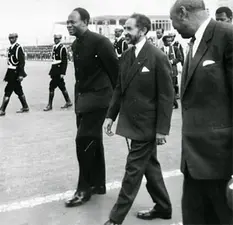
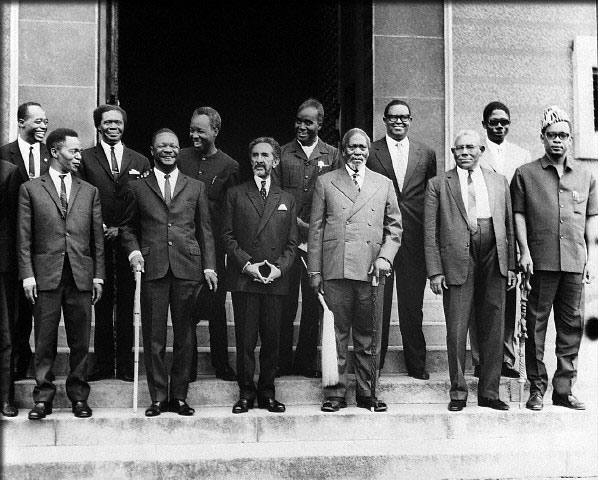
 Presidents Modibo Kieta of Mali, Dr. Kwame Nkrumah of Ghana and Seku Toure of Guinea (1960). Picture source: negroartist.com