
Event record
The International Court of Justice at The Hague rules, by the narrow majority of eight votes to seven, that it has jurisdiction
- Updated
- 30 Sep 2019
How we know this
- 01Kalley, J.A.; Schoeman, E. & Andor, L.E. (eds)(1999). Southern African Political History: a chronology of key political events from independence to mid-1997, Westport: Greenwood.
Last updated · 30 Sep 2019
South African History Online. (2011, December 14). The International Court of Justice at The Hague rules, by the narrow majority of eight votes to seven, that it has jurisdiction. South African History Online. https://sahistory.org.za/ref/E-0071210
South African History Online (2011) 'The International Court of Justice at The Hague rules, by the narrow majority of eight votes to seven, that it has jurisdiction', South African History Online, 14 December. Available at: https://sahistory.org.za/ref/E-0071210 (Accessed: 16 November 2026).
South African History Online, The International Court of Justice at The Hague rules, by the narrow majority of eight votes to seven, that it has jurisdiction [website], https://sahistory.org.za/ref/E-0071210, (accessed 16 November 2026).
"The International Court of Justice at The Hague rules, by the narrow majority of eight votes to seven, that it has jurisdiction." South African History Online, 14 Dec. 2011, https://sahistory.org.za/ref/E-0071210. Accessed 16 Nov. 2026.
South African History Online. "The International Court of Justice at The Hague rules, by the narrow majority of eight votes to seven, that it has jurisdiction." South African History Online. December 14, 2011. https://sahistory.org.za/ref/E-0071210.
Further reading
 Place
Bothaville
 Place
Kuils River

 Place
False Bay
 Place
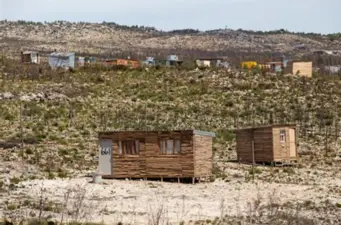
Knoflokskraal Settlement

Search events by date
This day in history
What happened on your birthday?
SAHO is free because readers fund it. Donate →