
Five power stations are blown up by pro-Axis power saboteurs in an attempt to destabilise the Rand gold mines. During the Second World War supporters of the Axis powers (Germany, Japan) came into conflict with the South African government, who supported the Allied forces led by Britain, France, the Soviet Union and the United States of America.
The conflict was a result of old feelings of kinship between many Afrikaners and Germany, not only because many Afrikaners have German blood, but also because of the latter country's support for the Boers during the Anglo-Boer War. The pro-German or pro-Axis groups resented the government's (led by Prime Minister Jan Smuts) decision to support the Allies, because of the previous conflict between the Boers and the British.
eventREF E-0011624Revised
Event record
Five power stations are blown up as tensions rise during WWII
- Date
- 28 Jan 1942
- Updated
- 20 Jul 2026
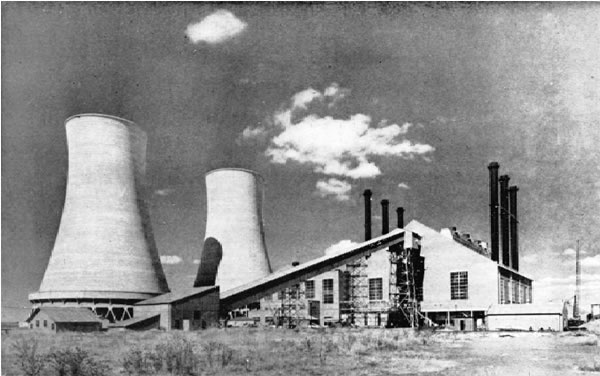
Vaal power station. The two cooling towers shown were completed in 1940. Source: Eskom
Search events by date
This day in history
What happened on your birthday?
How we know this
- 01About.Com,"1942, 28 January",From: About.Com,[Online], Available at:africanhistory.about.com,[Accessed: 20 December 2013
Last updated · 20 Jul 2026
South African History Online. (2011, March 16). Five power stations are blown up as tensions rise during WWII. South African History Online. https://sahistory.org.za/xh/ref/E-0011624
South African History Online (2011) 'Five power stations are blown up as tensions rise during WWII', South African History Online, 16 March. Available at: https://sahistory.org.za/xh/ref/E-0011624 (Accessed: 22 July 2026).
South African History Online, Five power stations are blown up as tensions rise during WWII [website], https://sahistory.org.za/xh/ref/E-0011624, (accessed 22 July 2026).
"Five power stations are blown up as tensions rise during WWII." South African History Online, 16 Mar. 2011, https://sahistory.org.za/xh/ref/E-0011624. Accessed 22 July 2026.
South African History Online. "Five power stations are blown up as tensions rise during WWII." South African History Online. March 16, 2011. https://sahistory.org.za/xh/ref/E-0011624.
Further reading
 Article
Imperialism and socialism in the context of Africa
Please note: This topic's content was written in 2003 and is part of the old curriculum content, we have modified it...
 Article
The effects of WW2 in Africa
Africans resisted colonial rule from the outset, trying to hold on to their land, but were not strong enough to...
 Article
The fight against colonialism and imperialism in Africa
To understand what effects WW2 had on the nature of the fight against colonialism and imperialism in Africa we need to.....
 Article
Impact of World War II: how the nature of political quest for independence in Africa changed after 1945
Note: Some grade 11 sections are under construction and still link to old content.
 Place
Place
Gauteng Province
The Area of Gauteng Province is small; stretching from Pretoria in the North to Vereeniging in the South.
SAHO is free because readers fund it. Donate →