
1908
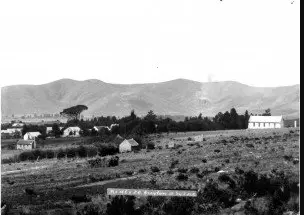
23 April, Abram (Bram) Fischer is born in Orange Free State to an auspicious family that includes Abraham Fischer, Brams grandfather, who was State Secretary of the Free State Republic and the only Prime Minister of the Orange River Colony in 1907, and his father Percy Fischer, who later became Judge President of the Orange Free State.
1920
1925 Attends Grey Primary School and then Grey College in Bloemfontein, where Bram excels both in academics (one of only two boys to receive a first-class pass) and sport (played for first cricket team, and scrum-half for the second and sometimes first rugby teams). At Grey College Bram comes under the long-lasting influence of Leo Marquard.
1926
Bram leaves for the Cape where he works for six weeks on a fruit farm in the Tulbagh District and then goes on to University of Cape Town (UCT) to study law. The same year Bram becomes UCT Tennis Champion and also plays for the Under-19A rugby team.
1926
December, Decides to move back to Bloemfontein and attend Grey University College where Bram feels the competition will be weaker for the Rhodes Scholarship to Oxford.
1927
With the Marquards, Bram becomes involved in adult education and other local projects for and with Africans. Also becomes a member of the Bloemfontein Joint Council of Europeans and Africans, which served as a forum where whites and blacks would meet to discuss issues of common concern.
1927
July, Bram attends a meeting of the National Union of South African Students (NUSAS) in Durban, is appointed a member by the NUSAS Council and is also asked to become the editor of the NUSAS magazine.
1927
Bram meets Susanna Johanna (Molly) Krige, who will later become his wife, at the Ramblers Club in Bloemfontein.
1928
Bram completes a Bachelor of Arts degree with distinctions in economics and history and then begins a part-time law degree at Grey while simultaneously working as a registrar in the Supreme Court of the Orange Free State to the Judge-President, Sir Etienne de Villiers.
1928
June, Selected to play scrum-half for the Free State against the All Blacks of New Zealand and as a result is seriously considered for the South African rugby squad.
1930
Becomes secretary of the Bloemfontein Joint Council.
1930
November, Accepted for the Rhodes Scholarship to New College at Oxford.
1930
1931 Member of a subcommittee of the Bloemfontein Joint Council to gather information for the Native Economic Commission (which tours the country gathering evidence on the situation of Africans during the Depression) and, as its representative, testifies at the hearings in Bloemfontein.
1932
January, begins studying at Oxford, focusing on Roman-Dutch law but also takes lectures on English history and Marxism. He also becomes involved with the Labour Club (a political club).
1932
June-July, With three university companions he tours Russia, where they witness the various effects of Stalins Five Year Plan.
1932
July, Travels to Latvia as a NUSAS delegate at a three-week congress of the Confederation International des Students (C.I.E.).
1932
October, Bram is elected to join the Ralegh Club, a very elite club that restricts its membership and invites the highest men of power to discuss matters of the Empire and world affairs.
1933
April, Elected Secretary of the Ralegh Club.
1933
June, Bram writes finals for his BA in law.
1933
July, Attends an International Students Service conference in Bavaria.
1933
October,Bram begins a diploma in Economics.
1934
August, Returns to South Africa.
1935
10 January, Bram called up to the Johannesburg Bar, thus starting his career as an advocate. Due to the Depression Bram begins "devilling" (taking on assignments from senior advocates to gain experience for little or no pay) for W.H. Ramsbottom, Oliver Schreiner and Tilson Barry (the leading expert in gold law a field in which Bram becomes very interested).
1935
He renews his involvement with the Joint Council.
1935
August, With Ramsbottom, Margaret Ballinger and others is part of a Joint Council subcommittee that prepares a statement for the Departmental Committee on Natives in Urban Areas.
1936
In order to earn enough money he takes up lecturing to individuals as well as through correspondence schools and the University of Witwatersrand.
1936
Wins the Bar bogey gold competition.
1936
Joins the 1925 Club (another elite club similar to the Ralegh Club) and later becomes its secretary.
1936
Through Schreiner, Bram is drawn into the Institute of Race Relations.
1936
April,Bram is elected to the executive of the Joint Council.
1936
July, Molly and Bram officially engaged.
1937
Is appointed honorary treasurer of the Joint Council.
1937
February, Writes a memorandum, on behalf of the Council, for a commission investigating treatment of Africans by the police.
1937
Is invited to become one of two Joint Council representatives (one white, one black) on the executive of the Institute of Race Relations.
1937
18 September, Molly and Bram are married.
1938
Bram begins to consider himself a member of the Communist Party of South Africa (CPSA) (from account given during his speech from the dock after his arrest in 1965, though it is not clear when exactly he becomes a member).
1938
Bram becomes a member of the Society of Jews and Christians, formed by the Institute of Race Relations and the Jewish Board of Deputies to resist the fascist incursion in South Africa.
1938
February, Appointed as a lecturer in law at the University of Witwatersrand.
1938
April, Molly and Bram move into 12 Beaumont Street which later becomes the centre of many political activities.
1938
14 August, Ruth Fischer is born.
1941
May, Is no longer treasurer of the Joint Council and resigns from its executive as well as that of the Institute of Race Relations.
1941
24 June, Gives a six-minute talk on Russia on the African Broadcasting Radio service (it is unclear whether this was because Bram had been in Russia in 1932 or as a representative of the Communist Party).
1941
November, Delivers a speech at one of the initiatory conferences of the organisation Medical Aid for Russia.
1941
Bram is nominated for the Alexandra Health Committee by the Department of Native Affairs.
1942
May, With Molly, helps set up a Soviet pavilion for a Liberty Cavalcade.
1942
June, Travels to Kimberley to speak to soldiers about the Red Army and social services in the Soviet Union.
1942
October, Performs at a Friends of the Soviet Union (FSU) pageant.
1942
December, Elected to the Johannesburg Bar Council (a body on which Bram serves without a break, and often with unanimous votes despite his alignment with the CPSA, for the next ten years).
1943
February - March, Travels to Maseru to act in a case regarding a royal succession dispute.
1943
16 June, Ilse Fischer is born.
1943
July, Travels to Bulawayo where Bram is involved in meetings and talks and gives speeches on the United Soviet Socialist Republics.
1943
After a request from Dr A. B. Xuma Bram helps draft the new African National Congress (ANC) Constitution of 1943.
1944
December, As a member of the Communist Party, Bram gives support to the bus boycott of Alexandra Township residents protesting the one-penny increase in bus fares.
1945
2 January, Bram attends the annual conference of the CPSA in Cape Town.
1945
December, Bram is elected onto the central committee of the CPSA.
1945
Nora Mlambo, niece of the Fischers? housekeeper, is taken in to be part of the Fischer household when her mother dies. She shares a room with Ilse.
1946
16 September, Bram arrested is and, with the rest of the CPSA subcommittee, stands accused of involvement in the African Mineworkers Strike, even though Bram was not in Johannesburg during the strike.
1947
26 August, Stands trial with 49 others for involvement in the African Mineworkers strike. All are charged under the Riotous Assemblies Act. Bram is the only accused called to the witness box by the defence.
1947
August, Paul Fischer is born.
1947
16 September, Bram is sentenced to £50 or four months hard labour suspended.
1947
22 September, Bram writes to The Friend newspaper in Bloemfontein in the wake of police raids of the offices of the Communist Party, trade unions and Guardian newspaper.
1948
February, Bram acts as a junior to Harold Hanson in a case where Frederick Alexander (inventor of the Alexander Principle) sued Dr. Jokl, Dr. Cluver and the editor of Volkskragte for an article which attacked the Alexander principle as "quackery".
1950
The National Party government finalizes the Bill that would become the Suppression of Communism Act, which provides for the liquidation of the Communism Party and defines communism as, among others, any attempt to bring about social, political or economic change through any unlawful act.
1950
June, The central committee of the CPSA meets in Cape Town to discuss the implications of the Suppression of Communism Act. A majority vote (which included Bram Fischer) calls to disband the Party.
1950
20 June, The Communist Party of South Africa is dissolved through an announcement by Sam Kahn (a Party member and Native Representative in the House of Assembly) in parliament.
1950
26 June, The National Party government passes the Suppression of Communism Act. The ANC and the South African Indian Congress combines in declaring 26 June a "National Day of Protest and Mourning", a day which became very important for the ANC and the Communist Party and has since then been celebrated as Freedom Day.
1950
17 July, The Suppression of Communism Act comes into force.
1950
September, Bram receives his initial 'naming' letter which officially placed him on the Minister of Justice's list of office-bearers, officers, members or active supporters of the Party.
1950
November, Despite Bram's appearance on the final list of communists he is granted admission to senior status as an advocate and becomes a member of the King's Council.
1951
Bram is a founding member of the Transvaal Peace Council.
1951
Bram is elected to the Johannesburg Bar Council for the ninth consecutive year (between 1942 and 1963 Bram serves on the council every year except three and is often elected with a substantial majority of the votes).
1951
May, Bram defends Solly Sachs, secretary of the Garment Workers Union, in court for defying his banning order.
1951
26 June, The Defiance Campaign begins in which volunteers contravene curfews, occupy segregated railway and post office facilities, flout location statutes and refuse to carry passes.
1951
November and December, Bram defends twenty Congress leaders, including Mandela and Sisulu, for their participation in the Defiance Campaign. The defendants are eventually found guilty only of statutory communism and are sentenced to nine months imprisonment, suspended for two years.
1951
Bram receives the verdict of the trial while in Vienna to attend the Congress of the People for Peace.
1953
South African Congress of Democrats (SACOD) is founded, fusing together the Transvaal Congress of Democrats (of which Bram was a founding member), the Springbok Legion and the Democratic League of Cape Town. Many who had been members of the Communist Party join - the SACOD was never a communist organization.
1953
The CPSA is reconstituted clandestinely as the South African Communist Party and Bram retains his membership.
1953
January, Defiance campaign officially ends.
1953
July, Brams home in Beaumont Street is raided by the police.
1953
20 August, Bram is served with two notices (two days before the inauguration of the South African Peace Council) under the Suppression of Communism Act, banning him from any gatherings for two years, from membership of the COD and the Peace Council as well as fifteen other organizations of which he is not a member.
1953
22 August , Bram gives the welcome address at the inauguration of the Peace Council through a pre-recorded message.
1954
September, Bram arrives at his chambers to find two Special Branch officers waiting to search his office and who then accompany him home where they confiscate numerous pamphlets and documents.
1956
Bram acts as defense advocate for The Star newspaper in a libel suit.
1956
December, 156 Congress leaders are arrested and tried for treason in what becomes known as the Treason Trial. Bram is part of the defence team.
1957
December, Charges are withdrawn against sixty-five of the Treason Trialists.
1958
August, Proceedings open in the Treason Trial with Bram as the second-in-command of the defence.
1959
October, Bram, on behalf of the defence in the Treason Trial, provides a memorial address after the death of Oswald Pirow (who led the prosecution).
1960
14 March, The defence team in the Treason Trial open their case.
1960
14 July, The underground existence of the Communist Party is announced in pamphlets, with Bram listed as a member of the central committee.
1960
August, Bram undertakes one of his most significant acts as an advocate, leading the evidence of Robert Resha.
1960
7 October, Bram closes the case for the defence.
1961
Bram is appointed Johannesburg Bar Council chairman.
1961
January, Bram is served with a new banning order for another five years.
1961
29 March, The accused in the Treason Trial are acquitted of treason.
1961
16 December, uMkhonto weSizwe is launched as an offshoot of the ANC and Communist Party.
1962
The SACP produces "The Road to South African Freedom" an elaborate policy document which Bram (who is acting chairman of the central committee of the SACP) helps to draft.
1963
11 July, Special Branch members raid Liliesleaf Farm in Rivonia, arresting a number of leading figures in the National High Command of the liberation movement. This is the beginning of what later becomes known as the Rivonia Trial and the defence is lead by Bram.
1963
9 October, The Rivonia Trial begins but is adjourned for three weeks to allow the defence to study the indictment as the prosecutor had refused to give a copy to the defence.
1963
November, The trial resumes but Bram is successful in having the indictment squashed due to its generality, obscurity and the contradictory nature of some of the charges. However, as soon as the charges are dropped the accused are rearrested on the same charges.
1963
End November, The Rivonia Trial begins again with a second indictment. During the trial uMkonto weSizwe is reconstituted and Bram becomes Dave Kitson's liaison with the Communist Party.
1964
20 April, Bram opens the case for the defence in the Rivonia Trial, in which Nelson Mandela gives his famous speech "I am Prepared to Die"
1964
12 June, The trial ends. Nelson Mandela, Walter Sisulu, Govan Mbeki, Elias Motsoaledi, Andrew Mlangeni, Raymond Mhlaba and Dennis Goldberg are found guilty on all four charges and sentenced to life imprisonment. Ahmed Kathrada is found guilty of one charge of conspiracy while Rusty Bernstein is found not guilty.
1964
13 June, While driving down to Cape Town Molly is killed in a car accident when Bram tries to avoid hitting a cow in the road.
1964
8 July, Bram is detained under the ninety-day law but is released three days later.
1964
23 September, Bram is arrested for contravening the Suppression of Communism Act along with 11 eleven others in a trial that became known as the Fischer Trial as Bram is accused number one. Violet Weinberg and Lesley Schermbrucker take the place of their husbands, who are arrested along with Bram, on the central committee of the SACP.
1964
24 September, Bram is granted R10 000 bail in order to attend a copyright case (the Bayer case) that is due to come before the Privy Council in London in October.
1964
3 October, Bram arrives in London and stays with his daughter Ruth and her husband Anthony Eastwood.
1964
15 October, Bram presents the application for leave to appeal in the Bayer case.
1964
19 October, The Privy Council rejects the application for leave to appeal but orders the opponents to pay costs. Bram spends the rest of his stay with exiled members of the SACP discussing his plans. They decide that he should return to South Africa and stand trial.
1964
2 November, Bram arrives back in Johannesburg.
1964
16 November, The Fischer trial opens in the Johannesburg Regional Court. It is after the testimony of Piet Beyleveld, a comrade who had turned state witness, and Gerald Ludi, a spy who infiltrated the SACP, that Bram calls the reconstituted SACP central committee together to discuss his going underground.
1965
15 January, Following a defence application the court adjourns for 10 days.
1965
23 January, Bram goes underground to a farm in Rustenburg where he becomes a Mr. Douglas Black. A massive country-wide search begins for the 'Rooi Pimpernel', as Bram is dubbed.
1965
25 January, The court reconvenes but Bram is not present. Harold Hanson, Bram's lawyer, reads out a letter written by Bram announcing his decision to go underground.
1965
27 January, The Johannesburg Bar Council decides to institute proceedings in the Supreme Court to have Brams name removed from the roll of advocates.
1965
March, Bram, as Douglas Black, moves into a flat in Waverley just a mile or two from his old home in Beaumont Street.
1965
April, General Keevy, the Commissioner of Police, announces a substantial reward for Bram's recapture.
1965
13 April, The Fischer trial ends with Eli Weinberg and Ivan Schermbrucker sentenced to five years imprisonment, Hymie Barsel is found not guilty and the others are sentenced to terms ranging from one to three years.
1965
18 July, Bram, still underground, moves from Waverley to Bramley.
1965
2 November, Judgment is delivered in the Bar Council case for the disbarment of Bram, who is represented by Sydney Kentridge and Arthur Chaskalson. Judge Quartus de Wet, Judge-President of the Transvaal and the judge who presided over the Rivonia Case, orders that Bram's name be removed from the Roll of Advocates and that he be pay the costs of the applicant.
1965
8 November, Violet Weinberg is arrested and interrogated.
1965
11 November, After seventy hours of interrogation Violet gives the Special Branch information on the whereabouts of Bram. Bram is arrested at his home in Bramley after 294 days underground and is taken first to Pretoria Central then to Pretoria Local Prison.
1965
15 November, Bram appears in the Johannesburg Regional Court to be charged. His initial defence organized by George Bizos.
1965
22 December, The prosecution apply to have the case against Bram converted into a preparatory examination so that new and extended charges can be framed.
1966
26 January, The preparatory examination opens in the Johannesburg Regional Court before Mr. S.C. Allen, the same magistrate who presided in the trial before Bram had gone underground.
1966
2 February, The preparatory trial ends. Bram is committed for a trial and elects to be tried by a judge.
1966
23 March, The trail opens in the central court of the Palace of Justice in Pretoria in front of Mr. Justice Boshoff. Brams defence is led by Sydney Kentridge. Bram pleads not guilty to fifteen charges ranging from being a member of the Communist Party and participating in its activities to six charges of fraud. His first charge is one of sabotage and on the Rivonia precedent he stands to get life imprisonment.
1966
28 March, The prosecution, after two days of presenting evidence, formally closes its case. Sydney Kentridge announces that the defence will not call any witnesses but that the accused will make a statement from the dock. Bram presents his "What I did was right" statement. After Bram's five hours in the dock the court is adjourned for 6 weeks.
1966
4 May, Bram is convicted.
1966
9 May, Bram is sentenced to life in prison on the count of sabotage; to twenty-four years on the six charges under the Suppression of Communism Act; to fines totaling R120 (or six months in prison) for six contraventions of the Aliens Act and to three months on the two counts of forgery. All the terms are to run concurrently. Bram decides not to appeal.
1967
1 May, Bram is awarded the Lenin Peace Prize.
1968
December, The political prisoners, including Bram, at Pretoria Central and Pretoria Local are moved into a special wing in Pretoria Local built especially for them.
1969
June, During the grading of prisoners, which allow for special privileges, Bram is assigned to group 'B', which allows for two letters a month and one double visit.
1969
Bram undergoes a cataract operation and also begins to suffer from arthritis in his left hip.
1970
Louis Babrow, who had been a junior to Bram at school, campaigns to have Bram released.
1971
27 January, Paul, Bram's son, dies in Groote Schuur Hospital. Bram is not allowed to go to his funeral.
1971
No date, Ilse marries Tim Wilson. Isle applies have the ceremony held in prison, but because only visits by two people are permitted (a minister would make it three) the request is turned down.
1971
When Arthur Chaskalson take silk (becomes a member of the Queen's Counsel), Bram presents him with his gown.
1973
Leo Maquard begins a second campaign to have Bram released and is joined by Lesley Blackwell, Helen Suzman, Archbishop Hurley and Dr Christiaan Barnard, among others.
1974
May, Bram is admitted to hospital due to internal hemorrhaging from a bleeding ulcer.
1974
July, Bram has his prostate removed and after tests shows signs of cancer.
1974
September, The pain in Bram's hip becomes so acute that he has to walk with a broom until the jailers provided him with crutches.
1974
October, Bram is sent for X-rays and it is found that the neck of his femur is fragile.
1974
6 November, Bram slips and falls while struggling into the shower with his crutches.
1974
7 November, Bram requests a doctor because he suspects a fracture but no one is sent and he merely receives a wheelchair. During this time Bram becomes aphasic (unable to speak or understand speech).
1974
19 November, Bram is admitted into hospital and has his femur pinned.
1974
4 December, Bram is returned to prison. By mid-afternoon Bram is running a high temperature and is unable to help himself. Denis Goldberg convinces the head warden to allow him to spend the night with Bram in his cell.
1974
6 December, Bram is readmitted to hospital where he is attended by Dr. Theunie Fichardt, his cousin and friend.
1974
11 December, Bram is reported as being in a critical condition and soon falls into a coma. Dr. Fichardt begins radiotherapy to help Bram regain some of his faculties so that he may have some time with his family. During this time the campaign for his release is escalated.
1975
January, Ilse flies down to Cape Town to meet the Minister of Justice, Jimmy Kruger, but nothing substantial comes of the meeting.
1975
10 March, Bram, on the recommendation of Dr. Fichardt, is released into the care of his brother Paul in Bloemfontein. He is partially paralyzed in both legs and cannot walk, and though he recovers sufficiently to travel it is decided that there is no point in further treatment.
1975
23 April, On his sixty-seventh birthday his condition once again becomes critical and Bram soon lapses again into unconsciousness.
1975
8 May, Bram dies.
1975
12 May, Bram is cremated and his ashes are returned to the Prisons Department. Though the whereabouts of his ashes never come to light, when the new democratic parliament of South Africa first meets, Ilse and Ruth find out that a plaque for Bram has been installed in the Garden of Remembrance.