
The notion of migrant labour is based from a legal framework system that did not recognize 'homelands' or 'reserves' as part of the Union of South Africa, hence employment seekers travelling outside of the homelands and those who had already secured employment within the Union of South Africa were considered migrant labourers. Migrant labourers across Southern Africa, from the Transkei (modern day Mthatha) and Rhodesia (modern day Zimbabwe), undertook lengthy jouneys from the kraal to gold and diamond mines seeking employemnt. Migrant labourers were accomodated in hostels on the outskirts of townships.
archiveREF R-0102600Revised
Archive record
The migrant labour system
- Updated
- 26 Jun 2019

South African History Online. (2016, February 22). The migrant labour system. South African History Online. https://sahistory.org.za/xh/ref/R-0102600
South African History Online (2016) 'The migrant labour system', South African History Online, 22 February. Available at: https://sahistory.org.za/xh/ref/R-0102600 (Accessed: 22 July 2026).
South African History Online, The migrant labour system [website], https://sahistory.org.za/xh/ref/R-0102600, (accessed 22 July 2026).
"The migrant labour system." South African History Online, 22 Feb. 2016, https://sahistory.org.za/xh/ref/R-0102600. Accessed 22 July 2026.
South African History Online. "The migrant labour system." South African History Online. February 22, 2016. https://sahistory.org.za/xh/ref/R-0102600.
Further reading
 Article
DISA Archive
DISA is a freely accessible online scholarly resource focusing on the socio-political history of South Africa,...
 Archive
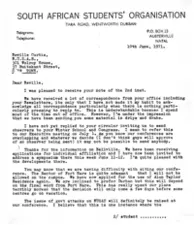
Letter from Barney Pityana to Neville Curtis
Letter from Barney Pityana (President, SASO) to Neville Curtis (NUSAS) regarding NUSAS and SASO relations.
 Place
Place
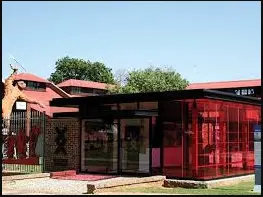
Workers’ Museum, Johannesburg
The excellent Portrayal of Life as a Migrant Worker, found at the Worker’s Museum in Newtown, Johannesburg, was...
SAHO is free because readers fund it. Donate →