
| Account | A record or description of past events. |
| Archaeology | The study of pre-historic people and their culture. |
| Banished | Forced to leave a place as a punishment. |
| Colonialist | Someone who believes in colonialism, which is the use of a weaker country's resources by a stronger country to make itself stronger. |
| Coral reefs | A ridge close to the surface of the sea that is made up of the skeletons of small sea creatures. |
| Custom | An activity or action that has been established for a long time. |
| Democracy | A political system where the citizens of a country choose their representatives by voting. |
| Ecosystem | A group of different elements or organisms that make up a community that interacts with its environment. |
| Endangered | In danger of being extinct. |
| Epic poems | Long, story-like poems about a person or events. |
| Excavated | Opened up by digging. |
| Exiled | Forced to leave a place as punishment. |
| Fossil | The remains or impression of a plant or animal that has been excavated from the ground. |
| Generation | All people who are roughly the same age or who are living at the same time. |
| Hectare | An area of 10 000 square metres. |
| Hominid | Humans and human-like creatures. |
| Iron-age | A period after the bronze-age where iron tools and weapons were used. |
| Lepers | People who have leprosy, which is an infectious disease that affects the nerves. |
| Lime | A chemical substance that burns flesh. It is obtained from heating limestone. |
| Lush | When something is present in great amounts. |
| Marsh | A wet area between land and water with grassy plants. |
| Microfauna | Very small animals. |
| Oppression | Being kept down by unfair use of authority or force or leaving a place willingly because of disagreement. |
| Practice | Something that is done regularly or as a habit. |
| Pre-historic | Something that existed before history was recorded. |
| Prospector | Someone who explores an area for mineral deposits. |
| Reciting | Give a verbal repetition of a poem that has been memorised. |
| Stone-age | The earliest known period of human culture. It is called the stone-age because these people used stone tools. |
| Tradition | Customs and beliefs that are handed down from generation to generation. |
articleREF A-0068538Revised
Article record
Glossary: Local History
- Published
- 12 Oct 2011
- Updated
- 20 Jul 2026
South African History Online. (2011, October 12). Glossary: Local History . South African History Online. https://sahistory.org.za/ss/ref/A-0068538
South African History Online (2011) 'Glossary: Local History ', South African History Online, 12 October. Available at: https://sahistory.org.za/ss/ref/A-0068538 (Accessed: 22 July 2026).
South African History Online, Glossary: Local History [website], https://sahistory.org.za/ss/ref/A-0068538, (accessed 22 July 2026).
"Glossary: Local History ." South African History Online, 12 Oct. 2011, https://sahistory.org.za/ss/ref/A-0068538. Accessed 22 July 2026.
South African History Online. "Glossary: Local History ." South African History Online. October 12, 2011. https://sahistory.org.za/ss/ref/A-0068538.
Further reading
 Article
How do we find out about the history of a local area?
Stories and Interviews as oral histories
Stories or ‘oral histories’ tells us about the past through the spoken...
 Article
Example of a local history: Pretoria
The places we come from are a part of our heritage. Where we grew up and where we live are important because we learn...
 Article
Learning about history through people: oral history
People as historical sourcesPeople can be great sources of information. By speaking to people we can learn about the...
 Article
Grade 4 - Learning about local history through pictures: Cape Town
How to find out about the present or the history of a local area?
When investigating our past, we need to look at...
 Article
Grade 4 - Term 1: Local History
People learn and are influenced by the places and the people around them. In a country like South Africa, which has a...
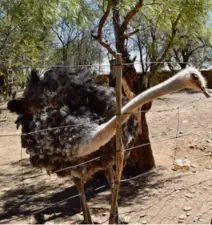 Place
Place
Oudtshoorn, Western Cape
The division of Oudtshoorn was originally part of the District of George, and was proclaimed a separate division in...
SAHO is free because readers fund it. Donate →
Contribute to this record0 comments
Comments are reader contributions. They are not part of the archival record.