
SAHO global search
586 records
English Settlement in South Africa
British presence in the Cape between the 1600s and 1795 was largely confined to the shores of the Cape and Table Bay as a halfway stop by the East India…
 Article
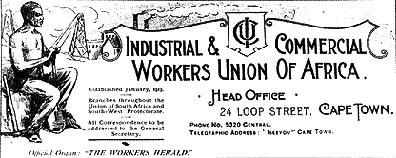
Industrial and Commercial Workers Union (ICU)
During the 1920s, the South African Native National Congress (SANNC) - which changed its name to the African National Congress (ANC) in 1923 - did not…
 Article
Drafting of the Final Constitution
Introduction The transition from the Apartheid era to the new democratic dispensation was a powerful and fundamental process for South Africans. With many…
 Article
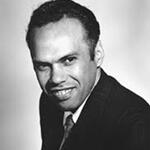
The South African Coloured People’s Organisation (SACPO)
The South African Coloured People’s Organisation (SACPO) was formed in 1953 at a Coloured People's Convention in Cape Town. The organisation aimed to unite…
 Article
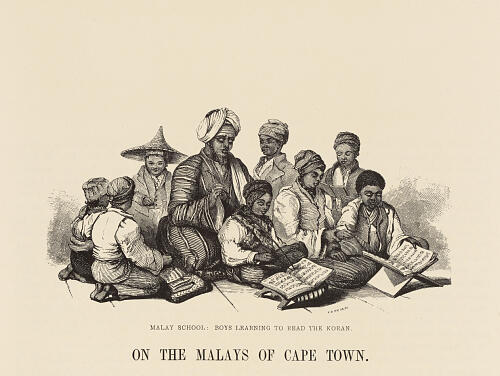
Amersfoort Legacy - History of education in South Africa
The opening moment of education in South Africa coincides with the foundation of the colonial experience at the Cape in 1652. Six years after the Dutch East…
Pretoria the Segregated city
Contents Pretoria the Segregated city The Tomlinson Report Atteridgeville and Saulsville Hammanskraal Mamelodi Mabopane Laudium Eersterus …
 Article
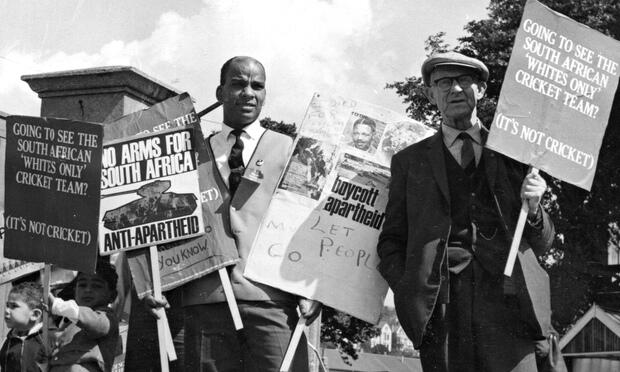
The British Anti-Apartheid Movement
The reaction of the outside world to the development of apartheid was widespread, and by the 1980s posed a sustained challenge to the South African regime,…
 Article
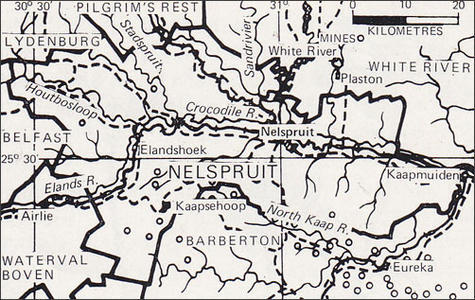
Nelspruit Timeline 1815-1996
1815 Louis Trichardt and Hans van Rensburg cross the Oranje/Gariep river. June 1836, Van Rensburg leaves Trichardt while Potgieter goes on an expedition to…
 Article
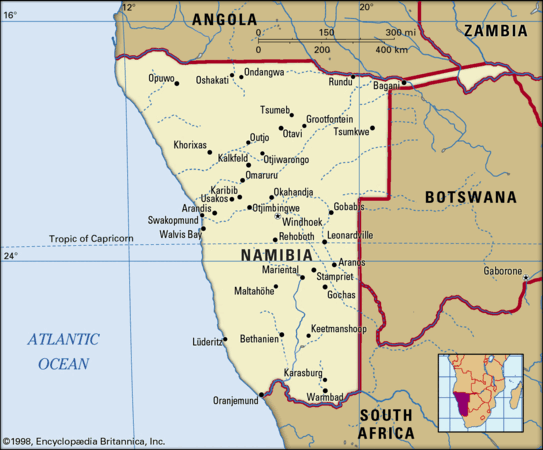
Namibian Timeline
Introduction Since independence, English has been Namibia’s only official language. This was a controversial policy and remains contested. This timeline…
Defining the term 'Bantu'
The following article is based on an essay from Kees van der Waal’s chapter in “Critical Essays on Afrikaans Places of Memory” The term ‘Bantu has gone…
 Article
Forced Removals in South Africa
Forced removals refer to the moving of people from their homes against their will. This may not always involve physical threat or force, but sometimes coercion…
 Article
History Grade 11 - Topic 2 Contextual Overview
A cartoon illustrating the process of getting to the idealised “American Dream" Image Source Introduction Like communism in Russia, American capitalism…
 Article
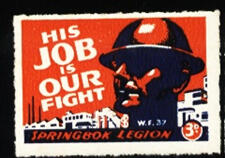
A History of the Springbok Legion
The Springbok Legion (SL) was a leading organisation formed in 1941 to fight for the rights of soldiers during World War II and in the post-war period. Over…
 Article
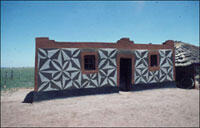
Sotho (South Sotho or Basotho)
Sotho (South Sotho or Basotho) people are concentrated in the Free State, Gauteng and Eastern Cape Provinces, with small groups in Namibia and Zambia. While…
 Article
Grade 9 - Term 3: Turning points in South African History, 1960, 1976 and 1990
Turning points in modern South African History since 1948& In 1948 South Africa held a general election which was to be decided by the white population of…
 Article
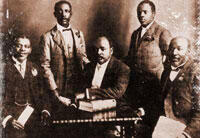
ANC Origins and Background
The African National Congress (ANC) was formed in 1912 as a result of many grievances. This included black dissatisfaction with the South Africa Act of 1910…
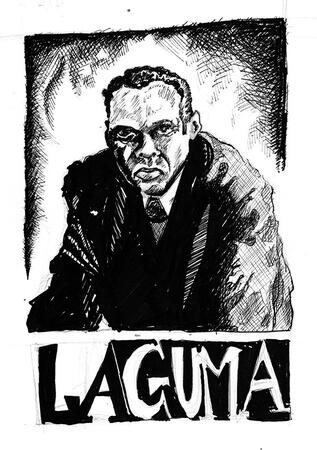
Re-emergence of resistance, 1980-89
By the early 1980s, the Congress movement was becoming established as the most effective force in the fight against apartheid throughout the country. With the…
 Article
South African Coloured People Organisation (SACPO)
Like all other Black ethnic groups, the Coloureds also fell victim to segregation and repressive legislations enacted by Colonial and successive governments…
 Article
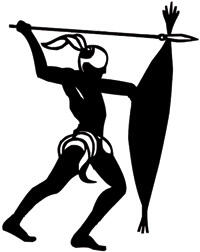
uMkhonto weSizwe (MK)
On 16 December, 1961, Umkhonto weSizwe (MK) was launched as an armed wing of the African National Congress (ANC). The formation of the MK Umkhonto…
 Article
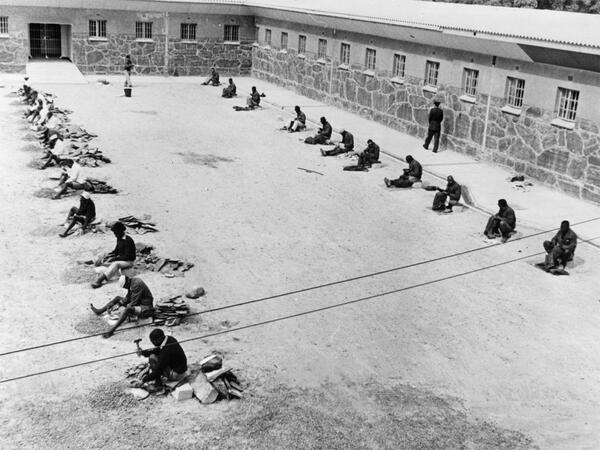
A history of prison labour in South Africa
Prison labour has a particularly debatable history in South Africa. Historically, South Africa operated on the understanding that prisons were places of…
 Article
Pondoland revolt - 1950 - 1961
The Pondo people fiercely resisted the rise of the Colonisersand their attempts to reshape and re-engineer Pondoland and to co-opt their Chiefs. Violence…
 Article
The effects of WW2 in Africa
Africans resisted colonial rule from the outset, trying to hold on to their land, but were not strong enough to defend themselves against European conquest…
 Article
A History of Abantu-Batho Newspaper 1912-1931
Newspapers or publications by African people played a critical role in giving them an alternative space to articulate their views. The emergence of a number of…
 Article
Indian South Africans
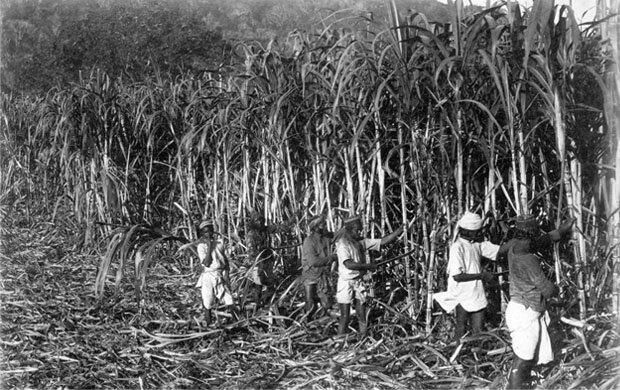
From bondage to freedom - The 160th anniversary of the arrival of Indian workers in South Africa The feature on Indian South Africans forms part of our…
The people armed, 1984-1990
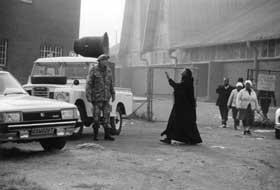
Introduction 1985, Desmond Tutu, armed only with the bible under his arm, confronts the SA forces during their attempts to break up a demonstration…
 Article
1960 - 1994: Armed Struggle and Popular Resistance
1984-1990:- The people armedIntroductionNumerous factors characterised the intensification of the freedom struggle against the National Party government in the…
 Article
1960-1966: The genesis of the armed struggle
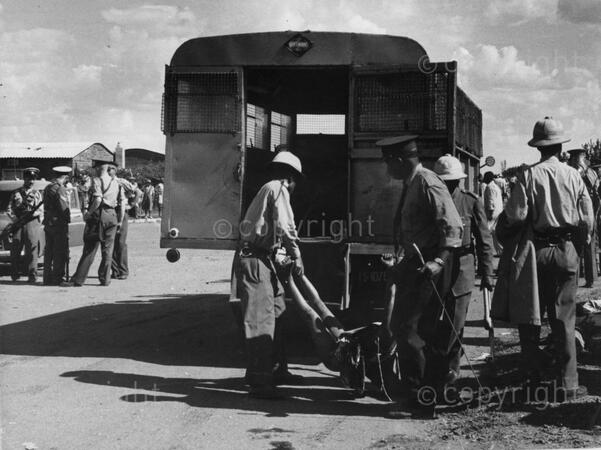
The 1960s marked an important watershed in South Africa's struggle against apartheid. The aftermath of the Sharpeville Massacre, in 1960, signalled the…
 Article
Afrikaans: the Language of Black and Coloured Dissent
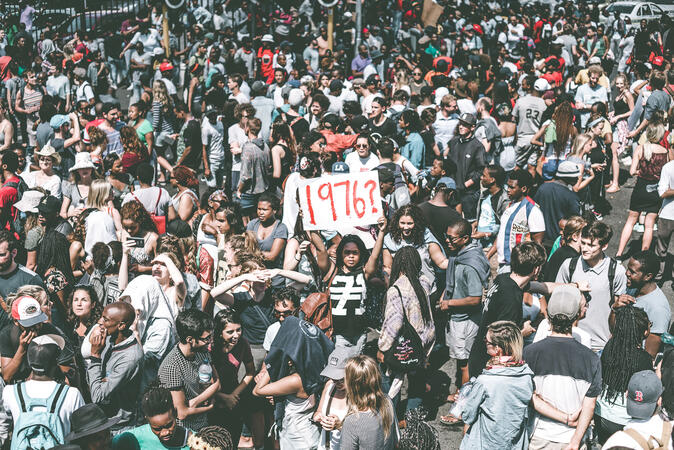
IntroductionAfrikaans, one of the official languages, together with English, during South Africa’s Apartheid era, often occupies a politicised space as the …
The Freedom struggle in Polokwane
The Freedom struggle in Polokwane/Pietersburg looks at the Resistance politics, the re-emergence of resistance in the 1980s, and political developments after…
 Article
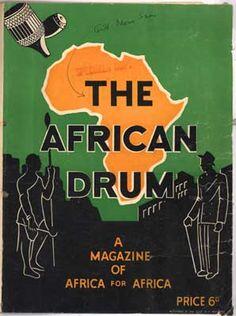
Drum Magazine
The establishment of Drum Magazine in the 1950s, notwithstanding the newly-elected Nationalist Party’s policy of Apartheid, reflected the dynamic changes that…