
SAHO global search
299 records
 Article
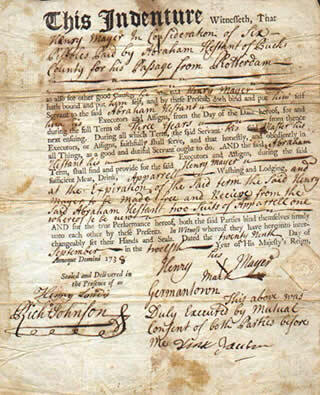
Indian South Africans timeline 1654-1899
Indian South Africans Timeline: 1654-1899 1654 Slaves from India and South East Asia are introduced to the Cape. 1820 A number of Indians arrive in…
Growth of African Nationalism and Defiance
The 1940s saw a growth of African nationalism that positioned itself to challenge the rising Afrikaner nationalism. The ANC which was weak in the 1920 and…
 Article
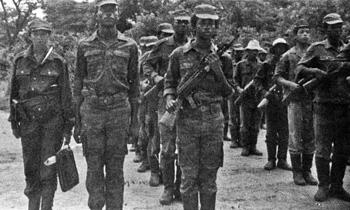
List of uMkhonto weSizwe Operations
ANC-2nd Submission to TRC - APPENDIX FOUR Please note: Information in this list was drawn from press reports and the Annual Surveys of the SAIRR. These…
 Article
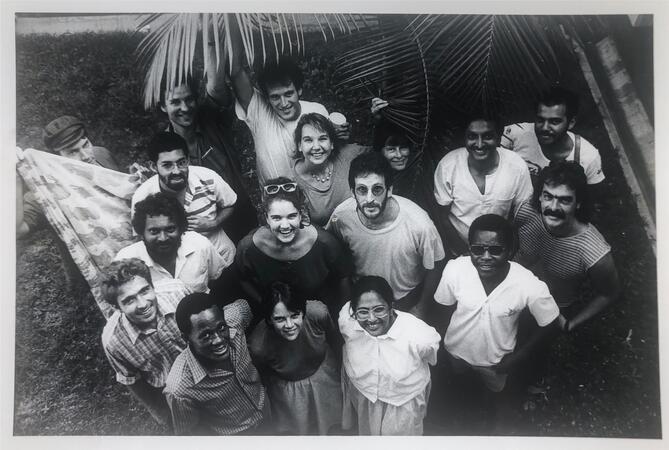
Afrapix Chronology 1981-1991
In the 1980s the National Party witnessed a renewed national and international pressure to initiate political reform. The Apartheid government accelerated its…
 Article
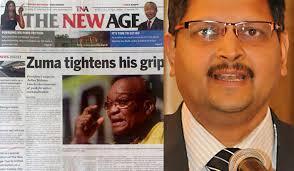
African National Congress Timeline 2011 - 2020
AFRICAN NATIONAL CONGRESS TIMELINE — 2011 – 2020 2011 8 January 2011 African National Congress (ANC) President Jacob Zuma delivers the traditional ANC…
The Triumph of the Radicals, 1939-1946
< Menu page < 6. The Moderates' Eclipse | Conclusion > CHAPTER IV The Struggle for Power: The Triumph of the Radicals, 1939-1946 7. Events leading up…
 Article
Black Consciousness Movement of Azania (BCMA)
The Black Consciousness Movement of Azania (BCMA) was the external arm of the Black Consciousness Movement (BCM), and had offices in Botswana, England, the…
 Article
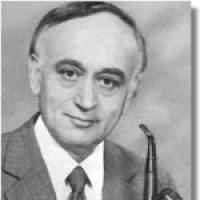
Yusuf Dadoo Timeline: 1920 - 1929
1920 January, Gandhi wrote to the press on the South African Appellate Court's judgment in the case of the Krugersdorp Municipality vs. Mohamed Dadoo. The…
Colonial history of Rustenburg
Origins of colonial settlement It is thought that Andries Hendrik Potgieter was one of the first Voortrekkers to settle in the Rustenburg area. David…
The people armed, 1984-1990
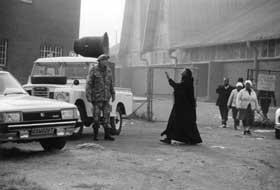
Introduction 1985, Desmond Tutu, armed only with the bible under his arm, confronts the SA forces during their attempts to break up a demonstration…
 Article
1960 - 1994: Armed Struggle and Popular Resistance
1984-1990:- The people armedIntroductionNumerous factors characterised the intensification of the freedom struggle against the National Party government in the…
 Article
Congress of South African Trade Unions (COSATU)
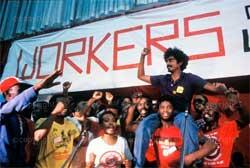
The Congress of South African Trade Unions (Cosatu) was launched on 1 December 1985, at the height of the struggle against apartheid. As a federation, it…
 Article
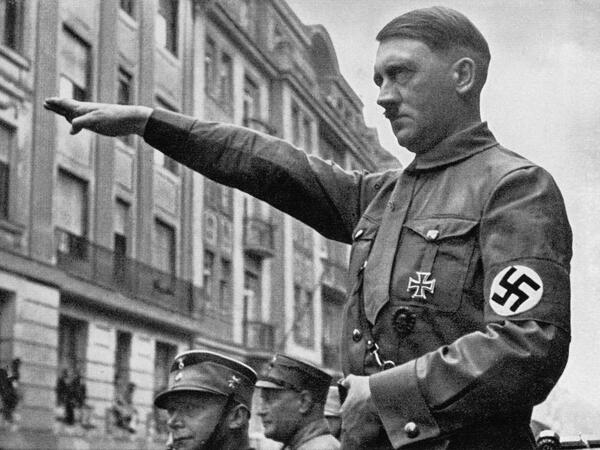
Hitler’s racial state in Germany
Eugenics and Genocide in Nazi Germany Summary The Holocaust was a form of genocide, which refers to the intentional, systematic extermination of six million…
 Article
Women, employment and the changing economic scene, 1920s
In the 1920s, with the First World War (1914-1918) over, the pattern of female employment began to change. The war and the protectionist policy of the Pact…
 Article
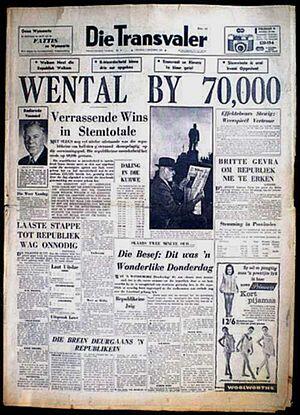
Timeline of State Action Against the Press in the 1960s
1960 Mar- Norman Phillips of the Toronto Star was detained 3 and '/2 days for trying to cable a story about a police attack on Nyanga, Cape Town. The report…
 Article
HIV/Aids in South Africa timeline 1940s-2009
1940s The oldest Human Immunodeficiency Virus-2 (HIV-2) jumps from animals to humans, according to a Washington-based study in May 2003. Some sources say…
 Article
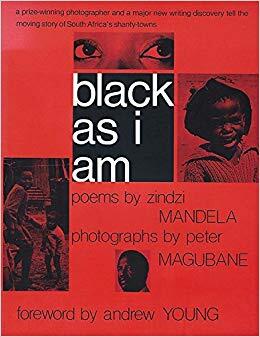
Timeline of South African photographic books and exhibitions 1958 - 2003
Timeline 1958 The photographer, Peter Magubane, is the first black South African to win the Press Photo of the Year Award. Albert Newall re…
 Article
History Grade 10 - Topic 3 Source-based Questions
Based on the 2012 Grade 10 NSC Exemplar Paper: Grade 10 Past Exam Paper Grade 10 Source Addendum Grade 10 Past Exam Memo Level 1 & 2…
 Article
uMkhonto weSizwe (MK) in exile
Introduction Following British victory in the South African War, the Union of South Africa was forged in 1910 under the British Commonwealth. The Union…
Afrikaner Newspapers and the newspaper industry from 1830
Afrikaner newspapers were essential supports for Afrikaner nationalism, and from the 1870s onwards they were used to mobilise Afrikaners, and after 1914 to…
 Article
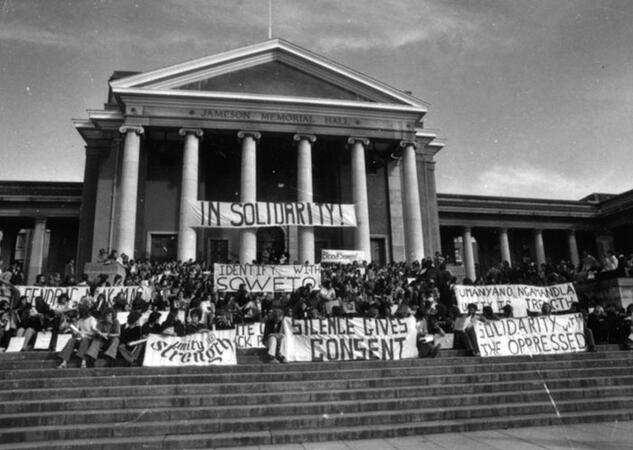
Cape Schools Join the Revolt
The school students in Cape Town reacted to the news they heard of events in Soweto. A teacher at one of the Coloured schools was later to write: 'We haven't…
 Article
African Achievements and Potential
Our success educationally, industrially and politically is based upon the protection of a nation founded by ourselves. And the nation can be nowhere else but…
Biography of Lindiwe Mabuza by Kayla Johansen
Born: 1939, Newcastle, Natal (now KwaZulu-Natal) In Summary: Poet, African National Congress Chief Representative to Sweden and United States of America,…
Segregationist Legislation Timeline 1930-1939
The Transvaal Asiatic Land Tenure of 1930 The (Amendment) Bill is introduced by Minister of Interior as a result of recommendations of Select Committee…
 Article
Timeline of Land Dispossession and Segregation in South Africa 1800-1899
The nineteenth century was a period of several events whose socio-political and economic impact profoundly changed South Africa and the African continent…
 Article
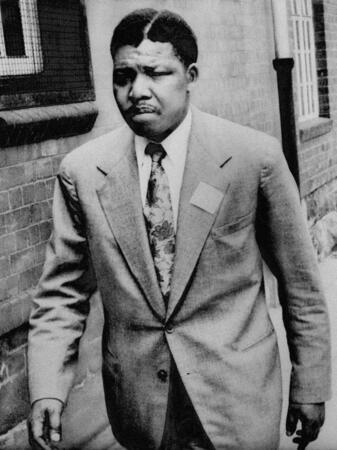
Changing Perceptions of Nelson Mandela
Nelson Mandela is a figure who has undergone many transformations in the eye of the South African public as well as in the global imagination. He has played…
 Article
A Luta Continua Dialogues, Episode 2: Policing and Resistance
Guest Contributors: Anietie Ewang - Human Rights Watch Researcher, Nigeria afọpẹ́fólúwa òjó - Artist & Berlin based #EndSARS Organiser Miski Noir -…
 Article
Rivonia Trial 1963 - 1964
Often referred to as "the trial that changed South Africa,” in October 1963, ten leading opponents of apartheid went on trial for their lives on charges of…
Community histories of Rustenburg
Afrikaans Community (1838-1899) The First White Inhabitants It is documented that the first pioneers from the Eastern Cape undertook a hunting expedition…
 Article
Britain takes control of the Cape
The arrival of the British at the Cape changed the lives of the people that were already living there. Initially British control was aimed to protect the trade…