
SAHO global search
586 records
Pedi
[baPedi – People and sePedi – Language] The four major ethnic divisions among Black South Africans are the Nguni, Sotho-Tswana, Shangaan-Tsonga and Venda…
 Article
50 Facts on Africa
In the modern-day world the view people are given of Africa is often a narrow one. In this piece we present 50 facts about this continent that people may not…
 Article
Art South Africa Today exhibitions
In May 1963, the Cape Times announced the launch of ‘a national art exhibition, open to South African artists of all races’. The first iteration of Art South…
 Article
Forced removals on Highveld and "black spots", 1912-1991
In the early 1960s the Apartheid government moved swiftly to dislodge numerous Black communities on the Transvaal Highveld occupying land in what was…
 Article
Black Consciousness and 16 June – The birth of a new generation
The Black Consciousness philosophy gained most of its support in the secondary schools and universities. The role played by the Black Consciousness Movement …
 Article
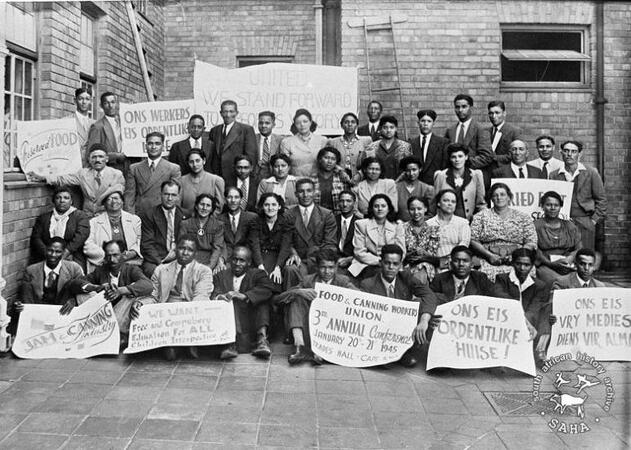
Women and The Food and Canning Workers’ Union
The fruit-canning industry in South Africa can be traced to the late nineteenth century, when the first jam factories opened in Paarl and Stellenbosch in the…
 Article
Tswana
(seTswana [language], baTswana [people]) The four major ethnic divisions among Black South Africans are the Nguni, Sotho-Tswana, Shangaan-Tsonga and Venda…
Increasing repression and the turn to the armed struggle
A series of legislations were passed by the NP led government in the 1950s as it sought to deal with dissent and entrench apartheid. Leading political…
Trade Union Council of South Africa (TUCSA)
The Trade Union Council of South Africa (TUCSA) was founded in October 1954 by 61 unions mainly representing White workers and mixed unions of Coloured and…
 Article
Afrikaner Broederbond
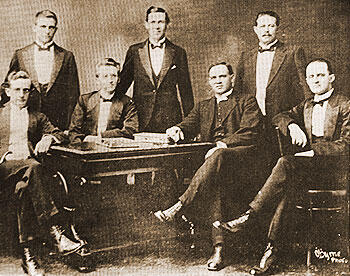
On 5 June 1918 disaffected Afrikaners were brought together in a new organisation called Jong Suid-Afrika (Young South Africa). The following year its name was…
 Article
The Homelands
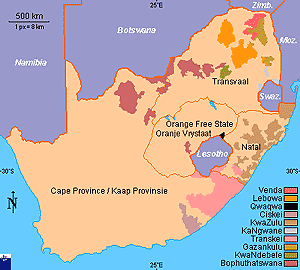
The Bantustans or homelands, established by the Apartheid Government, were areas to which the majority of the Blacks population was moved to prevent them from…
 Article
The Namibian struggle for independence – 1966 – 1990 – a historical background
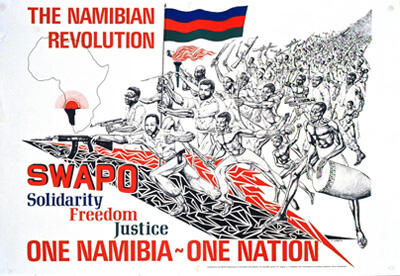
During the 1960s most of Africa’s countries had gained independence except for Namibia. Geographically, Namibia is made up of savannah, dry scrub land, as well…
 Article
Peter Henry Abrahams timeline 1919 - 1985
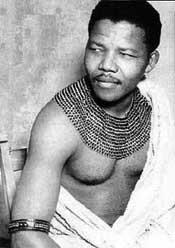
1919 Peter Abrahams is born in Vrededorp, Johannesburg in March 1919 to an Ethiopian father and a Coloured mother. His father passed away when he was young…
 Article
Community histories in Port Elizabeth
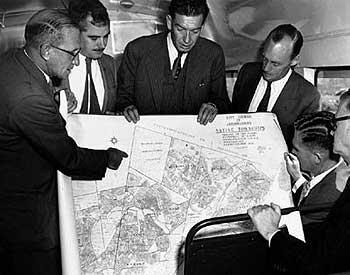
Xhosa community The pre-1994 apartheid system of homelands or 'Bantusans' denied Xhosa people South African citizenship and attempted to confine them to the…
 Article
Apartheid and reactions to it
In 1948, the National Party (NP), representing Afrikaners, won the national election on a platform of racism and segregation under the slogan of 'apartheid’…
‘Ubuqaba’ and ‘UbuGqobhoka’: Reading Zakes Mda’s Heart of Redness through a Post-Developmental lens by Rachel Fenton
‘Ubuqaba’ and ‘UbuGqobhoka’: Reading Zakes Mda’s Heart of Redness through a Post-Developmental lens Rachel Fenton ‘Politics and the Novel’ January 2015 …
 Article
Insurrections Ensemble
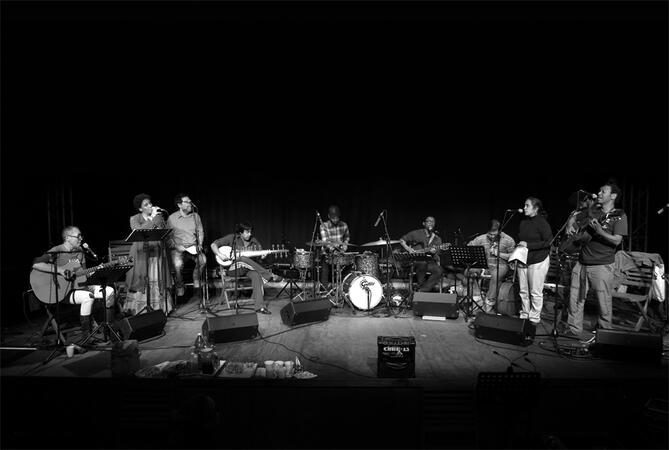
Can you create music that can find a home on both sides of the Indian Ocean beyond the cliché of “fusion”? Are Indian forms compatible with their African…
 Article
December 16 and the Construction of Afrikaner Nationalism
The date, December 16, holds a special significance in South African history. On this day in 1838, the Voortrekkers fought a battle for survival against…
 Article
Cuba and the struggle for democracy in South Africa
The revolution in Cuba, culminating in Fidel Castro’s seizure of power on 1 January 1959, was from the beginning based on a non-racial ethos, and revolutionary…
 Article
History Grade 11 - Topic 3 Contextual Overview
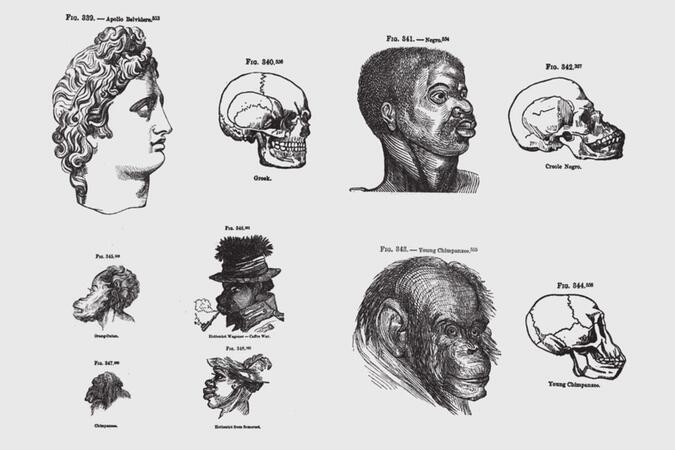
Introduction In the previous section, we have learnt about the origins of capitalism, however, we paid cursory attention to the racial character of that…
 Article
History Grade 11 - Topic 4 Source-based Questions
QUESTION 1: HOW WAS AFRIKANER NATIONALISM PROMOTED IN SOUTH AFRICA DURING THE 1930s TO 1940s? Study Sources 1A, 1B, 1C and 1D and answer the questions that…
 Article
History Grade 11 - Topic 4 Contextual Overview
Figure 1.1. With his call to put “America First”, Donald Trump is the latest recruit to a dangerous nationalism. Flagrantly authoritarian figures like Donald…
Biography of Bessie Emery by Elizabeth Venditti
ABSTRACT: Bessie Emery was the first black South African woman to publish a collection of short stories.[i] She was also described as a passionate and…
 Article
Black Consciousness and student revolt in the Cape
After the government crackdown on political organizations in the early 1960s, new organizations emerged to fill the political vacuum. A movement based on the…
 Article
South African Student Organisation (SASO)
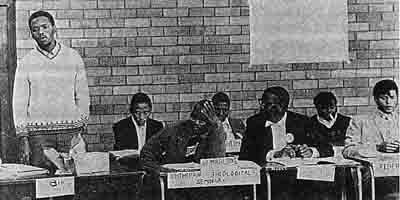
The Origins and formation: The South African Student Organisation (SASO) was formed in 1968 after some members of the University of Natal’s Black Campus…
 Article
The International Defence and Aid Fund (IDAF)
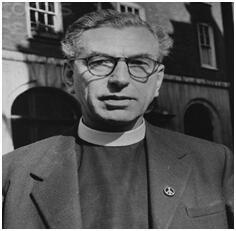
The International Defence and Aid Fund (IDAF) was established by Canon L John Collins of St Paul’s Cathedral in 1956. Its mission was to work towards a…
 Article
History Grade 10 - Topic 4 Essay Questions and Answers
Shaka Zulu Legacy Essay questions on Shaka Zulu’s legacy will be asked as 8-mark questions where students have to use sources to answer the question. The…
Armed struggle & the advancement of the student and labour movements, 1967-1976
Introduction MK Sabotage. This photograph was part of a sequence shot by a Rand Daily Mail photographer, two of which were published in the and Daily Mail of…
 Article
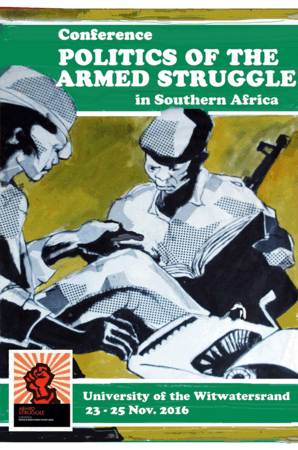
Paper abstracts and biographies of speakers
NameKoni Benson & Asher GamedzeOrganisationUniversity of Cape Town Biography Asher Gamedze currently cuts up most of his time between playing music, studying…
 Article
African National Congress Timeline 1940-1949
In the 1940s the ANC rejuvenated itself and began to work more closely with the SACP, putting behind the antagonistic relationship between the two parties in…