
SAHO global search
616 records
Hunter-Gatherers in Southern Africa
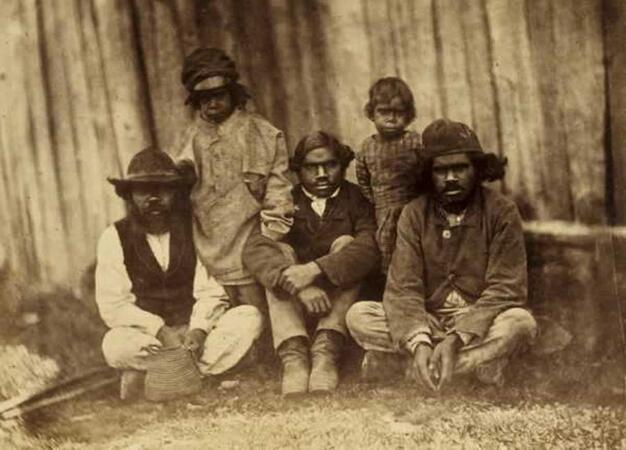
For more than 95% of the last 100 000 years, most people all over the world followed a hunting and gathering way of life. Until recently, people living by…
 Article
The spread of these ideas to Europe and Australia
The indigenous inhabitants of Australia The continent of Australia was settled about 60,000 years ago. Before European settlement, most of the inhabitants of…
 Article
The Black Consciousness Movement in South Africa
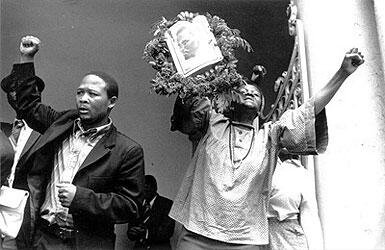
The landscape of Black political activity in the 1960s was different that of the previous decade. The apartheid government had banished the Black resistance…
Biography of Heinz Klug by Ashley Rogers
… family came to South Africa from Mauritius in the early 1900s. [i] They were involved in shipping and moved to the …
Growth of African Nationalism and Defiance
The 1940s saw a growth of African nationalism that positioned itself to challenge the rising Afrikaner nationalism. The ANC which was weak in the 1920 and…
 Article
Towards a people’s culture - Art and Resistance under Apartheid
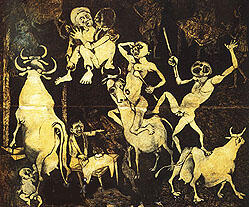
Art in the state of siegeThe Sharpeville Massacre was one of the most important turning points in the history of South Africa. It triggered a chain of events,…
 Article
Liberation Struggle in South Africa
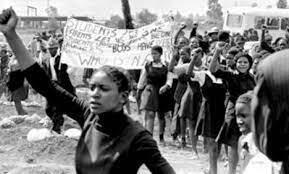
Although Apartheid only ‘officially’ started in 1948, repression was rife in South Africa long before that date. This special project examines the Freedom…
 Article
A history of Soweto
The consequence of this promising wealth was that a great number of people left their farms, rural homes and other towns in South Africa to make a quick buck…
 Article
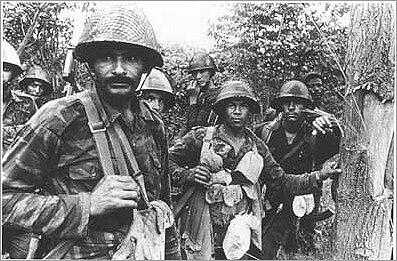
The Angolan Civil War (1975-2002): A Brief History
The overthrow of Portugal’s Prime Minister, Marcello Caetano, on 25 April 1974 hailed a watershed moment for the former Portuguese colonies of Mozambique,…
The historical significance of COSATU’s Workers’ Charter Campaign
Introduction During the late 1970s and early 1980s the issue of drawing up a Workers’ Charter became a leading item on the agenda of the South African labour…
A Society for the “Advancement of Art”
… Drawing Club (SADC), founded in 1889. 12 In the early 1900s, Burg Street and St George's Street were the address of …
Afrikaner
From European to "Africaander” The modern Afrikaner is descended mainly from Western Europeans who settled on the southern tip of Africa during the middle…
 Article
History of elections in South Africa
Introduction The South Africa Act passed by the British Parliament in 1909 combined the self-governing British colonies of the Natal, Cape, Transvaal and…
 Article
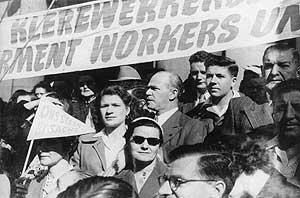
Garment Workers Union (GWU)
Formed in 1928 by Emil Solomon (Solly) Sachs, this was a union of women factory workers that transcended barriers of colour and class. In the late 1920s and…
 Article
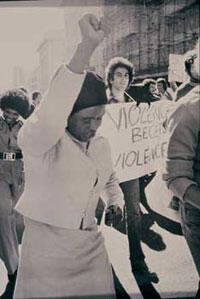
The Youth Struggle
From the early years of colonial rule, South African youth had participated in various forms against the racist character of colonialism, oppression, and…
 Article
Western Cape Civic Association (WCCA)
Civic organisation also experienced problems in organising across the racial divide. Initially the emerging civic organisation in African township and coloured…
 Article
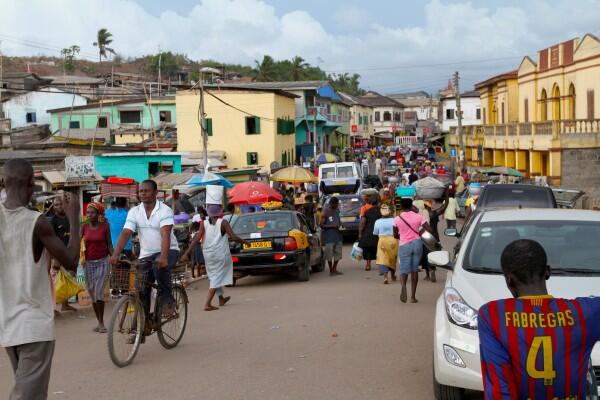
50 Facts on Africa
In the modern-day world the view people are given of Africa is often a narrow one. In this piece we present 50 facts about this continent that people may not…
 Article
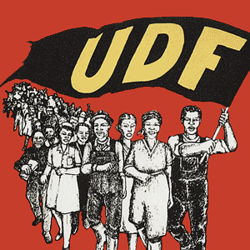
United Democratic Front (UDF)
The United Democratic Front (UDF) was an anti-apartheid body that incorporated many anti-apartheid organisations. It was launched in 1983, in Mitchells Plain…
The Afrikaanse Handelsinsituut
The Afrikaanse Handelsinsituut (AHI – in English the Afrikaans Commercial Institute) was formed during WWII to create Afrikaner businesses and represent their…
Grade 12 - Topic 4 - The end of the Cold War and a new global world order 1989 to present
There were many reasons why apartheid collapsed. You can read about the crisis of Apartheid in the 1980s in section 5 of the grade 12 material. The collapse of…
 Article
Commemoration, remembering and memorialising June 16 Soweto uprising
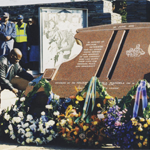
Since the early 1990s, June 16, now known as Youth Day, has been remembered, commemorated, and memorialised as public history. There have been different ways…
 Article
A history of prison labour in South Africa
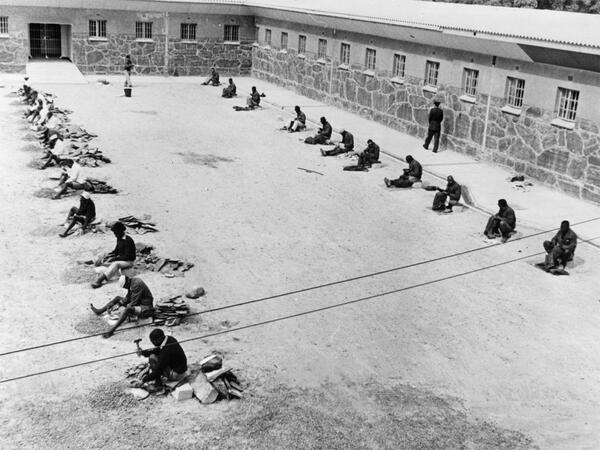
Prison labour has a particularly debatable history in South Africa. Historically, South Africa operated on the understanding that prisons were places of…
Conflict among civic organisations
Civic organisations in the Western Cape, particularly in Cape Town did not share the same ideological stance, interests and outcomes. One of the major…
 Article
The Society of Young Africa (SOYA)
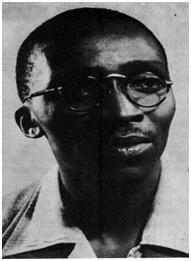
The Society of Young Africa (SOYA) held its opening conference on 20th December 1951. Led by I. B. Tabata, SOYA was closely linked to the Non European Unity…
 Article
Nelspruit Timeline 1815-1996
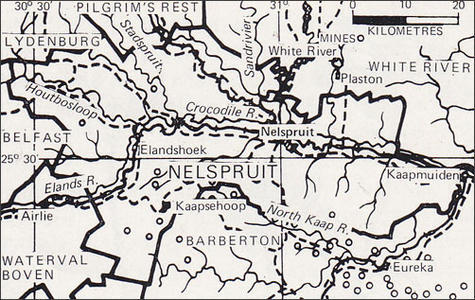
1815 Louis Trichardt and Hans van Rensburg cross the Oranje/Gariep river. June 1836, Van Rensburg leaves Trichardt while Potgieter goes on an expedition to…
 Article
Azanian People’s Organization (AZAPO)
In aftermath of the June 16 Uprising, the government cracked down on student activists and organisations alike. On 19 October 1977 the Black Consciousness…
State policies and social protest, 1924-1939
One of the most important developments in South Africa in this period was the formation of the Pact Government in which the push for independence from Britain…
 Article
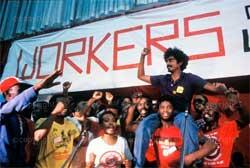
Congress of South African Trade Unions (COSATU)
The Congress of South African Trade Unions (Cosatu) was launched on 1 December 1985, at the height of the struggle against apartheid. As a federation, it…
 Article
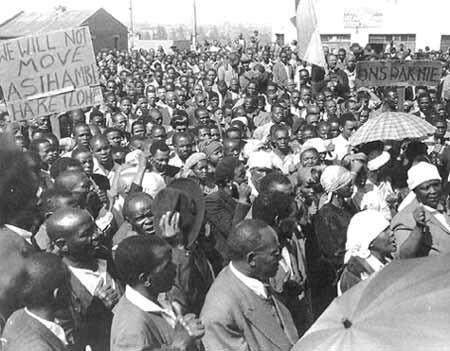
Sophiatown Timeline
Pre-1860s South Africa is still a predominantly agrarian 1860s-1880s This period marks a turning point in South African history when the discovery of…
 Article
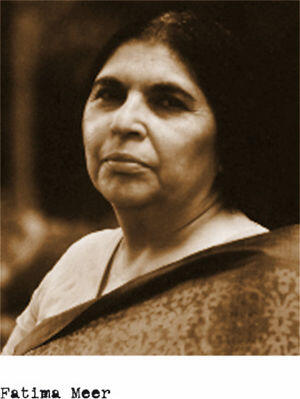
Fatima Meer Timeline 1928-2010
1928 Fatima Meer was born in Durban, daughter of Moosa and Amina Meer. 1940s Established literacy classes for adults in her father's garage She spent…