
SAHO global search
156 records
Rejuvenation of the ANC and intensification of the struggle 1940s
In 1940, Alfred Xuma was elected the new president of the African National Congress (ANC), and a period of greater action was introduced. Xuma was still…
 Article
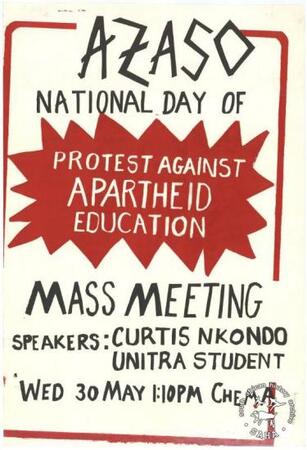
Azanian Students Organisation (AZASO)
Filling the void left by SASO? The Azanian Students Organisation (AZASO): A summary Following the banning of the South African Student Organisation (SASO) a…
 Article
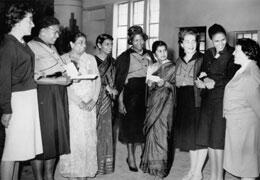
Federation of South African Women (FEDSAW)
The Federation of South African Women (FEDSAW or FSAW) was launched on 17 April 1954 in Johannesburg as the first attempt to establish a broad-based women’s…
Mission Stations - G-H
… from Burchell in 1811: "The Vignette at the end of this chapter is a view of a part of the valley of Genadendal, … a part of the ridge, which is represented…
 Article
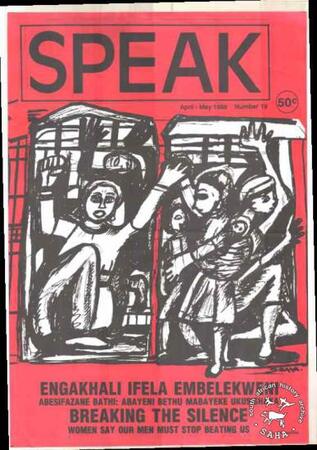
SPEAK Magazine (1982 - 1994)
… but ‘ those priests do not mention that in the same chapter they quote, there is a request for men to respect and …
 Article
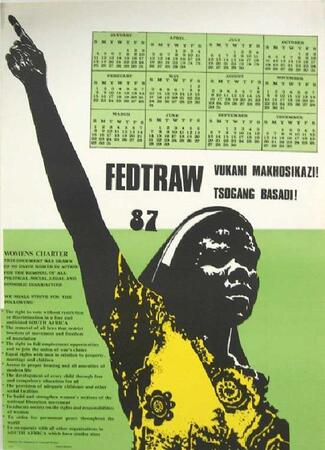
Federation of Transvaal Women (FEDTRAW)
The Federation of Transvaal Women (FEDTRAW) was formed on the 8th of December 1984, bringing together close to 200 women from all over the Transvaal (now known…
 Article
Co-operation and conflict on the Highveld
… about the rise of the Basotho state under Moshoeshoe, this chapter takes the story a bit further. Trouble over the land …
 Article
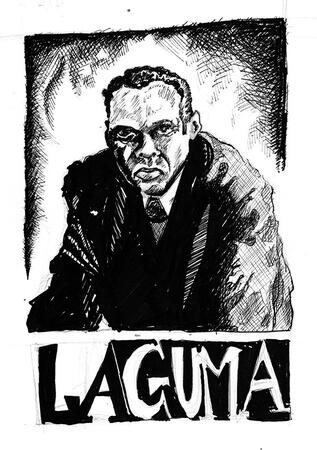
South African Coloured Peoples Organisation (SACPO)
Like all other Black ethnic groups, the Coloureds also fell victim to segregation and repressive legislations enacted by Colonial and successive governments…
 Article
A change to armed struggle and the state’s intensified repression 1960s
With no discernable change in government policies, some members of the African National Congress (ANC) began to move away from peaceful protest. The ANC…
 Article
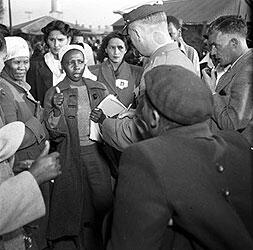
ANC January 8th Statements
The ANC in exile issued its first January 8th statement in 1972, the founding date of the ANC. This statement outlined the organisation’s programme for the…
 Article
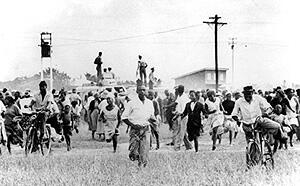
The Anti-Pass Campaigns 1960
1959-1960: Formation, Sharpeville and Banning For many years there was tension inside the African National Congress (ANC) between those with more moderate…
Prehistory: Pre colonial farmers in Gauteng
… time, the Boers declared a Republic and started a new chapter in the history of Greater Johannesburg. …
 Article
Organisation of African Unity (OAU)
Context: The Emergence of a Pan-African Rhetoric The Organisation of African Unity (OAU), established on 25 May 1963, was the culmination of a number of…
 Article
African National Congress Youth League (ANCYL)
The African National Congress Youth League (ANCYL) was established on 2 April 1944, by Anton Lambede (who became the League’s first President), Nelson Mandela,…
 Article
Apartheid crumbles, Women in the turmoil of the 1980s
The 1980s saw escalating state repression and mass detentions. In a frenzy of desperate reaction, the government declared a series of back-to-back states of…
Gallery
This extensive history through pictures gallery documents the role that women have played in the liberation and democratisation of our country from 1900…
 Article
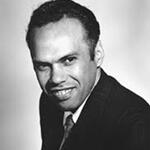
The South African Coloured People’s Organisation (SACPO)
The South African Coloured People’s Organisation (SACPO) was formed in 1953 at a Coloured People's Convention in Cape Town. The organisation aimed to unite…
Liberation organisations
UDF The United Democratic Front (UDF) was a non-racial alliance of about 400 national, regional and local organisations. It was launched in Cape Town in 1983,…
 Article
Customary Law in South Africa: Historical Development as a Legal System and its Relation to Women’s Rights by Devon Wall
… race, class, belief or sex ’. (Ebrahim, 1998) Indeed, Chapter I of the Constitution states that South Africa is …
 Article
The turbulent 1950s - Women as defiant activists
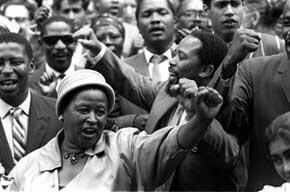
In the 1950s the government's increasingly repressive policies began to pose a direct threat to all people of colour, and there was a surge of mass political…
 Article
ANC and the early development of apartheid 1948-1950s
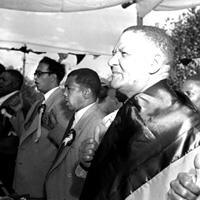
In 1948 the Nationalist Party (NP) won the election, and began to introduce the policy of apartheid. The African National Congress (ANC) reacted immediately to…
ArticleSouth African Coloured People Organisation (SACPO)
Like all other Black ethnic groups, the Coloureds also fell victim to segregation and repressive legislations enacted by Colonial and successive governments…
South African Constitution 1996
The adoption of the South African Constitution on 8 May 1996 was one of the turning points in the history of the struggle for democracy in this country. The…
First National Consultative Conference - Morogoro, 26 April 1969
The first National Consultative Conference of the ANC was held at Morogoro, Tanzania, from 25 April to 1 May 1969. The conference has become known as the …
 Article
Federation of South African Women by Skylar Jayes
This article was written by Skylar Jayes and forms part of the SAHO and Southern Methodist University partnership projectAbstractThe Federation of South…
 Article
The Johanna
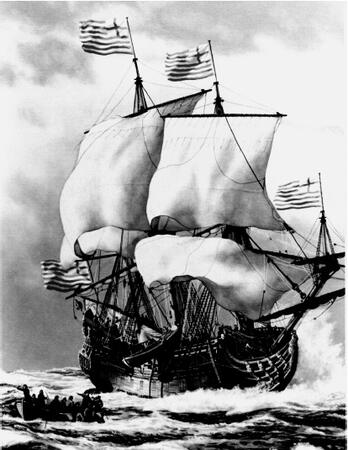
The Johanna, or Joanna, was a British East Indiaman vessel sailing from Kent, England, to Surat, India, under the command of Captain Robert Brown. She embarked…
First Matabele War
In 1890 Cecil John Rhodes became premier of South Africa with the support of the Afrikaner Bond. Rhodes' grand imperial vision for a British Africa included…
 Article
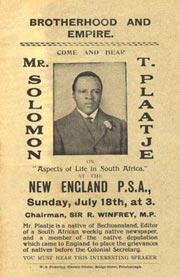
1910-1924: African nationalism and working-class and popular protests
… became known as the Bulhoek Massacre. It opened another chapter in South African history of Black people's defiance …
 Article
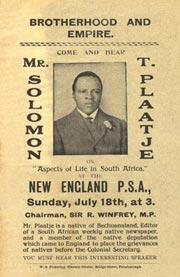
African nationalism and working-class & popular protests, 1910-1924
… became known as the Bulhoek Massacre. It opened another chapter in South African history of Black people’s defiance …
 Article
Women and the struggle against Apartheid
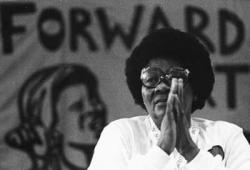
Introduction Full feature on the History of Women’s struggle in South Africa will give a broader view of the role played by women in the struggle for freedom…