
SAHO global search
11,508 records
 Archive
Steve Mokone: the striker who broke the apartheid barrier
The first black South African footballer to play in Europe, was told whenever he scored it would be in the cause of independence. Jonathan Wilson tells of a…
 Event
Castro decides to send troops to Angola to fight South Africa
The president of Cuba Fidel Castro decides to send Cuban troops to Angola in response to South Africa's invasion of the country. After attaining its…
 Article
Grade 5 - Term 2: The first farmers in Southern Africa
The first farmers in southern Africa were Bantu-speakers and archaeology shows that they entered southern Africa between 2 000 and 1 700 years ago This topic…
Chapter 4. From The Poverty of the Platteland to the Slums of the City: Farm Girls Turned Into Factory Hands
The Poor White problem spread to the factories and the slums of Johannesburg and was soon felt in the offices of the union. There was a constant flow into the…
Statement by Oliver Tambo to the Diplomatic Correspondent of Morning Star, 23 November 1967, London
South Africa - The principal target Mr. Tambo explained that the Lusaka communique was issued when the Smith regime was trying to give the impression that the…
 Article
uMkhonto weSizwe (MK) and the Armed Struggle
Sabotage campaigns Between 1961 and 1963 MK was responsible for about 134 acts of sabotage. Many of these caused minor damage to the intended targets…
Biography of Caiphus Semenya
Caiphus Semenya is a South African composer, musician, and arranger that became known for his musical work while living in Southern California during South…
The values of David Goldblatt by Zachary Rosen,13 June 2017
Inseparable from the photographic images of world-renowned South African photographer David Goldblatt, are values. Values, like waves of light, are in some…
 Article
Women in the Cities and the Resistance Movement
Why is sexual violence so endemic in South Africa and why has it been so hard to combat? by Jessica Clarke
Why is sexual violence so endemic in South Africa and why has it been so hard to combat? Abstract This essay will firstly lay out government legislation…
 Place
Angola
Angola has a long and rich history, and is home to some of the largest historical kingdoms in Africa such as the Kingdom of Kongo or the Kingdom of Ndongo. The…
 Place
Sea Point
Early HistoryFor years prior to European settlement, Sea Point formed part of the Gorachoqua and Goringhaiqua grazing paths, which stretched out to Hout Bay…
 Article
Bloemfontein Timeline 1824-2010
1824 The Matabele, underChief Mzilikazi, settle on Thaba Bosiu. 1833 The Baralong under Chief Moroka II settle at what was later known as ThabaNchu. …
 Article
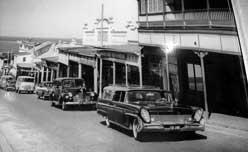
Port Elizabeth the Segregated city
Contents 1910-1950 Apartheid ideology and implementation from 1950 Conclusion 1910-1950 By 1950, the population of New Brighton had grown from 3,650 in…
 Article
Freedom Day: 27 April
Freedom Day on 27 April is an annual celebration of South Africa's first non-racial democratic elections of 1994. It is significant because it marks the end of…
Background to the Freedom Charter 1955
Defiance Campaign mass meeting The post-1948 period saw the African National Congress (ANC) abandoning its traditional reliance on tactics of moderation such…
 Article
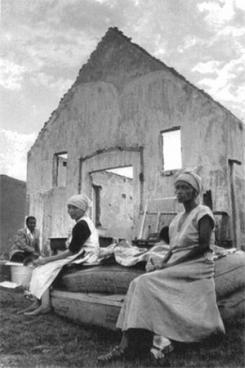
Socio-economics in Sophiatown
The economic activity of children African children living in Sophiatown were particularly vulnerable to the harshness of urban life. Schooling was not…
 Article
The Aftermath of the war
The Second Anglo-Boer War resulted in heavy loss of life for both the Boers and the British. The Boers had lost the war and peace negotiations begun in March…
Communist Party of South Africa, What is the Native Independent Republic? (1934)
From: South Africa's Radical Tradition, a documentary history, Volume One 1907 - 1950, by Allison Drew Document 76 Communist Party of South Africa, What is the…
 Article
Manto Tshabalala-Msimang timeline 1940 - 2009
1940 9 October, Manto Tshabalala-Msimang is born in Durban, KwaZulu Natal. 1959 Tshabalala-Msimang matriculates from Inanda Seminary. 1961 Tshabalala…
The first martyrs of Satyagraha by E. S. Reddy
Gandhiji often stressed that satyagraha is not mere jail-going. He warned, during the first satyagraha in South Africa, as early as 1909: "A satyagrahi…
Beerhalls in Soweto from Soweto Heritage Survey Final Report compiled by Steven Lebelo and Elsabe Brink for the National Monuments Council, Northern Region
Beerhalls have always been at the centre of the waves of political turmoil in Johannesburg's African townships. The Johannesburg City Council JCC) opened a…
 Place
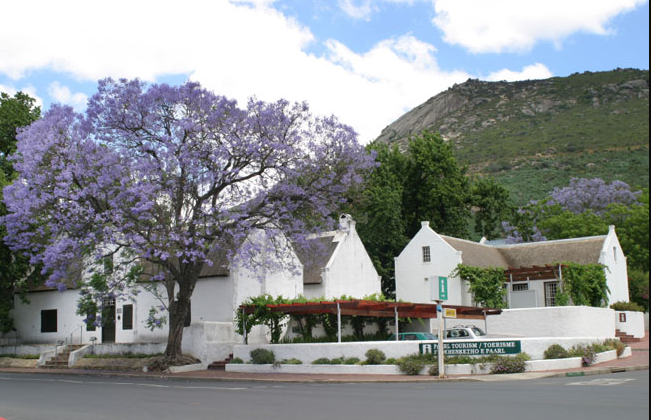
Paarl
(prior to 1910)The division of Paarl was originally part of the district of Stellenbosch, and was proclaimed a separate division in 1839. Like Stellenbosch its…
Neville Alexander interviewed by Rupert Taylor and Adam Habib,25 April 1998, Cape Town
Neville Alexander 25/3/98, Cape Town interviewed by Rupert Taylor and Adam Habib Habib: We generally start off with the question of trying to get people’s…
Propaganda and the Pursuit of Hegemonic Goals – The Myanmar and Zimbabwe Experience by Thabo Mbeki, 29 February 2016
Much has been written about how much the so-called international community expected the new South Africa born in 1994 to lead the campaign for respect of human…
 Place
Michaelis School of Fine Art
The Michaelis School of Fine Art, the namesake of the Fine Art Department of the University of Cape Town, is located on Hiddingh Campus, which is a cluster of…
Say It out Loud - The 1921 Presidential Address, Cape Town, 29th March, 1921
From the book: Say It out Loud by Mohamed Adhikari The 1921 Presidential Address, Cape Town, 29th March, 19211 Seventeen years ago, in my first…
Why did so few Black South Africans make films before the 1990s?
There are less than a handful of black directors who made films before the 1990s. The reasons for this are the same reasons that kept black people out of other…
 Article
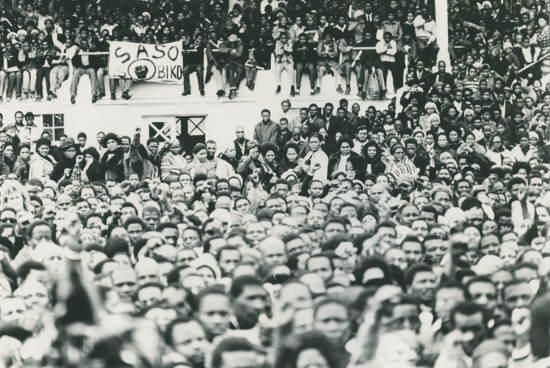
SASO Bannings
SASO came under increasing attack from the Government. In March 1973, eight Black Consciousness leaders were banned. In 1977, nine SASO members were sentenced…
 Place
Masiphumelele Township, Cape Town
Masiphumelele means “We will succeed” in Xhosa. This spirit of endurance was needed by the people for decades - and these words are still an expression of…