
SAHO global search
473 records Advanced search →
 Article
Organisation of African Unity (OAU)
Context: The Emergence of a Pan-African Rhetoric The Organisation of African Unity (OAU), established on 25 May 1963, was the culmination of a number of…
 Article
Non-European Unity Movement (NEUM)
This article was written by Baruch Hirson A Short history of the Non-European Unity – An insider's view Where is the Non-European Unity Movement? The Non…
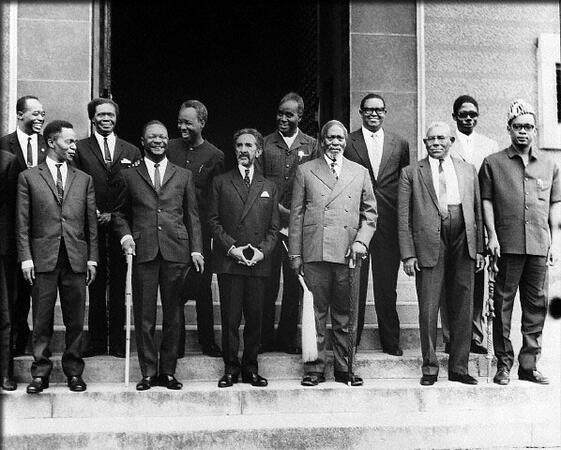
Organization of African Unity Charter
 Article
Organization of African Unity Timeline 1884-2000
1884 Otto von Bismarck chairs the Berlin Conference to stem the scramble for Africa. Only Morocco, Ethiopia, and Liberia are recognized as independent…
South African Government of National Unity (GNU) – 1994 – 1999
From 27 April 1994 to 3 February 1997, South Africa was governed by a Government of National Unity (GNU) under the leadership of African National Congress (ANC…
Briefing to Organisation of African Unity
'Unite! Mobilise! Fight On! 1976 ANC document
'Unite! Mobilise! Fight On! by Nelson Mandela
Harry Snitcher 1, Unite Against Segregation! Condemn the C.A.C. [1943]
South Africa’s Radical Tradition: A documentary history, Volume two 1943 – 1964. Edited by Alison Drew.Part oneHarry Snitcher 1, Unite Against Segregation!…
The Government of National Unity and the making of the new Constitution
"People's Front and the Cry for Unity in South Africa", The Spark, 2, 4, April 1936
 Article
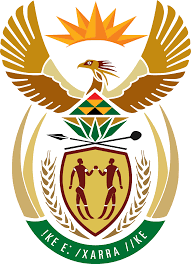
National symbols such as the Coat of Arms and the National Anthem
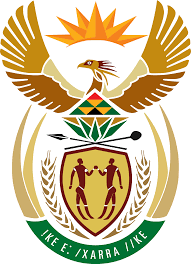
National Symbols since 1994In South Africa, we have a perse number of people and cultures, but we are all South African. National symbols such as a national…
 Article
Cuba and the struggle for democracy in South Africa
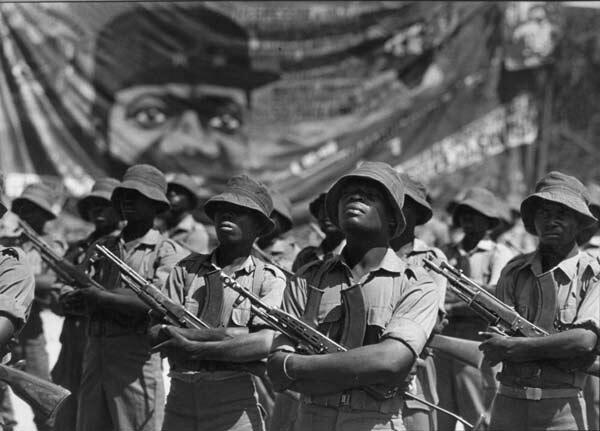
The revolution in Cuba, culminating in Fidel Castro’s seizure of power on 1 January 1959, was from the beginning based on a non-racial ethos, and revolutionary…
 Article
Angolan Civil War (1975-2002): A Timeline of Events
1961 FNLA and MPLA begin a guerrilla campaign to overthrow Portuguese colonial rule. 25 April 1974 Portuguese colonial rule ends after a coup removes…
 Article
The National Coat of Arms
The role of a Coat of Arms A national coat of arms, or State emblem, is the highest visual symbol of the State. Take a minute to consider the important events…
Grade 12 - Topic 2 - Independent Africa
In 1884, at the Berlin Conference, the European powers carved up Africa amongst themselves. By 1914 all of Africa, except Liberia and Ethiopia, was under…
 Article
1976-1983: Mass Democratic movements
Introduction
 Article
Grade 6 - Term 3: Democracy and the Constitution
National Symbols since 1994 In South Africa, we have a perse number of people and cultures, but we are all South African. National symbols such as a national…
 Article
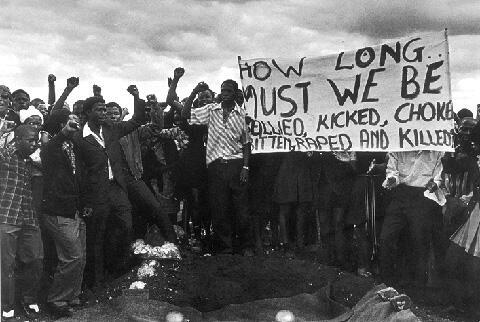
Mass Democratic movements, 1976-1983
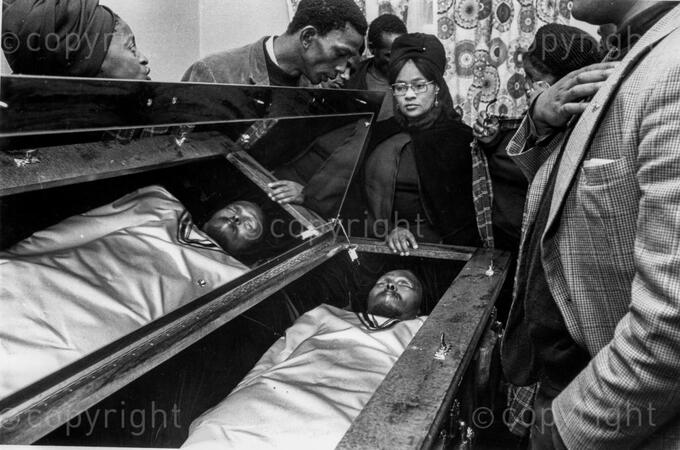
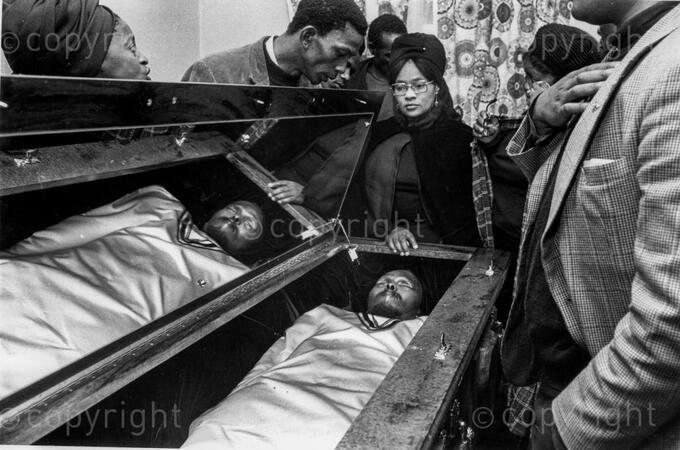
IntroductionNovember 1977, Dr Mamphele Ramphele stands over Steve Biko's open casket in his home before the funeral, attended by 20,000 mourners at King…
 Article
African Nationalism
Introduction Nationalism refers to an ideology, a form of culture, or a social movement that focuses on the nation. It emphasises the collective of a…
Launch of uMkhonto weSizwe (MK)
Umkhonto we Sizwe logo 16 December 1961 is seen as the date of formation because Umkhonto performed its first acts of violence on this date. Popularly called…
 Article
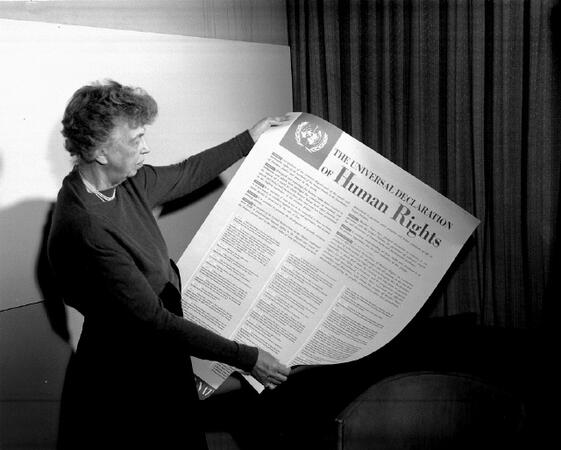
New identities and the construction of heritage
Please note that there is a compulsory assessment task that must be completed in this section (part of the curriculum)New identities: Human Rights for allThe…
 Article
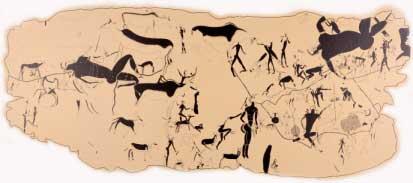
The Linton Panel & the San language
Very little is known about the languages of South Africa's San people, as most of these beautiful, ancient languages were never recorded. Fortunately, the /Xam…
 Article
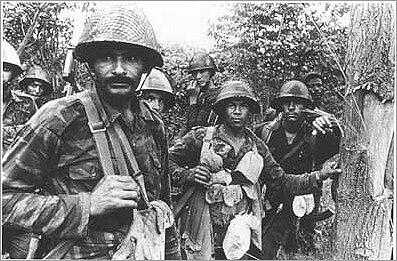
The Angolan Civil War (1975-2002): A Brief History
The overthrow of Portugal’s Prime Minister, Marcello Caetano, on 25 April 1974 hailed a watershed moment for the former Portuguese colonies of Mozambique,…
 Article
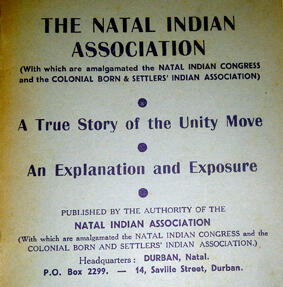
Natal Indian Association (NIA)
The Natal Indian Association (NIA) was formed when the Natal Indian Congress (NIC) and the Colonial Born and Settlers Indian Association (CBSIA) amalgamated.[1…
 Article
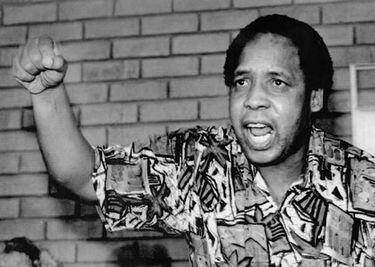
Thembisile Chris Hani Timeline 1942 - 2003
1942 28 June, Martin Tembisile, who later becomes known as Chris Hani, is born in the village of Sabalele in Cofimvaba (then named St Marks) region, Transkei…
 Article
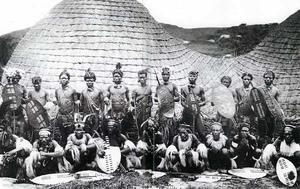
Zulu
The four major ethnic divisions among Black South Africans are the Nguni, Sotho, Shangaan-Tsonga and Venda. The Nguni represent nearly two thirds of South…
 Article
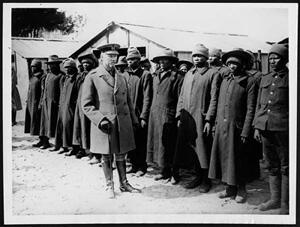
World War I and the South African Native Labour Contingent
The South African Native Labour Contingent (SANLC) was formed in 1916 in response to a request from the British Imperial Government for an African labour force…
 Article
Truth and Reconciliation Commission (TRC)
The Truth and Reconciliation Commission (TRC) was a court-like body assembled in South Africa after the end of Apartheid. Anybody who felt they had been a…
Armed struggle & the advancement of the student and labour movements, 1967-1976
Introduction MK Sabotage. This photograph was part of a sequence shot by a Rand Daily Mail photographer, two of which were published in the and Daily Mail of…