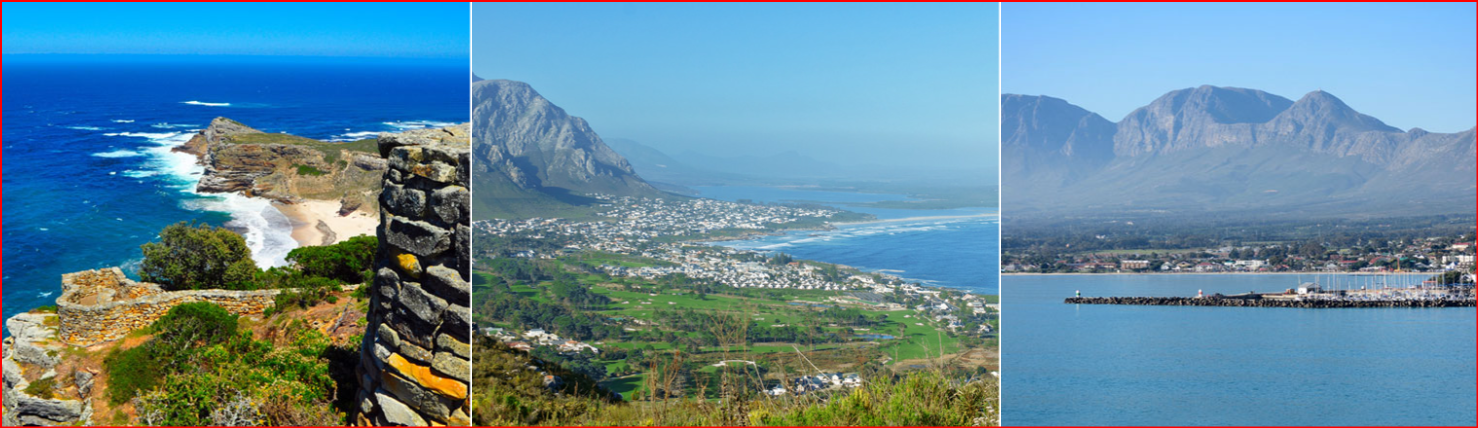
In 1993, the Cape Province was divided into three smaller provinces. One of them is the Western Cape. The Western Cape was the first place in the country where people from Europe settled. The Europeans brought slaves from Malay to serve them, and the Malay culture became part of South Africa own heritage. Some of the buildings in Cape Town are more than 300 years old. In the Cape, as many languages like Dutch, French, German and Malay were spoken, these were mixed to form a new language called Afrikaans that is unique to South Africa. The word 'Afrikaans' means 'African' in Dutch. Today, Afrikaans is the third most widely spoken home language in South Africa, after isiZulu and isiXhosa.
Capital: Cape Town (also the legislative capital of South Africa)
Main languages: Afrikaans, English, isiXhosa
Premier: Helen Zille (6 of May 2007 -10 of May 2015) the 8th Premier and current leader is: Alan Winde (2019-)
First premier (1994): Hernus Kriel
The Western Cape's claim to fame:
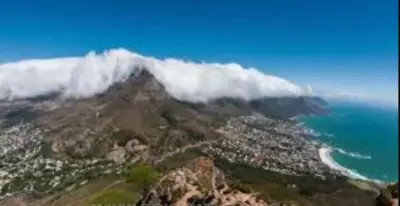
Table Mountain is a national monument. It is a Natural Wonder of the World that is often used as a symbol forCape Town and South Africa. On days where there are no clouds, the mountain can be seen from 200 kilometers out at sea. It is called Table Mountain because it is so flat on top that it looks like a table. On the either side of Table Mountain there three named hills. They are Devil's Peak, Signal Hill and Lion's Head.
Robben Island is just off the coast of Cape Town. There was a jail on the island where political prisoners were kept. Political prisoners are people who are sent to jail because they challenged the government. Many leaders of the Freedom Struggle were sent to Robben Island, including former President Nelson Mandela. Today, the jail is a museum and a World Heritage Site because of its importance to our historical heritage.
Castle of Good Hope- (INTERESTING LINK PROVIDE IN FURTHER READING)
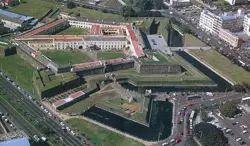
The Castle of Good Hope is the oldest building in South Africa that is still standing. It was built between 1666 and 1679 by the Dutch East India Company (VOC), a big trading company from the Netherlands. The castle has five corners, like a star. Each corner has a name: Buren, Nassau, Katzenellenbogen, Leerdam and Oranje. The names come from the title of the Dutch ruler of that time, the Prince of Orange. The stone that was used for the castle walls came from Robben Island.
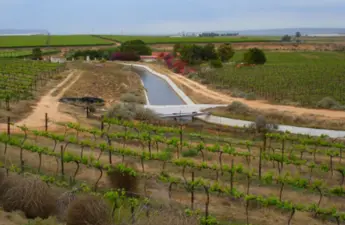
The wines of the Western Cape are known all over the world. Groot Constantia is the oldest wine producer in the country. It was part of the farm of one of the old Dutch governors of the Cape, Simon van der Stel. There are wine farms, or estates, all over the province, like in the Boland, Swartland, Olifants River Valley and the Klein Karoo.
Cape Minstrels
Every New Year, there is a carnival in Cape Town called the Coon Carnival. Troops parade in the streets in colourful costumes, and on the last day they all gather at the Greenpoint Stadium for a choir festival. There is a competition for the troop with the best costumes and choir performance. The carnival originated in the festivals that the old slaves held to celebrate the New Year, and was also influenced by carnivals from America. It is an important part of the culture of South Africa. Many people from all cultures come to watch the carnival every year.
Biodiversity in the Province
Emphasis on human wellbeing is echoed by CapeNature’s CEO, Dr Ashley Naidoo:
“The resilience of our ecosystems and the services they provide is key to the wellbeing of the people of the Western Cape,” he said.
The message is clear: conservation is not just about scenic beauty or species counts. It is about securing the natural infrastructure on which society depends — clean air, safe water, fertile soil and a stable climate. Crucially, the report aligns with the national State of Environment Outlook and international commitments under the UN Convention on Biological Diversity. It is part of a broader attempt to not only track biodiversity loss but reverse it — one hectare, one river, one estuary at a time. Looking ahead, CapeNature and its partners face a difficult balancing act: to expand the conservation estate while simultaneously managing pressures from development, agriculture and climate volatility. The tools are there: adaptive management, targeted restoration, stewardship programmes, spatial planning.
The Western Cape’s oldest places you can still visit today (LINK PROVIDED IN FURTHER READING)


Dating back to 1802, Oude Werf is widely regarded as South Africa’s oldest continuously operating hotel. Set in the historic core of Stellenbosch, it began life as an inn for travellers moving between Cape Town and the interior.
Staying here today places you within walking distance of oak-lined streets, historic churches and wine farms that shaped the Cape’s early economy.
Ancient trees that are still growing
The camphor trees of Vergelegen and Constantia
Some of the Western Cape’s oldest living residents are not buildings but trees. The camphor trees planted at Vergelegen and across the Constantia valley are estimated to be more than 250 years old. Declared national monuments, these towering giants were planted to mark boundaries, offer shade and signal wealth.
Walking beneath their canopies today offers a rare sense of continuity, a living link between the present and the colonial Cape.
Company’s Garden and the Treaty Tree

Established in the 1650s as a refreshment station for ships rounding the Cape, Company’s Garden remains one of the city’s most historic green spaces. Among its oaks and ancient plantings stands the Treaty Tree, linked to the formal transfer of the Cape from Dutch to British control in 1806.
These trees have quietly borne witness to centuries of political, social and environmental change.
Arderne Gardens, Claremont
Home to one of South Africa’s largest collections of champion trees, Arderne Gardens is an overlooked pocket of living history. Many of its trees are recognised for their exceptional age, size and rarity, making this suburban park a surprising time capsule for visitors willing to slow down.
Roads and passes carved by time

Attakwaskloof Pass/Vdiest (talk) (Uploads), Public domain, via Wikimedia Commons
Attakwaskloof Pass
Used as early as 1689, Attakwaskloof Pass was one of the first routes linking the coast at Mossel Bay with the interior. Originally carved for foot traffic and ox-wagons, the pass winds through rugged mountain terrain that remains largely unchanged.
While modern vehicles no longer use the original route, hikers can still trace its path and imagine the effort it once took to move goods and people inland.
Bothmanskloof Pass
Dating back to the early 1700s, Bothmanskloof Pass connects the Riebeek Valley with the Swartland. It remains one of the oldest drivable mountain passes in the province, still used by farmers, cyclists and travellers exploring this agricultural heartland.
The pass is a reminder that some of the Western Cape’s most scenic routes were shaped by necessity rather than leisure.
Seven Passes Road
Completed in 1883, the Seven Passes Road between George and Knysna was the first direct route linking the two towns. Designed by Thomas Bain, it remains a favourite for slow travel, whether by car, bicycle or on foot.
Passing through forests, rivers and historic mountain passes, it offers a journey through both landscape and engineering history.
Lighthouses that have guided ships for generations

Cape Agulhas/Sebastian Wohlrapp/Unsplash
Cape Agulhas Lighthouse
Built in 1848 and first lit in 1849, the Cape Agulhas Lighthouse is the second-oldest working lighthouse in South Africa. Standing at the southernmost tip of the continent, it has guided ships through one of the world’s most treacherous stretches of coastline for more than 170 years.
Visitors can climb to the top for sweeping views and explore the keeper’s cottage, now a museum dedicated to maritime history.
Green Point Lighthouse

Completed in 1824, Green Point Lighthouse predates Agulhas and remains the oldest operational lighthouse in the country. Its location near the V&A Waterfront places it within easy reach of the city, yet it represents an era when the sea was the Cape’s primary gateway to the world.
Vineyards older than the country itself
Groot Constantia
Established in 1685, Groot Constantia is South Africa’s oldest wine estate and one of the Western Cape’s most significant heritage sites. Its Cape Dutch buildings, historic cellars and sprawling vineyards tell the story of wine’s role in shaping the region’s economy and culture.
Visitors can taste wines rooted in centuries of tradition while walking grounds that have remained productive for more than 300 years.
Blaauwklippen and Rustenberg
Both Blaauwklippen and Rustenberg trace their origins back to the early 1680s, making them among the oldest wine farms in the country. Still producing wine today, these estates offer tangible proof that the Western Cape’s winemaking heritage is not confined to museums.
Rietvallei Wine Estate, Robertson
Founded in 1864 and still family-owned, Rietvallei is home to historic Muscadel vines planted in the early 1900s. The estate represents a later chapter in the Cape’s wine story, showing how tradition and continuity extend beyond the earliest farms.
Why these places matter now
What links these trees, buildings, roads, lighthouses and vineyards is not just age but accessibility. These are not sealed-off relics. They are places you can walk through, stay in, taste from and travel along.
In a province known for reinvention and reinvigoration, the Western Cape’s oldest places remind us that some of its greatest stories are still standing, growing and waiting to be visited.