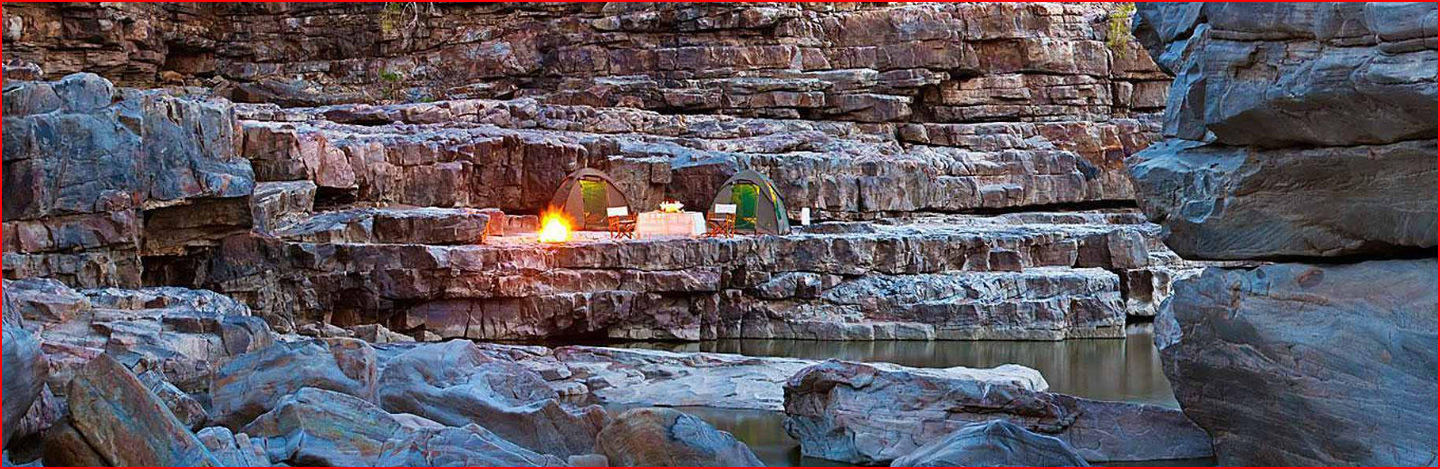
The World’s second largest Canyon with grand landscapes, breath-taking vistas, unforgettable sundowners, intensive game and bird viewing. Creating fascinating insights into the geology and History of Namibia and much more!
The Fish River Canyon forms part of the state-run Ais-Ais Richtersveld Transfontier Park. Entrance to the Park is situated 10 kilometres from the well-known view point-Hell`s Bend, at the Hobas Restcamp. Visitors have to report here.It is important to know that during the Summer months the Canyon hike is closed due to the heat. The Fish River Hiking Trail can be conducted during the months April – September and can be completed within 4 to 5 days, depending on fitness. It covers a length of 85 km and the descent into the Canyon is only allowed for hikers doing the trail. Day-visitors are not allowed to climb into the Canyon. The Fish River Canyon commences at Seeheim, at the lower course of the River. Seeheim is a settlement in the Karas Region of Southern Namibia. The only notable structures in Seeheim today are the Hotel and the Railway Station.
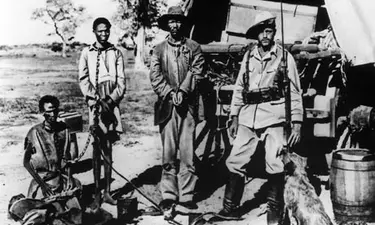
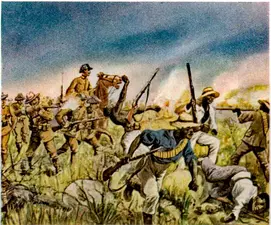
The Canyon is 161 km long, 27 km wide and up to 550m deep. The Fish River Canyon ends at Ai Ais and the river then flows into the Orange River, the border to South Africa. At Seeheim is a Hotel, in 1896 it was built from local rock, into a house for 'Schutztruppe' (German colonial forces). It was then converted into a Hotel in the roaring twenties and became the pivotal place of activities as the Town of Seeheim prospered and grew in size. For visitors interested in the Historical aspects of the surrounding, there are ruins to explore, while the activities of the Schutztruppe are evidenced by an evocative of rusting ammunition scattered in the surrounding Foothills. Future plans include the restoration of two Historical Railway Dwellings to accommodate groups and families, and the development of camping facilities.
The History of some of the oldest rocks in Namibia (gneiss) cut by the Fish River started over a Billion Years ago. The Namaqua Mountain Range eroded down to a vast plain flooded by the Ocean, about 650 Million Years ago. Then, about 350 Million Years ago the biological formation of the Fish River Canyon started.A vast graben formed along old tectonic faults. It formed the broad ancient Valley of the Fish River. The edges of this graben that are more than 20 km apart today form the upper edges of the Canyon. After the formation of the graben structure 300 Million Years ago, the riverbed was still 300 metres higher, than it is today. With the so-called Gondwana-Glaciation glaciers further deepened the graben.Today, ice in the canyon is completely unimaginable. With the separation of the continent Gondwana about 120 Million Years ago and the uplifting of the African continent the gradient of the Fish River increased allowing it to erode even deeper into the rock. Today the deepest point of the canyon is 549 metres deep.
The Seeheim Hotel was built from local rock in 1896 to house 'Schutztruppe' (German colonial forces). It was then converted into a Hotel, in the 'roaring twenties' and became the pivotal place of activities as the town of Seeheim prospered and grew.A little-known fact is that during the forties and fifties, Seeheim was larger and of greater prominence than Keetmanshoop. Keetmanshoop is a Town in the South of Namibia in the Karas Region, lying on the Trans-Namib Railway from Windhoek to Upington in South Africa. The Town is situated near two quiver tree Forests, and is a major tourist attraction, of Namibia. Then in the late fifties, the Town gradually fell into decline. The School closed down and the residents began to leave. During 1974 the B2 Road was re-directed and the Seeheim Hotel finally shut shop. It had a Railway Station, several Churches and Shops, a School, three Hotels and was a flourishing Residential Area. After standing empty for 30 years, Zirkie Kloppers renovated the building and brought it back to life. The furniture (all of which is brand new and made by Zirkie himself), the curtains and other fittings as well as the new outbuildings for additional accommodation have been styled to suite the turn-of-the-Century Architecture and atmosphere of the original stone Building.
For visitors interested in the Historical aspects of the surrounding, there are ruins to explore, while the activities of the Schutztruppe are evidenced by an evocative of rusting ammunition scattered in the surrounding foothills. Future plans include the restoration of two Historical railway dwellings to accommodate groups and families, and the development of camping facilities.