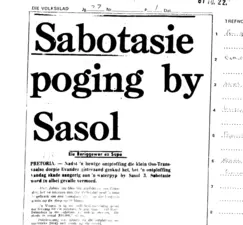
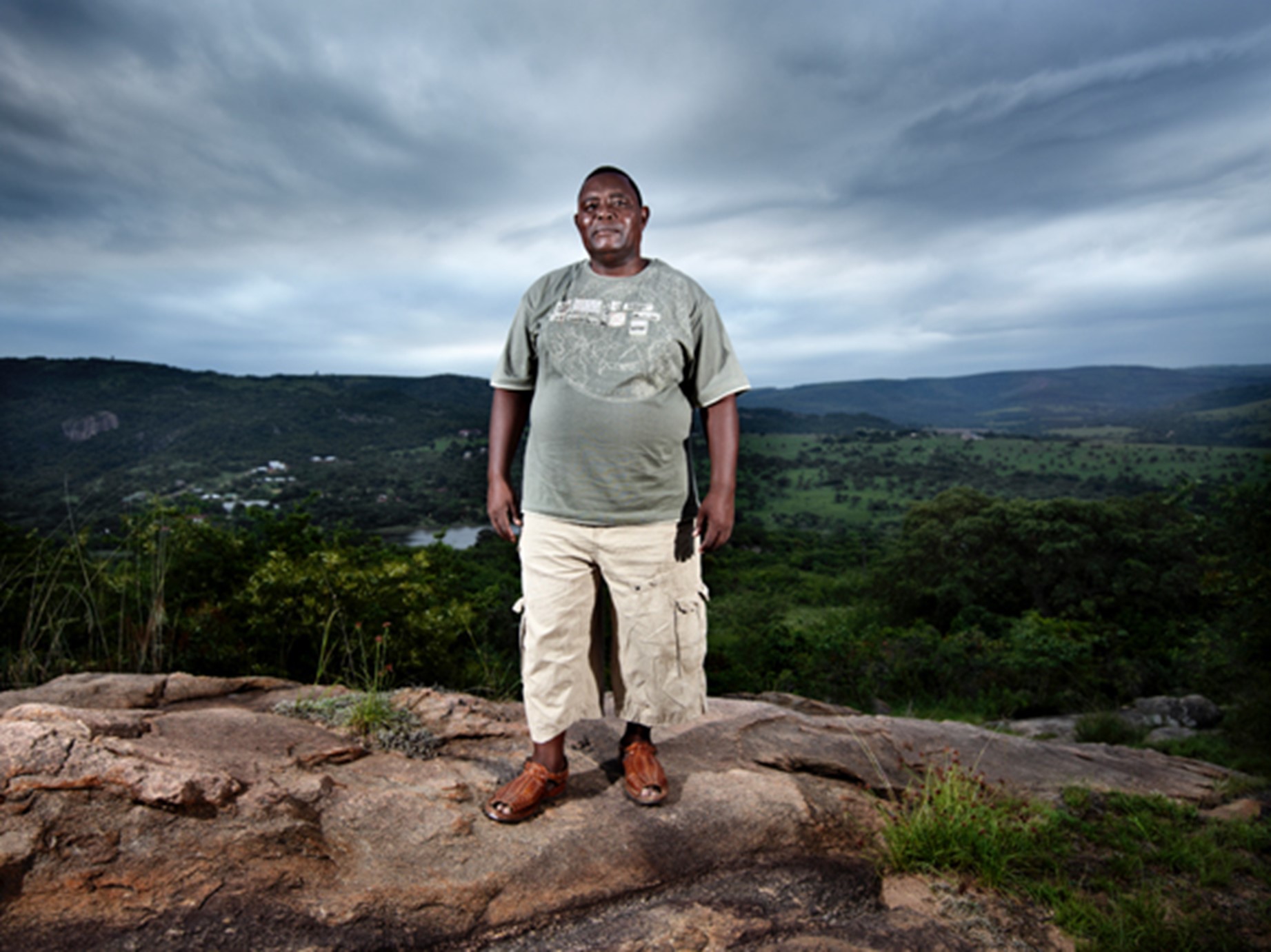
Patrick Chamusso will be remembered for his role in the bombing of Sasol’s Secunda power plant in the 1980s as a protest against the apartheid regime. But his work at the Two Sisters Orphanage since the 1990s, will ensure that he is also remembered for providing a brighter future for many under-privileged children.
I am a grassroots person. I am here to help the poorest of the poor people.
As a young man, Patrick was not interested in joining the struggle. He loved to play football and earned an honest living as a house painter. He preferred to keep a low profile and stay out of trouble, but trouble seemed to find him.
He was first arrested in 1973. He had saved all the money he had earned to buy his dream car, a Peugeot. The car dealers were suspicious of how a black man would have the money to buy such a car, so they politely offered him a cup of tea, while calling the police from the back office. The police arrived, arrested him and beat him, demanding to know where he had got the money. At the police station, the inspector recognised him from doing a paint job, and intervened. He drove him to the bank to check his records and realised that they had falsely accused him of theft.
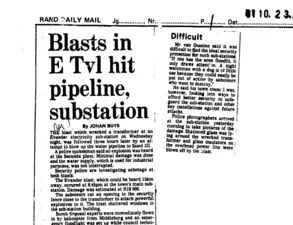
The authorities continued to haunt him. After being pulled off the road in his new Peugeot, accused of stealing the car, and being arrested for the second time, he decided to leave the white suburbs in search of another job. He found work as a driver at Secunda power plant. In 1980, the ANC set explosives and blew up parts of the plant. Patrick was a foreman at the time, and speaks of being in the wrong place at the wrong time when the bombing took place. He was the last driver to leave the power plant that evening when it exploded. The next morning when he reported to work, the police were waiting for him. He was arrested, beaten and severely interrogated, but he insisted that he had had nothing to do with the bombing.
Whilst he was being interrogated, he made a decision: if he were ever to come out of this prison alive, he was going to join the military arm of the ANC and fight back. He had been arrested for the third time for doing nothing; the fourth time he would be sure he had a reason for being beaten.
On his release, he stuck to his decision, and crossed the border to Mozambique where he was recruited into the ANC military camps. He tells the story of being called into a meeting alone with a large white man – memories of interrogations began to flash before him - and he started to sweat. Instead, the man offered him a Coke, which he was too skeptical to drink. The man was Joe Slovo, the spearhead of Umkhonto we Sizwe (MK) and leader of the South African Communist Party. Slovo wanted to know why he wanted to go back and fight, when the ANC had offered him the opportunity to study instead. Patrick stood his ground; he wanted revenge.
Joe Slovo recognised his fighter instinct and sent him for specialised training in sabotage in Angola. The aim was to teach him to destroy infrastructure without claiming the lives of people.
After several months of training, he was sent on his mission: to single-handedly blow up Sasol’s power plant, for a second time. He was integrated into a highly-trained and professional underground network of the ANC and managed to re-enter South Africa via Swaziland with five limpet mines.
He was only partially successful in his Secunda mission and after a three-day man-hunt, having been shot in the leg, Patrick was arrested for the last time.
He was imprisoned, assigned a lawyer and his case went to court. He was being charged for both bombings of Secunda and the murder of two whites, for which he could expect to receive the death sentence. He pleaded not-guilty for the first bombing and the murders. It was at this moment, with death at his doorstep, that his life seemed to flash before him, a deeply spiritual experience that changed the way he has viewed the world ever since. He made a promise to give back to humanity what he felt was taken from him. The next day he was given 24 years in prison and was sent to Robben Island. He cried - he was alive.
He served 10 years of his sentence and in 1991 was released. Joe Slovo offered him a position with the intelligence service of the new government, which he refused; he wanted to be left out of politics. He married and moved to Mpumalanga where he used his pension to start the Two Sisters Orphanage.
Instead of being a traditional orphanage, Patrick finds foster parents to help raise and care for the children. In most cases, the parents have died of AIDS, and occasionally the children are also infected. He works closely with the nearby AIDS clinic, which provides him with the support to treat the children that come under his care.
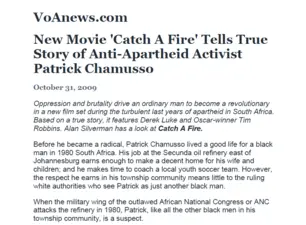
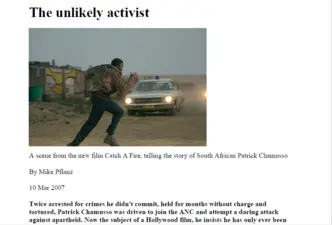
From Robben Island to red carpet. History always depends on who writes it - one man’s terrorist is another man’s freedom fighter. Patrick’s story is intriguing and was used to inspire the Hollywood movie Catch a Fire.
Today, Patrick sees himself as a grassroots activist. He believes that the real work to be done in South Africa is at the grassroots level, amongst the people, in the community. He criticises current leaders for being disconnected from the real needs and minds of the people, where unemployment and AIDS have left large parts of the community with little hope of improving their lives.
Patrick’s efforts have not gone unnoticed. In 2008, he was awarded the National Heritage Council Ubuntu award - given to those who have consistently lived the humanitarian values of the African philosophy of ubuntu. He has also made peace with Sasol, and the company is now one of the largest supporters of his orphanage.
Today Two Sisters Orphanage helps to care for approximately 200 children, providing them with a point of reference and safety in their lives. Patrick seeks no glitz and glamour, his heart is with the people, he wants to see these children grow up and be the leaders of the nation - educated and hopeful of a bright future.
Who is your most remarkable South African?
Madiba.
What is your South African message to the world?
Take care of the children, help those whose lives have been ravaged by the AIDS pandemic, and give them security, hope and a future.
Copies of the book "Remarkable South Africans" by Line Hadsbjerg are available via SA - the Good News.