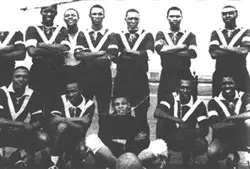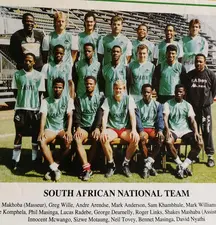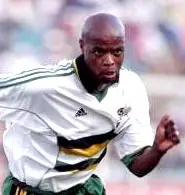
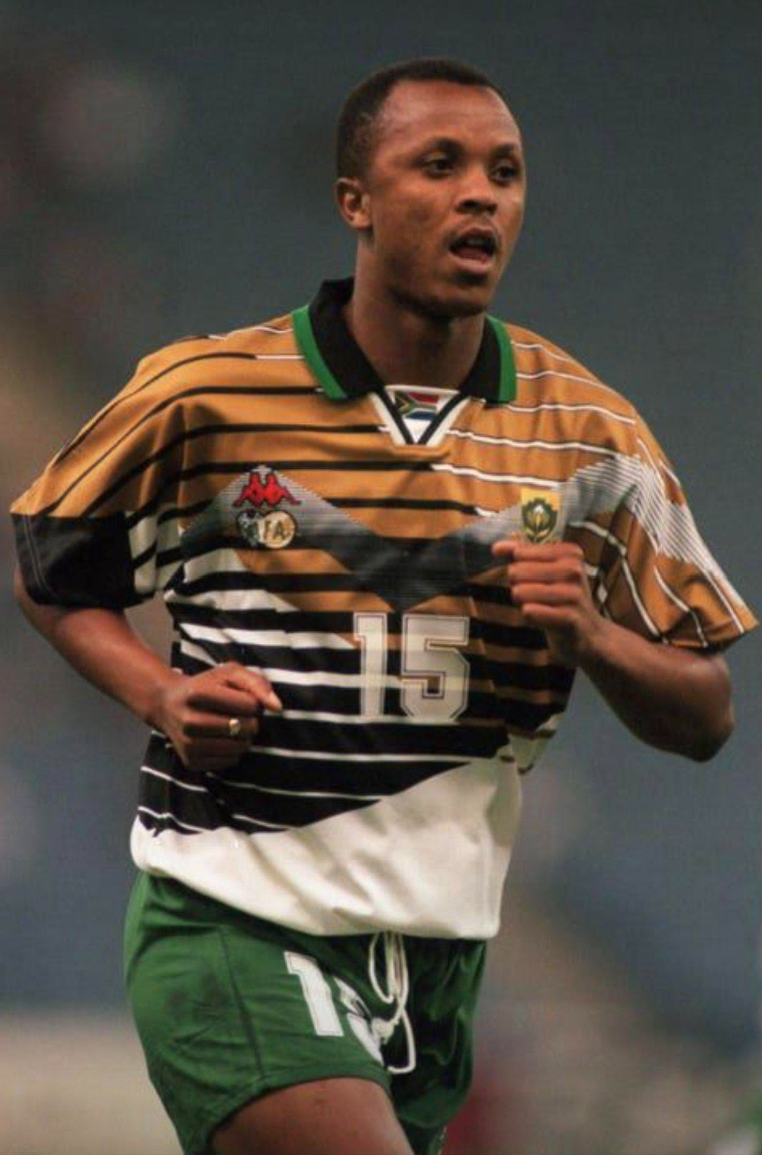
South Africa had been suspended by FIFA in 1961 and formally expelled in 1976 because apartheid law forbade mixed-race sport. For three decades, generations of brilliant township footballers played out their entire careers invisible to the world. Only after apartheid began unravelling did the newly unified South African Football Association form (December 1991), and FIFA readmitted the country just days before the Cameroon fixture. The Durban match was the first time a truly representative, non-racial South African XI took the field in a FIFA-sanctioned international.Cameroon arrived as Africa's most celebrated side, the Indomitable Lions had electrified the 1990 World Cup in Italy, beating holders Argentina and reaching the quarter-finals. Beating them, even in a friendly, gave the result real weight and signalled South Africa could compete continentally. Coached by Stanley "Screamer" Tshabalala and captained by Neil Tovey, the side featured Doctor Khumalo, Lucas Radebe, Steve Khompela, David Nyathi and goalkeeper Mark Anderson and a mix that itself embodied the new non-racial South Africa. When the penalty was awarded in the 82nd minute, nobody wanted the burden. Khumalo later admitted "we all chickened out" until Tovey told him, "Come on, I know you can do it." He converted, and became a national icon in that instant.
Cameroon stayed for a three-match tour: they won the second game 2-1 in Cape Town on 9 July, and the sides met again in Johannesburg on 11 July to close the series. Around this period the team acquired its nickname "Bafana Bafana" ("the boys, the boys"), popularised by Sowetan journalists. The trajectory from that rainy night was steep: within four years South Africa hosted and won the 1996 Africa Cup of Nations, with Khumalo and Radebe central and Tovey lifting the trophy and by 2010 it hosted the World Cup itself.