
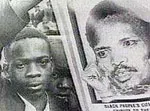
Steve Biko, who died at the hands of apartheid security police on September 12, 1977, is widely seen as the greatest martyr of the anti-apartheid movement. He gave up studying medicine to devote himself to the "struggle", and founded the Black Consciousness Movement in 1969. Steve Biko was viewed with alarm by the South African apartheid government and in 1973 he became a "banned" person and was restricted to his hometown of King William's Town. Regardless of the restrictions against him, continued to work for the consciousness movement - leading to his arrest four times between 1975 and 1977.
On 18 August 1977 he Biko was arrested on 18 August in Grahamstown for writing inflammatory pamphlets and "inciting unrest" among the black community, and brought to the Port Elizabeth police station. During his detention he was always kept in chains, and slept in urine-soaked blankets, often naked and cold. He was finally tortured to death on September 12. Despite the obvious and extensive trauma to the body, the police were exonerated of any blame in Biko's death.
In a terse, 3 minute ruling the chief magistrate of Pretoria, Martinus Prins, said he officially accepted findings stating that died of extensive brain injuries sustained during a scuffle with police on the morning of 7 September.
At that time Biko was being interrogated by five members of the security police, who claimed he went "berserk". During the inquest police suggested Biko may have fallen on the floor during the fight "bumping his head". They did admit that he was handcuffed, shackled, and left naked while in custody and was then driven 750 miles to hospital on the floor of a car.
In 1999, South Africa's Truth and Reconciliation Commission, set up to investigate political atrocities between 1960 and 1994, denied amnesty to the former security policemen involved in his custody. The officers were told his killing was not politically motivated, the requirement for granting amnesty.
Despite the TRC's ruling however, no charges were ever brought. Criminal proceedings against the former officers were submitted to the attorney general of the Eastern Cape. But in October 2003, South African Justice Ministry officials said there would be no prosecution due to insufficient evidence. Charges of culpable homicide and assault were considered, but because the killing occurred in 1977, the time frame for prosecution had expired.