
Event record
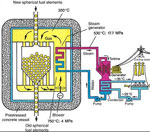
Department of Environmental Affairs and Tourism approves ESKOM’s prototype 110MW pebble
- Date
- 25 Jun 2003
- Updated
- 30 Sep 2019
Search events by date
This day in history
What happened on your birthday?
How we know this
- 01Economic Expert Pebble Bed Reactor [Online] Available at: www.economicexpert.com [Accessed 14 June 2010]
- 02Environment News Service Earthlife Africa sues for Public Power Giant's Nuclear Plans [Online]. Available at: www.ens-newswire.com [Accessed 14 June 2010]
Last updated · 30 Sep 2019
South African History Online. (2011, March 16). Department of Environmental Affairs and Tourism approves ESKOM’s prototype 110MW pebble. South African History Online. https://sahistory.org.za/ref/E-0013541
South African History Online (2011) 'Department of Environmental Affairs and Tourism approves ESKOM’s prototype 110MW pebble', South African History Online, 16 March. Available at: https://sahistory.org.za/ref/E-0013541 (Accessed: 25 September 2026).
South African History Online, Department of Environmental Affairs and Tourism approves ESKOM’s prototype 110MW pebble [website], https://sahistory.org.za/ref/E-0013541, (accessed 25 September 2026).
"Department of Environmental Affairs and Tourism approves ESKOM’s prototype 110MW pebble." South African History Online, 16 Mar. 2011, https://sahistory.org.za/ref/E-0013541. Accessed 25 Sept. 2026.
South African History Online. "Department of Environmental Affairs and Tourism approves ESKOM’s prototype 110MW pebble." South African History Online. March 16, 2011. https://sahistory.org.za/ref/E-0013541.
Further reading
 Article
Brenda Fassie’s 1997 hit song Vulindlela still raises questions about South Africa as a nation
 Place
Place
KwaZulu-Natal Literary Trails (under Heritage Routes)
 Article
Ambassador Lindiwe Mabuza and her connection with Scotland: An Appreciation by Brian Filling
 Place
Place
Langa Township, Cape Town
 Place
Place
Gansbaai, Overberg
SAHO is free because readers fund it. Donate →