
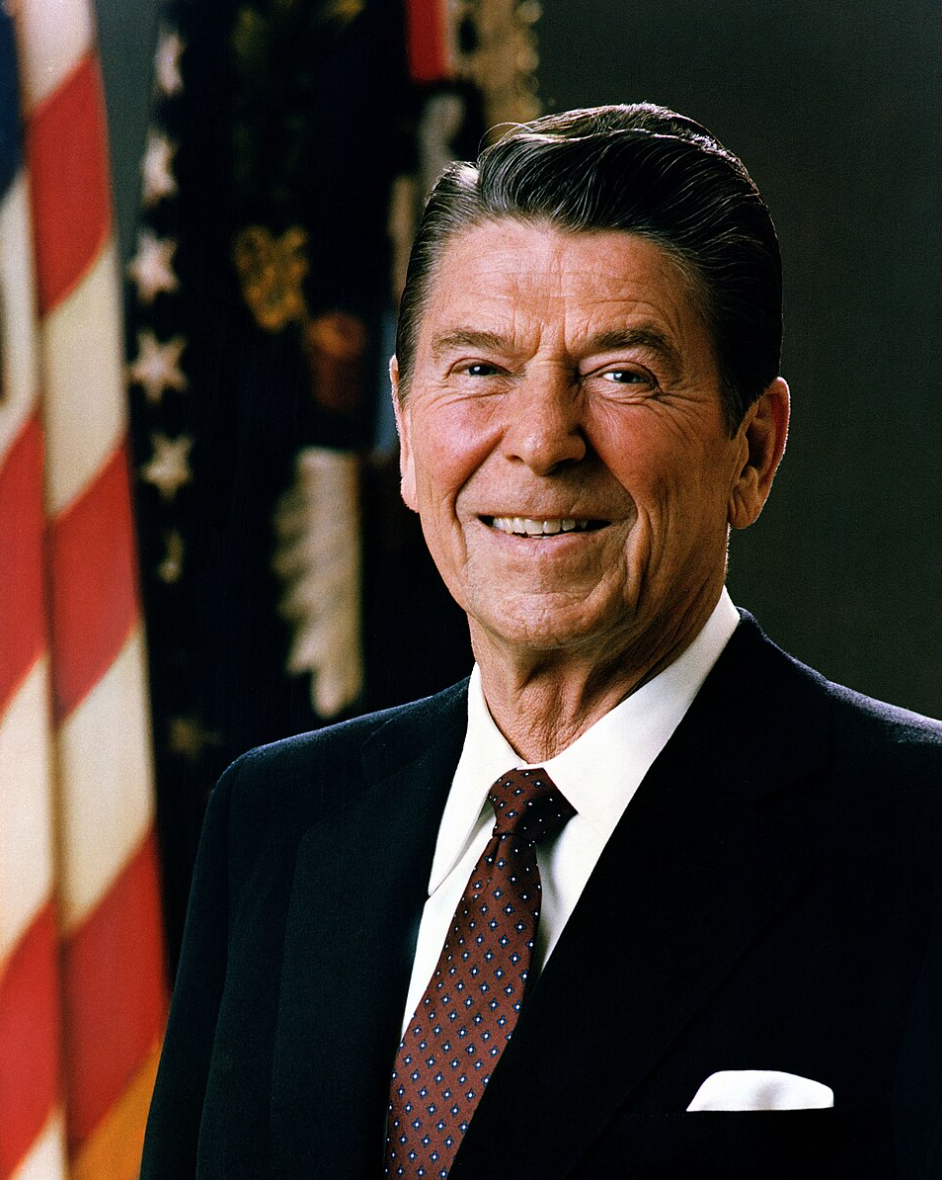
During the late 1970 and early 1980s the Ford, Carter and Reagan administrations had tried to influence South African governments by working with them discreetly in a strategy called "constructive engagement." In so doing it was hoped that the US would maintain some degree of influence in the coming political reforms in Southern Africa. And while it has been alleged that Reagan's indifference to human rights issues in South Africa are best explained by a latent racism; it is more likely that Reagan, the last of the great Cold Warriors, was trying to contain global communism and what he sincerely believed to be the growing Soviet menace.
Sadly, as far as Washington was concerned the ANC's alliance with the South African Communist Party was reason enough to taint not only the ANC, but all associated with The Struggle. Furthermore, if South Africa ever were to fall into the Soviet sphere, the US would risk losing access to gold, uranium, magnesium, and other strategic metals.
By the mid 1980s world opinion and American public awareness of the situation in South Africa had forced Washington's hand. Many state governments and local municipalities had already begun to divest themselves of South African investments. So, in September of 1985 Reagan announced limited sanctions on South Africa. Banned by Executive order were: the exportation of computer technologies used by South African Security Forces, loans to the South African Government, exports of nuclear goods or technology, and the importation of Krugerrands.
Yet Congress would go even further. With the passage of the United States Comprehensive Antiapartheid Act (CAAA) over a presidential veto in 1986, the United States Congress established an elaborate sanctions structure prohibiting future investments, bank loans, and some forms of trade with South Africa This override of Regan's veto was the first and only time that Congress was able to reverse the foreign policy of a sitting American President.
Sources:
DefendingTheTruth, "Ronald Reagan American hero/Closet Racist." . Website: defendingthetruth.com
Galiber, Armstead J. United States Foreign Policy In Southern Africa--A Closer Look. GlobalSecurity.org website: globalsecurity.org
Reagan, R., "Remarks and a Question-and-Answer Session With Reporters on Signing the Executive Order Prohibiting Trade and Certain Other Transactions Involving South Africa". Website: reagan.utexas.edu. 9 September 1985
"Involving South Africa". Website: reagan.utexas.edu. 9 September 1985.