
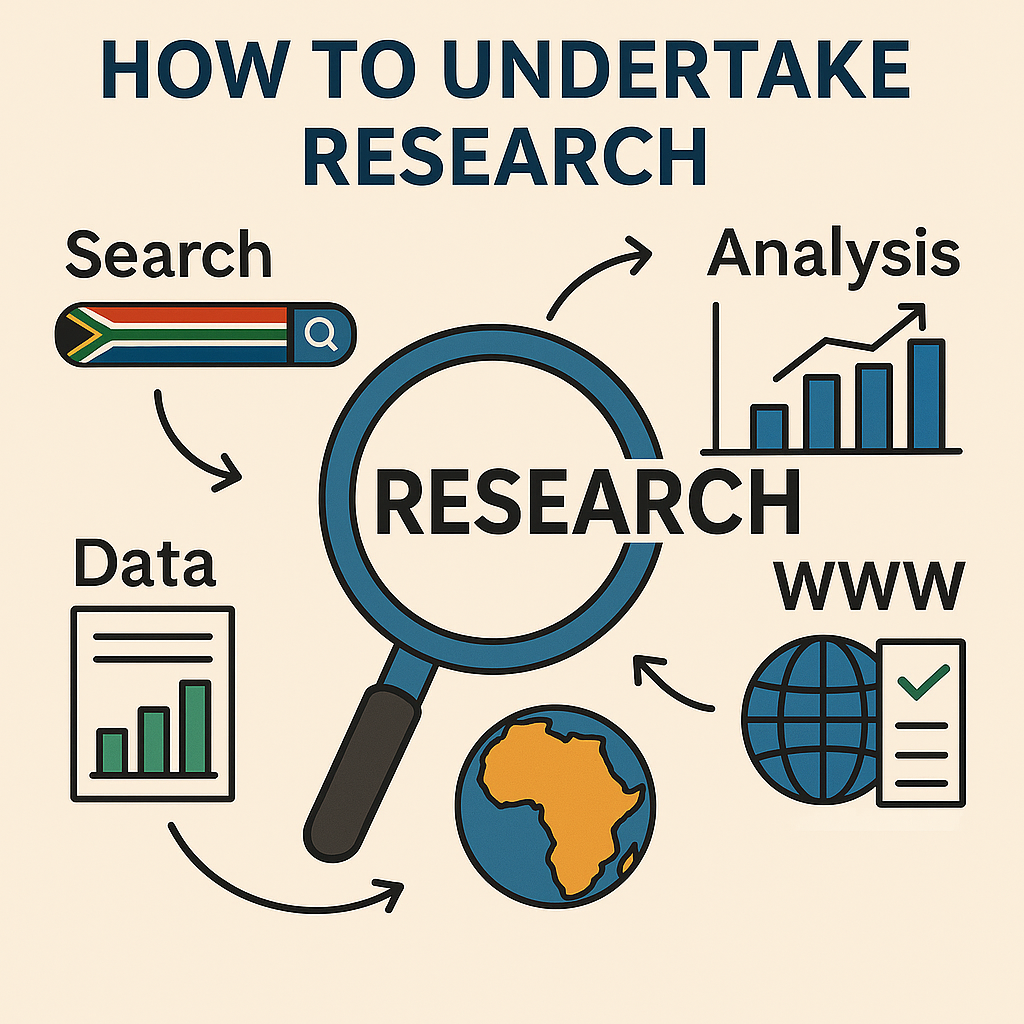
South African History Online (SAHO) believes in empowering learners, educators, researchers, and independent web users with the tools they need to investigate the past and shape the future. This guide introduces a structured approach to undertaking research, especially within the field of history, designed for a wide range of users from primary learners to university students and educators.
What is Research?
Research is a process of asking questions, investigating sources, evaluating information, and presenting findings. It is not only a tool of academia but a powerful way to understand society, identity, and history.
Four Key Steps to Research
1. Define Your Topic
Start by identifying what you want to explore. Good research begins with a focused and meaningful question. For example:
- What role did women play in the liberation struggle in South Africa?
- How did apartheid shape urban development in Johannesburg?
2. Find Information
Gather relevant materials from reliable sources such as books, archives, newspapers, oral histories, and trusted websites like SAHO. Use timelines, biographies, and topic overviews to ground your understanding.
3. Evaluate Sources
Ask: Is the source credible? Who wrote it, and why? Is it biased or well-supported with evidence?
Prioritise peer-reviewed articles, primary sources, and institutional repositories.
4. Reference Sources
Give credit to the sources you use. Referencing ensures your work is ethical, traceable, and strengthens your argument.
Why We Conduct Research: Top 10 Reasons
- To Explore and Explain – Research uncovers hidden layers and explains the ‘why’ behind events.
- To Identify and Solve Problems – Whether social, historical, or technical, research reveals problems and pathways forward.
- For Facts & Figures – Accurate data and historical detail provide substance to any claim.
- To Build Skills – Research sharpens analysis, writing, digital literacy, and critical thinking.
- For Personal Growth – Research helps us understand ourselves, our communities, and our values.
- To Understand the Past and Future – The past offers insight into the present and foresight into what’s next.
- To Predict and Plan – Research supports future planning, policy-making, and forecasting.
- To Improve Human Welfare – From medicine to memory, research contributes to the betterment of society.
- To Go Deep – Real solutions come from understanding issues in full context.
- To Inspire New Ideas – Discovery fuels creativity. Research helps turn information into innovation.
Tips for Young Researchers
- Start small and stay curious.
- Ask your teacher or librarian for help locating sources.
- Use SAHO’s Online Classroom for themes, timelines, and biographies.
- Keep notes and track sources as you go.
- Always reflect on what you’ve learned.
"A people without the knowledge of their past history, origin and culture is like a tree without roots." – Marcus Garvey
Next step: Learn how to reference your research properly. Visit our dedicated Referencing Guide.