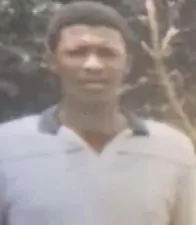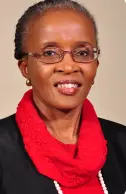

Mosiuoa Gerard Patrick "Terror" Lekota was born in Kroonstad, Orange Free State (now Free State Province) on 13 August 1948, into a working-class family. He was the eldest of seven children. Most of Lekota’s schooling was completed in Kroonstad. He matriculated from St Francis College, Mariannhill, outside Durban, Natal (now KwaZulu-Natal – KZN), where Steve Biko had completed his schooling just a few years earlier. Lekota got the nickname "Terror" on the soccer field.
In 1971, Lekota enrolled at the University of the North, where he became politically active. He joined the South African Student Association (SASO), and when the full-time organiser, Abaham Tiro, had to flee the country in 1973, Lekota took over this position.
In September 1974, Lekota was arrested with eight other SASO members for organising celebrations following Mozambique’s independence. He was charged under the Terrorism Act, found guilty and sentenced to six years on Robben Island. While on Robben Island, he wrote these words to his daughter:
Above all then, my dear, I am in prison for the sake of peace for our country and the world. I am in prison so that our generation may leave to yours and later generations a country and a world that has the greatest potential for progress.
On Robben Island, Lekota came into contact with other political prisoners who influenced his ideas. He moved towards non-racialism and away from Black Consciousness ideology. Lekota was released from Robben Island at the end of 1982.
Eight months later, he attended the launch of the United Democratic Front (UDF), where he was elected national publicity secretary. As a member of the UDF, Lekota faced police harassment and detention. In 1984, he was arrested and released, in 1985 he was arrested again, together with other UDF leaders, and charged with high treason in what became known as the Delmas Trial.
The trial leaders were not allowed bail. In November 1988, Lekota was one of four fellow trialists found guilty. Although UDF leaders Popo Molefe and Patrick ‘Terror’ Lekota were found guilty and sentenced to 10 and 12 years respectively, the judgment was rescinded on appeal, and all the defendants were freed on 15 December 1989 after spending four years and six months in jail.
When the African National Congress (ANC) was unbanned, he was elected to the ANC’s National Executive Committee (NEC) in 1991 and its National Working Committee (NWC). He served as Chief of Intelligence in 1991 and was elected Secretary of the ANC’s Election Commission in 1992. He was elected the National Chairperson of the ANC from December 1997 until December 2007.
Lekota was Minister of Defence of the Republic of South Africa from 17 June 1999 until 25 September 2008. Prior to his appointment as minister, he served as the first Premier of the Free State Provincial government from 1994 until 1996 and as Chairperson of the National Council of Provinces from February 1997 until June 1999.
In May 2003, Lekota was sanctioned by parliament for failing to disclose his business interests. He received a written reprimand and was fined one week’s salary. The opposition parties objected to this punishment, saying it was insufficient.
After the ANC’s Polokwane Conference in December 2007, it became clear that a split in the party was imminent. Those defeated in Polokwane were said to be disillusioned with the new incoming leadership of Jacob Zuma. The recall of Thabo Mbeki as the country’s president was another reason for the formation of the Congress of the People (COPE).
Heralded as the alternative to the ANC, the Congress of the People (COPE) was officially launched on 16 December 2008 in Bloemfontein, Free State. It could not have been foreseen that in less than two years, the party would be battling with leadership squabbles. The crisis in COPE was a result of internal squabbles, a manifestation of the crisis of leadership. Ironically, the squabbles came from its founders, namely Mosiuoa ‘Terror’ Lekota and Mbazima Shilowa, who were the interim President and Deputy President, respectively. With Lekota being accused of dividing the party with his alleged dictatorial views and leadership style, and Shilowa viewed as having joined the party for self-enrichment, the party lacked a uniting symbolic figure at the helm.
COPE started with significant impact but quickly degenerated due to leadership struggles and poor organisational practices. The party contested the May 2011 local government elections but managed to get only 2,1% support of the total votes. This was an indication that the leaders spent much time addressing the party’s leadership squabbles rather than concentrating on building it.
Mosiuoa Gerard Patrick "Terror" Lekota passed away in Johannesburg, Gauteng, South Africa, on 4 March 2026.