PART 2
The Congress of the People
There were such a lot of things happening at that time, and some very
good things too. In 1955 a very great thing happened. We organized the
Congress of the People at Kliptown. Ooh! What a wonderful thing was there!
All over the country people organized to come to that congress, and all
the groups worked together to organize it and make it truly national,
so that everyone was represented there. Everyone was invited to come.
Even SACTU sent delegates too, though they weren't a member of the Congress
Alliance yet. SACTU only joined the Congress Alliance later. At that
time it was only the ANC, the Coloured Congress, the Indian Congress
and the Congress of Democrats.
In Port Elizabeth we from the ANC organized too. We went from door to
door telling people that we are going to have this conference and that
it is for all the people of South Africa. We got people together in small
groups, maybe 10 together, and we asked them, ‘If you go to this
conference, how would you like South Africa to be handled? How would
you like things to be here?'
Then the people say what and what, 'I want to do this and this'. And
we listen to the wishes of the people and we give them some pieces of
paper so they must write what they want, what they think the country
should be. And those who couldn't write, they tell us, 'Write such-and-such
a thing and this and this and this.'
We collected demands from all the members of our branch in the ANC and
then we collected demands from the workers in the trade unions. Some
people went to the churches too to collect demands. Someone from the
ANC would go to the church meeting and tell them about us wanting to
make the Freedom Charter and what it was for, and then collect their
demands. And maybe you see some people sitting somewhere in a group,
sitting talking maybe, so you go to them and you ask them what they want,
how they think the country should be. Then we have a meeting and we pile
all these wishes together. All those wishes were taken to the National
Executive Offices’ and there they sorted these things out and found
what most people want and so forth. They took all the things that everyone
wants and they put all these wishes together and made the Freedom Charter.
That is how the people made the Freedom Charter.
The Federation organized for the Congress too. We made a list of what
the women demanded so that the women should not be forgotten in the Freedom
Charter. We had already made the Women's Charter at the Federation Conference
and we wanted them to put some of these things in the Freedom Charter
too. We wanted proper care and help for pregnant women and mothers; we
wanted free education for everyone. We demanded proper housing that we
could afford, with proper electricity and proper toilets, because our
houses did not have these things. And we wanted enough food for everyone
and better prices for food because we all knew what it is like when your
child is crying and you have no money to buy him food. And then too of
course, we demanded that the women be equal with the men in everything,
and we wanted that all women in South Africa should be allowed to vote.
Then, in about April, we elected all the delegates that we wanted to
send to the Congress. There were more than a hundred delegates that went
from the Eastern Cape. Florence Matomela was one of our delegates I remember,
from the ANC Women's League
The Federation in Johannesburg organized accommodation for most of these
delegates, in Soweto and so on. They went around to all the houses in
the townships near Kliptown, and they told the 'people about the Congress
and they asked them if they had some space for people to stay. They made
a big list of all the houses and how many people must stay where. The
people were to bring their own blankets with them to the Congress, and
then we find them some space, on the floor, or maybe a mattress if they
are lucky, and they can stay there in someone's house.
.
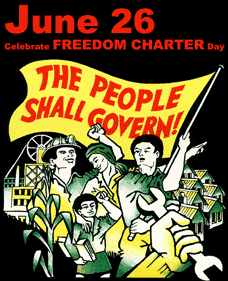
On the day of the Congress of the People, hawu! It started the day before Freedom
Day, on Saturday. There were a lot of people. They came by buses, cars, taxis,
anything, just to be brought there. That place was in Kliptown near Johannesburg
in a big open space, a flat area. And they made a stage, a big stage; because
people had to go up their where there were loudspeakers so that everybody could
hear what they were saying. The whole place was packed. And everyone dressed
so brightly you know the ANC colours everywhere, and the Indian women in saris,
and some people in traditional dress, colour everywhere. 1 was there too as
a delegate of the Women's League. There was a lot of excitement and what, I
don't know. It was wonderful!
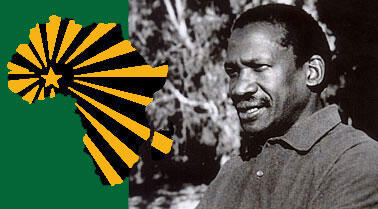
Father Huddleston and Chief Luthuli and Dr Dadoo were given awards by the people
to honour them gave that day. Chief Luthuli was such a nice man. I used to
know him quite well, and he was a very nice, quiet man. I stayed with him at
his place in Durban when I was once there. And his wife too - they were nice
people.
All those demands that had been collected from the people and had been put
into the Freedom Charter, they were read out by all the different leaders,
read out to the people so we could say whether we accepted them. They were
all read out in English, Sotho and Xhosa so that everyone must understand.
And then people spoke about those demands, for work for all, houses, security
and comfort, about learning and culture, all of those demands in the Freedom
Charter, especially the one that says, 'The people shall govern'. We said why
we wanted these things to be like this. It went on like that with the people
singing and clapping and everyone was very happy.
Then during the second afternoon the police came, as a force man! They
came with horses and with motorcars and they surrounded the whole Congress.
They came in and they sort of rounded us up. They took the names of everyone
there, thousands of us, they took everyone's name, and they confiscated
-cameras and papers and so on. But we carried on and finished the conference.
The people told us that there were a lot of people who were coming to
the conference who were stopped on the way in roadblocks, and sent back,
or kept in jail for the weekend. Some people didn't make it at all because
of the police. But there were a lot of people who came and the conference
was a success anyway.
There were something like 3 000 delegates there for the two days of
that conference, from all over the country, from every part of South
Africa. Everyone was invited to the conference. Even the government was
invited to come. But they sent their police instead!
After that Congress then we had to go back to our places and make sure
that all the people knew about the Freedom Charter and what it said,
so that everyone must know what we went to Johannesburg for and how was
the Charter created by the people. We did that through all our organizations;
we did it through the trade union too. We spoke to all our trade union
members about this thing.
I remember one time when we were in Cape, Town doing this work, talking
to the people about the Freedom Charter. One of the girls who were with
me there was carrying her Freedom Charter with her and there comes the
security! They came up to her and wanted to grab her freedom charter,
but she swallowed it! She ate it! So that the policeman couldn’t
get a thing out of that; it was already chewed and swallowed.
After the Congress of the People you would see on the trains, on the
walls, written everywhere, all the demands from the Charter. Nobody
knew how they do it, but we see it when we get up in the morning. The
volunteers painted those things everywhere. It was because they were
so happy when they heard that we wanted South Africa to be like this,
that we want the people to rule themselves in this way, that we want
the people's government, and that we want to share. That is why they
went about doing all this graffiti of the Freedom Charter in town,
on the factory walls, everywhere. Every morning the government had
to have some people to go about scrubbing these things away! I think
they had to hire extra people to go about scrubbing the walls.
Sometimes when the people know that you are working for the government
and so forth, they had some stickers too, and you'll be walking and they
put a sticker behind you here on your back. And then you'll be going
about all day with this sticker and the people go 'huh! huh!' Perhaps
on the sticker it says 'The people shall govern' or something from the
Freedom Charter.
And you think, why are people wondering at you all the time? When you
get home and take off your jacket, then you find this sticker there.
We did a lot of things with the Freedom Charter.